
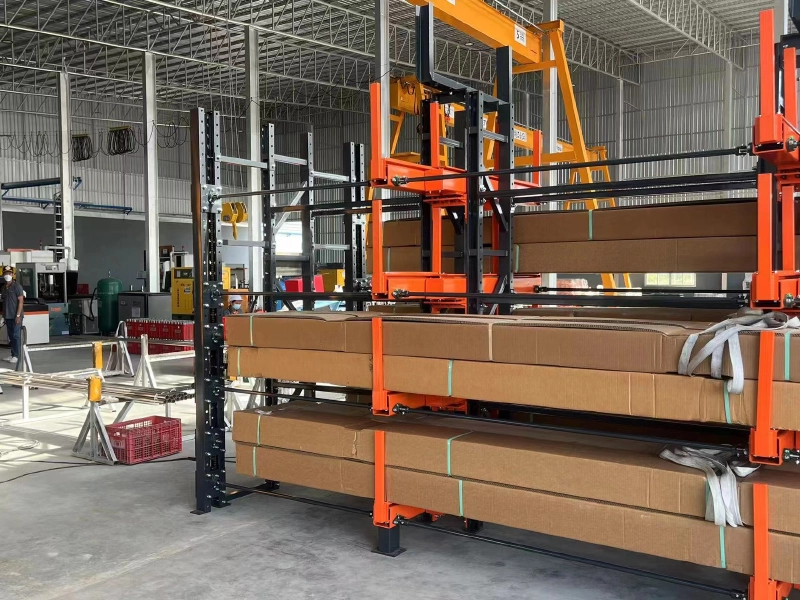
| Configuration | Single-sided or double-sided roll-out cantilever rack |
|---|---|
| Arm motion | Telescopic / crank-out, roller-guided sliding tiers |
| Tier count | 3 to 6 independent levels, set by ceiling height |
| Arm load | Up to 1500 kg dynamic / 4500 kg static per arm |
| Frame | Q235 carbon steel welded uprights with bracing |
| Handling | Overhead crane or side-loader forklift access |
Ground stacking hits a wall long before the building does
A metal distributor adding more alloys, diameters, and wall thicknesses usually responds by spreading stock across more floor. Aisles narrow, bundles overlap, and the only way to find a specific size is to walk the pile. Pickers burn hours, mis-picks climb, and usable floor utilization settles well under a third of the bay. The constraint was never the building footprint — it was storing one-dimensional long material as if it were pallets. A roll-out cantilever rack stops fighting the floor and starts using the column above it.
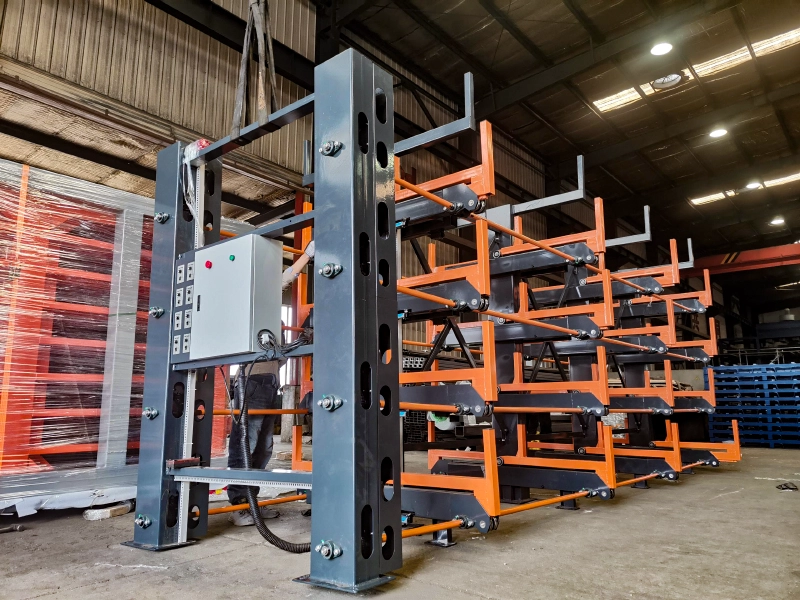
One rack, every diameter, labelled and off the ground
Each telescopic arm forms an independent sliding tier, so a single rack stores 6-meter heavy pipe on one level and short bar stock on another without mixing them. Because the arms extend straight out, the crane or side-loader forks never brush a neighbouring bundle — the scratch and dent risk that plagues floor stacking disappears. For a facilities manager, that means a SKU can be addressed by rack, side, level, and position instead of by memory, which is what actually drives mis-pick rates toward zero.
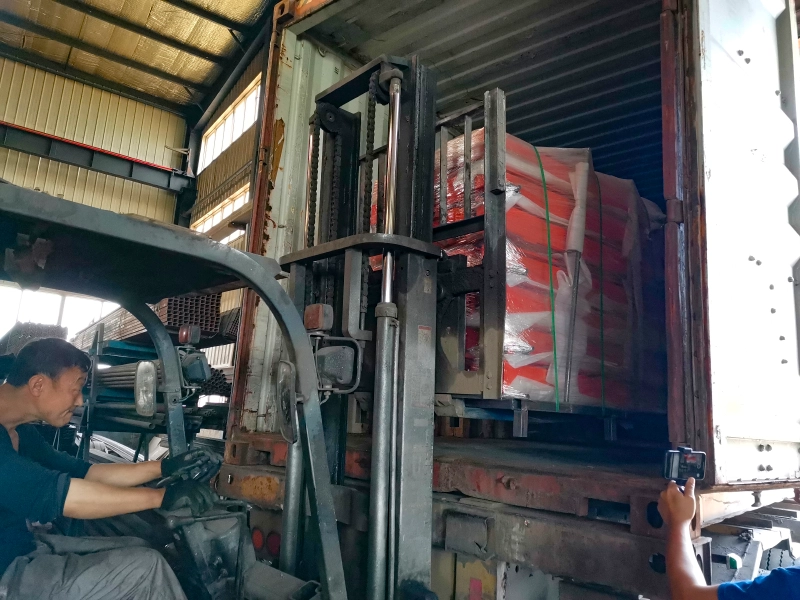
Single or double sided, built around your ceiling and tonnage
Layout is not a catalog choice — it is drawn from your bay. A double-sided roll-out cantilever rack doubles face access from the same footprint, while a single-sided run tucks against a wall to free the aisle. Uprights are Q235 carbon steel with welded bracing, arm load is specified per level (up to 1500 kg dynamic / 4500 kg static in the standard build), and tier count is set by your ceiling height rather than by a fixed shelf. The rack engineering division returns a 3D layout showing exactly how many tonnes move off the floor and into the air before a single beam is cut.
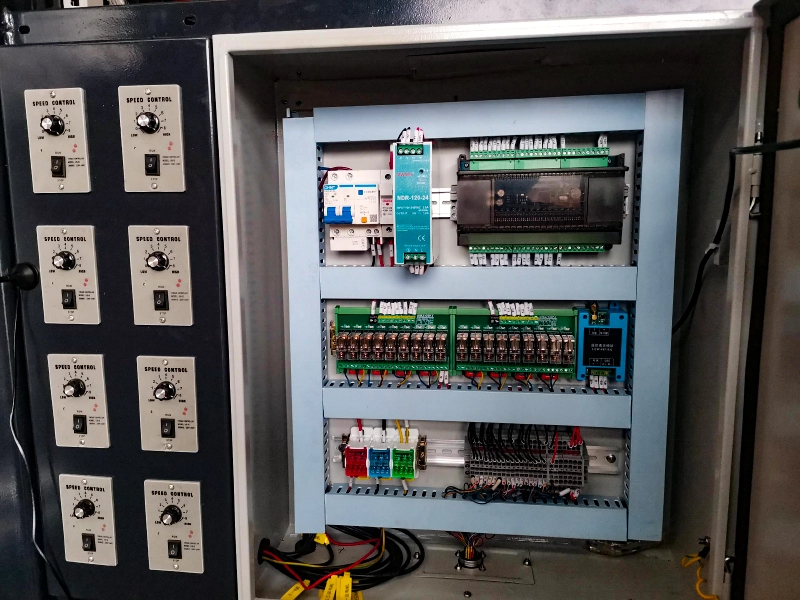
The ROI case writes itself once the layout is drawn
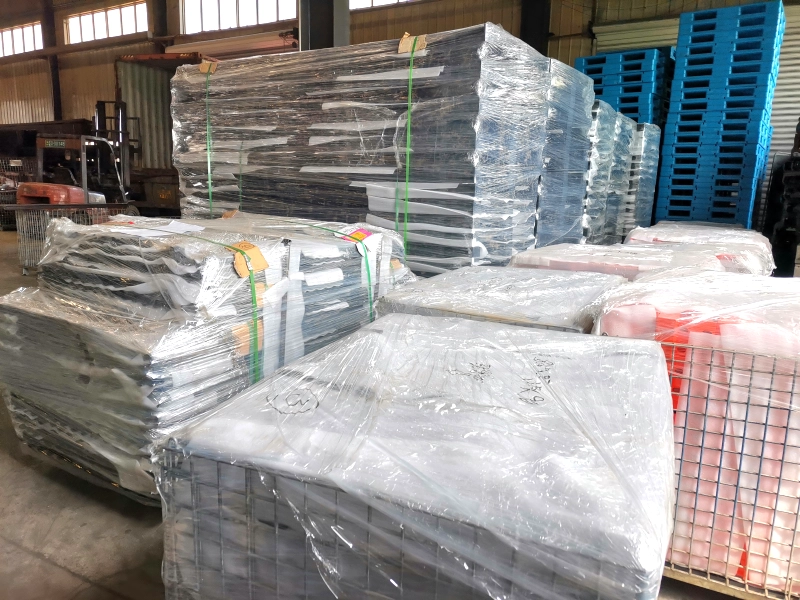
Facilities teams do not approve racking on a brochure; they approve it on recovered floor, fewer pick hours, and lower scrap. A double-sided roll-out cantilever rack typically returns its cost through recovered storage capacity alone — the same bay that held one layer now holds three to six. Because frames ship knocked-down and shrink-wrapped on pallets, site installation is a matter of days, not a shutdown. Hand the planning meeting a 3D layout and a payback line, and the expansion stops being a debate and becomes a schedule.
- Metal service centers expanding tube, pipe, and bar SKUs without more floor
- Pipe and tube mills planning a warehouse expansion or retrofit project
Double-Sided Roll-Out Cantilever Rack — Specification Sheet
Need a Custom Storage Solution?
Speak directly with our technical engineers. We offer free structural designs, heavy-duty catalog evaluations, and quick B2B price quotations.
Request a Quote Now →