
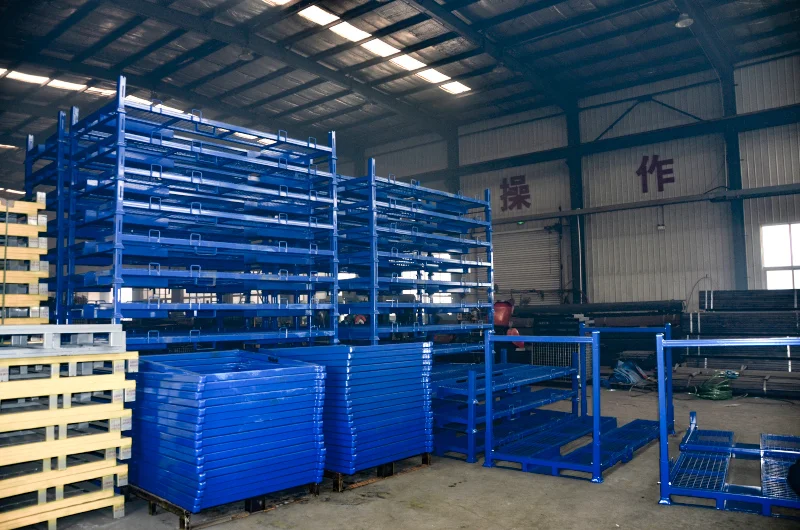
When loose tires are left on the floor, the warehouse pays three times: once in footprint, once in handling touches, and once in search time. A batch that is not fixed to a rack has to be moved, counted, and restacked again before it can leave the building. That is why many teams move from floor parking to a returnable steel rack flow. The load becomes a single forkable unit, the storage line becomes easier to read, and the return trip becomes smaller.
The point is not just “more vertical space.” The real gain comes from a repeatable handling path. A rack gives the forklift a base entry, a stable stack interface, and a way to keep the load in one piece during warehouse moves, truck transfers, and export loading. It also cuts the contact points that normally appear when items are picked up loose, set down loose, and touched again at every stage.
What loose floor storage really costs
Loose floor stacking looks simple, but it spreads inventory across the building and forces workers to work around it. Round loads are especially awkward because they shift shape, roll, or lean when they are not restrained. That means more time spent separating units, more time spent counting, and more chance of surface contact damage. If a team has to inspect, move, or re-sort the same batch multiple times, the hidden labor cost grows fast.
A returnable rack changes that equation. Instead of dealing with individual loose pieces, the warehouse handles one structured unit with fixed entry points and a defined footprint. That makes the storage zone easier to plan and the outbound lane easier to schedule. It also helps when the team needs to keep different sizes or batches apart, because each rack becomes a visible, numbered work unit instead of a pile on the floor.
What the rack changes in daily handling
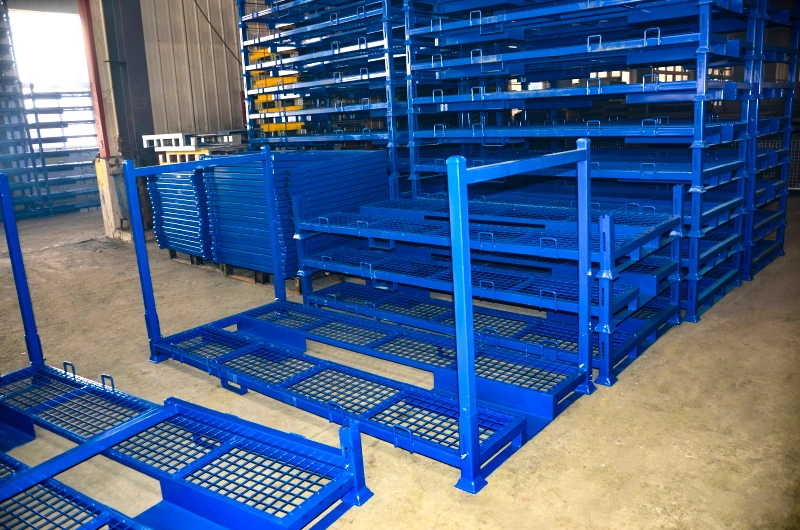
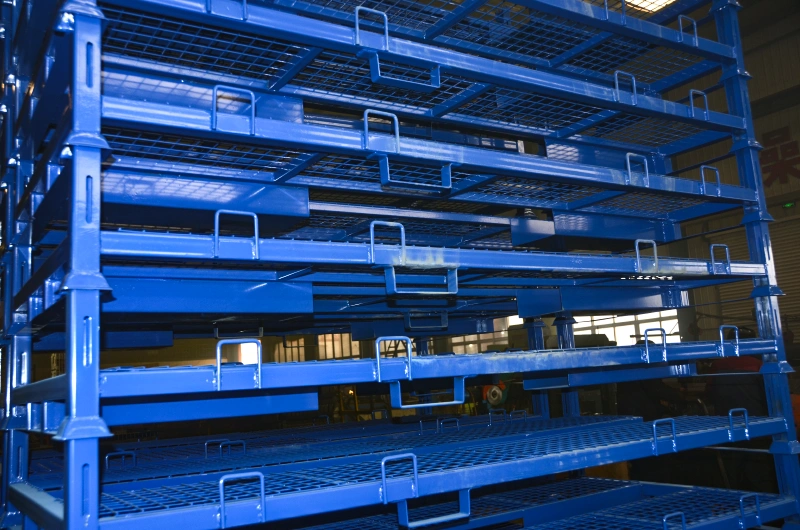
The product image set shows the physical features that matter in day-to-day work: stackable corner sleeves or locating cups, fork pockets, guide rails or restraint points, protective uprights or portal frames, and mesh or rigid deck surfaces. Those parts are what let the load stay together during mechanical handling. They are also what make the rack useful in a warehouse where speed matters more than hand sorting.
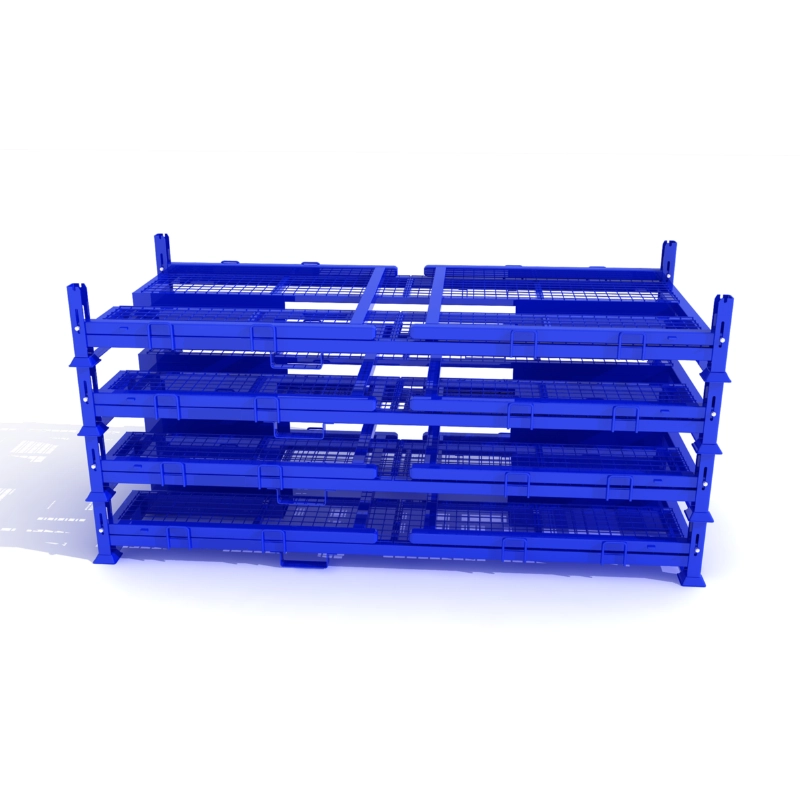
For most teams, the first savings are easier movement and fewer touches. The second savings are clearer space planning and better lane discipline. The third savings come later, when the empty frames go back out: a returnable steel rack can be nested, stacked, or folded in the configurations that support that feature, so the return load takes less room than a pile of loose goods or a one-way crate.
How to stack it, and when not to overstack it
The source pack shows two-, three-, and four-high arrangements, but those are configuration examples, not a universal rule. Stack height must follow the quotation, the load rating, the floor condition, and the actual frame geometry. Before release, the upper feet should seat fully on the lower posts. If the floor is uneven, if the frame is damaged, or if the stack interface is not fully engaged, the unit should not be put back into service until it is checked.
That is why a rack is better than floor parking for repeat handling. A stackable frame gives you a known interface. A floor pile gives you uncertainty. In practice, the rack makes the warehouse easier to audit, easier to move, and easier to stage for shipping.
Where returnable rack transfer fits best
- Warehouse staging where loose floor piles are slowing counts and blocking lanes.
- Truck or container loading where the team needs one forkable unit instead of many separate pieces.
- Dealer stock or transit hubs where vertical stacking helps recover usable floor area.
- Return logistics where folding or removable side frames can shrink the empty cube on the way back.
This approach is not for every job. If the load shape is unstable, if the rack configuration is not confirmed, or if you need a disposable one-way package, a rack may not be the right fit. The useful test is simple: if the product can be secured, stacked, and returned as a repeatable unit, the rack starts to pay back. If those three steps are not true, the handling plan needs to be changed first.
FAQ
What does the rack save first?
It saves floor space first, then handling touches. Once a loose batch becomes a structured unit, the warehouse can move it with a forklift instead of rehandling it piece by piece. After that, the return trip becomes smaller when the empty frames nest or fold.
What should I confirm before ordering?
Confirm the load envelope, the stack height, the forklift entry size, the restraint style, the finish, and whether the side frames fold, remove, or stay fixed. Do not treat one configuration as universal. The correct setup depends on the batch size and the route you need to run.
Need a Custom Storage Solution?
Speak directly with our technical engineers. We offer free structural designs, heavy-duty catalog evaluations, and quick B2B price quotations.
Request a Quote Now →