
Mybox finish selection guide
If your containers stay indoors and branding matters, powder coating is often the cleaner fit. If they live in humid, outdoor, or washdown zones, hot-dip galvanizing usually wins on corrosion tolerance.
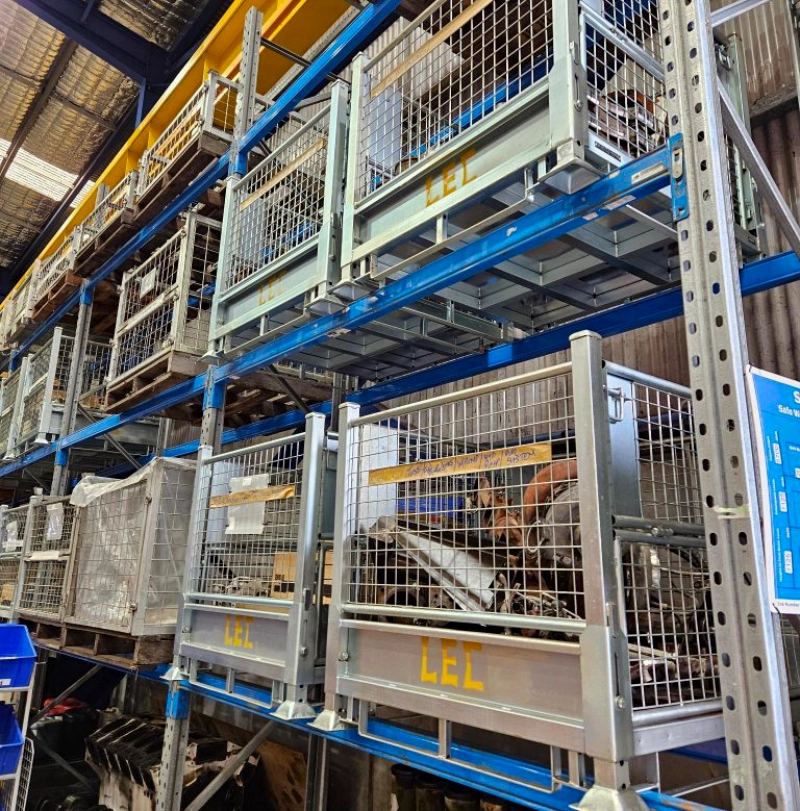
The finish choice should follow the storage zone, not the catalog photo
For Mybox, the real question is not which finish looks nicer. It is which finish can survive the actual warehouse environment. Powder coating creates a continuous barrier film on the steel surface. Hot-dip galvanizing creates a zinc layer that protects the steel and keeps working even after small scratches or edge wear. That difference matters the moment a container leaves a clean indoor aisle and starts seeing condensation, rain, or frequent forklift contact.
This is why the same container family can be specified differently for different sites: indoor dry storage, dockside staging, outdoor buffer zones, or mixed-use logistics yards.
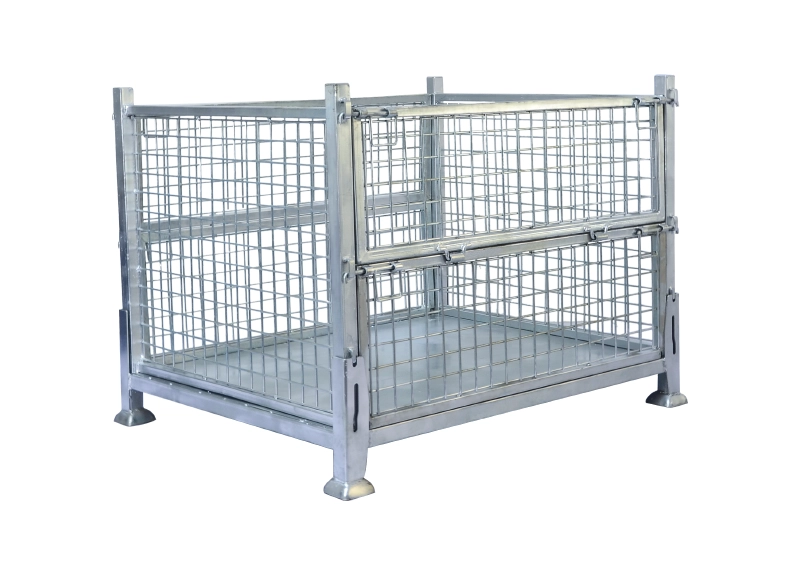
When powder coating is the better fit
Powder coated Mybox is usually the better option in dry indoor warehouses, clean assembly areas, and distribution centers where the container is expected to look uniform, carry a custom color, or display a logo and warehouse code. A powder coat finish is typically specified at 50–70um, which is enough for a controlled environment and gives you a neat visual surface for branding.
- Best for dry indoor storage
- Best for color coding, logo marking, and visual management
- Best when appearance matters as much as function
- Best when the container will not live in rain, salt spray, or constant washdown
For light to moderate handling, powder coating can be the more economical first choice because the finish is straightforward to specify and the visual result is consistent. The trade-off is that if the film is deeply damaged, bare steel can be exposed and corrosion may start from the damaged point.
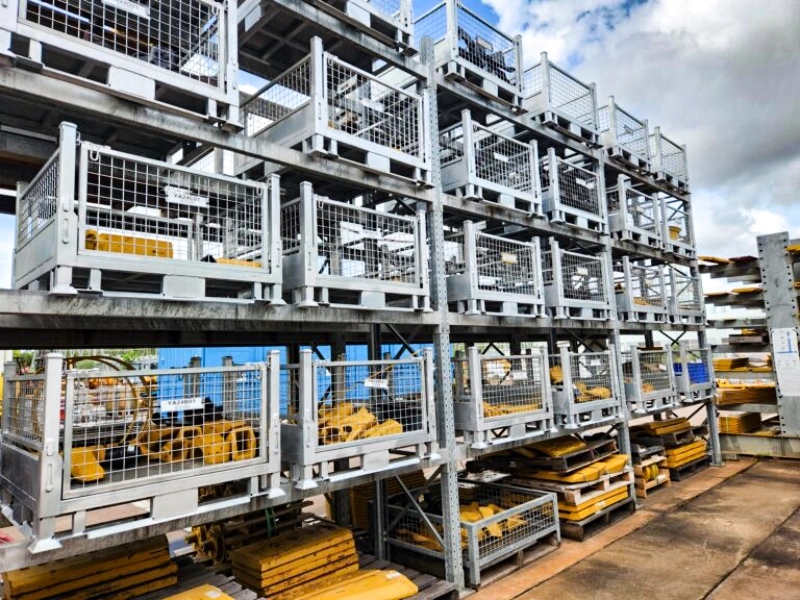
When hot-dip galvanizing is the safer choice
Hot-dip galvanized Mybox is the stronger choice for outdoor yards, open docks, damp warehouses, cold-storage edges, and any place where the unit may sit through condensation, rain, or long idle periods. Zinc protection is sacrificial, so it is more forgiving when the surface gets scuffed during forklift handling or stacking. That makes it a practical finish for containers that will spend their life in harsher working conditions.
In plain terms: if the container is expected to stay dry and visible, powder coating is attractive. If the container is expected to keep working in weather or humidity, hot-dip galvanizing is the more defensive choice.
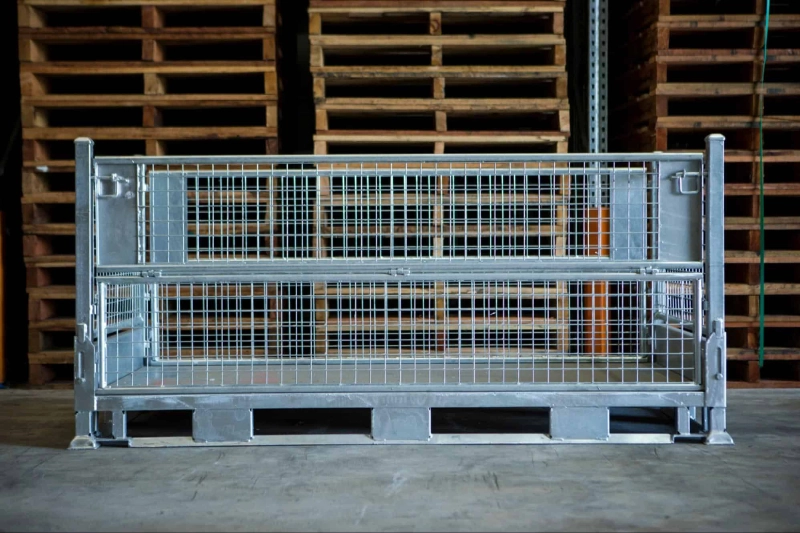
Cost, color, and logo: what changes in real projects
Powder coating usually has the advantage when upfront cost and brand presentation matter most. It is easier to align with a color chart, easier to match a factory zoning system, and easier to make a container look like part of the plant rather than generic metal inventory. Hot-dip galvanizing usually carries a higher initial cost, but it can reduce the need for repainting, touch-up, and early replacement in demanding environments.
If your team needs both durability and identification, the better question is not only finish type. It is whether the warehouse needs a visible color system, a printed logo, a BOM tag, or a more robust finish that prioritizes service life over appearance.
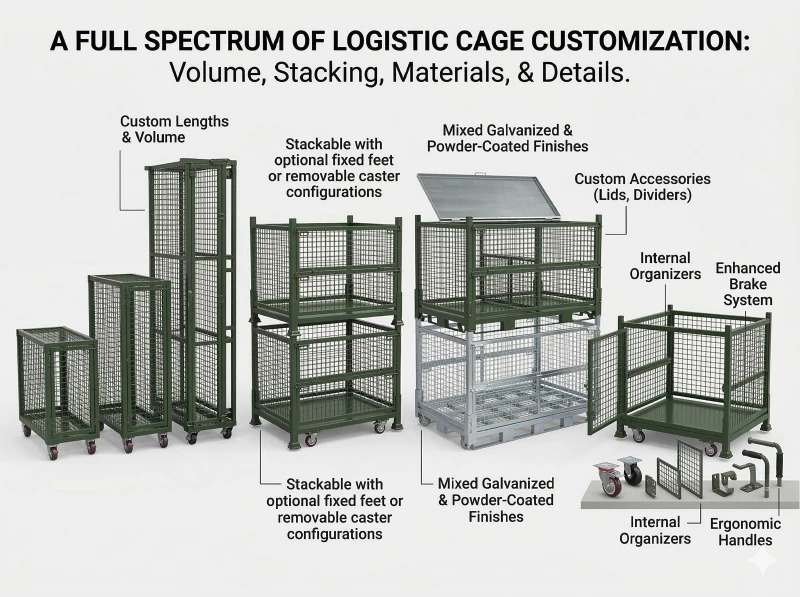
How to specify the right Mybox finish
If you are comparing powder coated and hot-dip galvanized Mybox for a new project, start with the environment, not the appearance. Then confirm handling mode, stacking height, empty-return route, and whether the unit needs casters or brake casters. Mybox is designed as a collapsible, stackable wire container family, so the finish should match the real duty cycle of the container rather than the drawing alone.
- Choose powder coating for dry indoor storage and brand-coded visual management
- Choose hot-dip galvanizing for outdoor, humid, or washdown exposure
- Choose the finish after confirming forklift, pallet jack, and return-logistics conditions
- Choose logo and color requirements before release, not after first production
For related product structure details, see PDP-06. For the application view and use-case summary, see PAGE-01.
Need a finish recommendation for your warehouse? Send us the operating environment, handling method, and branding needs, and we will match the right Mybox finish.
Need a Custom Storage Solution?
Speak directly with our technical engineers. We offer free structural designs, heavy-duty catalog evaluations, and quick B2B price quotations.
Request a Quote Now →