
Temporary warehouse layout
When a site changes from peak season to off-season, a fixed beam rack can turn every aisle change into a project. Rerack is built for the opposite use case: a temporary warehouse layout that needs to move with the work, not against it. Because the frame is not tied to the floor, teams can deploy it where the load is today, then re-cut the storage map when the mix, volume, or dispatch pattern changes.
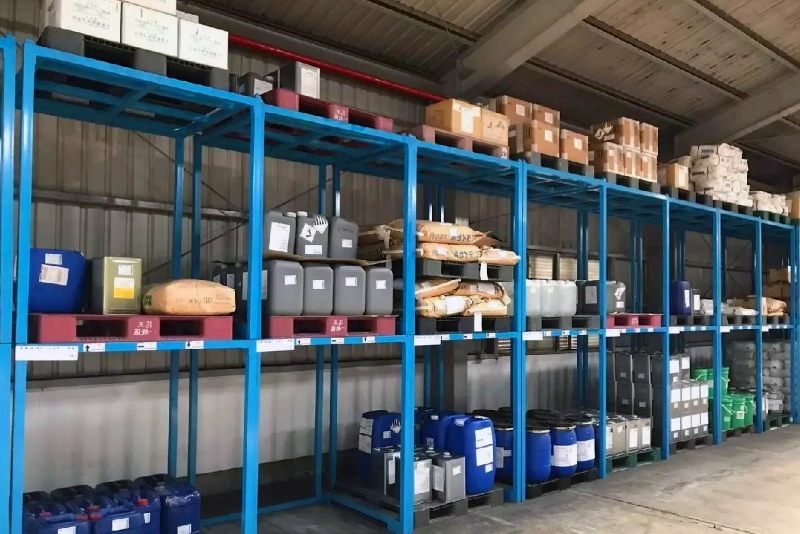
Why fixed beam racks become rigid
Fixed pallet racking works well when the layout is stable. If the SKU set, replenishment rhythm, and travel paths stay constant, anchoring the system can give a clean and highly repeatable flow. The problem appears when the warehouse has to absorb seasonal overflow, project cargo, or short-term buffer space. Once uprights are fixed, every aisle width, staging lane, and access path becomes part of a permanent geometry.
That is the main difference with Rerack. It gives you storage structure without forcing a permanent floor plan. You can place it close to receiving for fast put-away, move it toward dispatch when outbound waves grow, or open the center lane when forklift traffic becomes heavier. The layout decision stays with operations, not with anchor bolts.
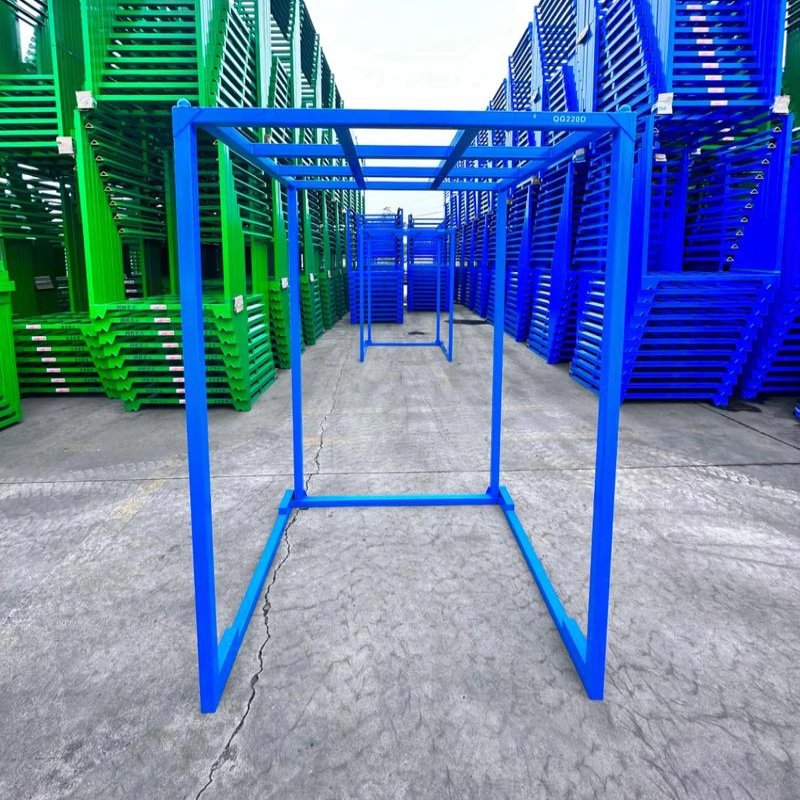
What Rerack changes in temporary warehouse planning
The value is not only that Rerack stands without floor anchoring. It is that the storage zone can be rebalanced as a system. During peak season, you can concentrate racks to create more vertical slots. During a slow period, you can spread them out to reduce congestion and improve access. If one area must act as a short-term buffer, the racks can be relocated instead of redesigning a fixed structure around that buffer.
That matters in leased buildings, overflow yards, project-based logistics, and plants that run different campaigns through the year. A temporary warehouse layout should preserve the option to change its mind. Rerack supports that with a modular frame, stackable form, and nested empty return behavior, so the equipment itself does not consume the same footprint when it is not carrying goods.
Where fixed racks still make more sense
Objectively, fixed beam racks are still the better choice when the operation is built around a stable long-term map. If the same products occupy the same lanes for months, if the building is already engineered for permanent storage, or if the process depends on a highly defined pick-face structure, fixed racking can be the right investment. It also makes sense when the layout will not be touched often and the business wants the highest level of repeatability in a single arrangement.
In other words, the question is not whether fixed racks are good. The question is whether the site needs permanence or flexibility. When the site needs flexibility, Rerack helps the warehouse stay open to change without wasting space on a rigid layout.
Best fit use cases for Rerack
- Seasonal inventory that needs fast re-slotting.
- Temporary warehouses and leased facilities where floor plans may change.
- Overflow storage that should not permanently consume circulation space.
- Staging areas that must support inbound and outbound peaks at different times.
- Operations that want to reduce empty-return footprint by nesting unused frames.
If your team is debating between fixed pallet racking and a stack-rack approach, start from the layout question. If the aisle geometry must stay the same, fixed racking can be appropriate. If the layout must move with the operation, Rerack gives you the freedom to replan the warehouse without rebuilding it.
Need a Custom Storage Solution?
Speak directly with our technical engineers. We offer free structural designs, heavy-duty catalog evaluations, and quick B2B price quotations.
Request a Quote Now →