
Stack ten layers of bags, boxes or tires on the floor and the load does not spread evenly. It lands on the bottom layer. In powder, feed and fermentation stock that bottom pressure turns free-flowing material into hard clumps, splits bag seams, and pulls humidity in through the damaged film. This article explains why floor stacking crushes the bottom — and how a demountable post pallet moves the load off the product.
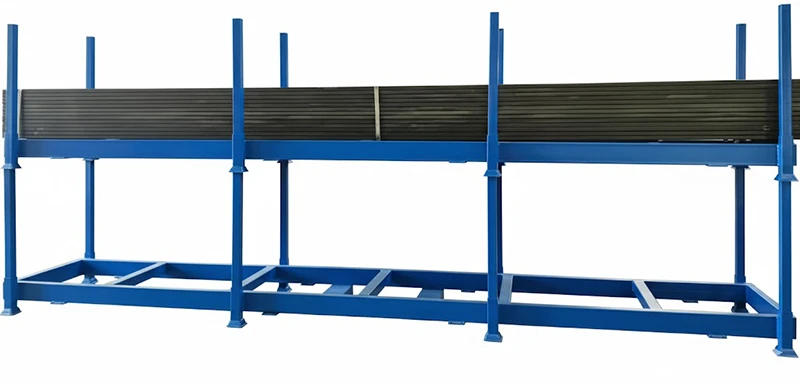
A demountable post pallet (also called a post pallet, portable stack rack, stillage or manurack) is a steel frame with removable posts. The load is carried by the posts and the base, not by the goods stacked inside. That single change removes the pressure that causes sintering, caking and crush damage.
Why Floor Stacking Crushes the Bottom Layer
When bags or boxes are floor-stacked, every layer above adds vertical pressure to the layer below. Ten layers means the bottom package carries roughly ten times its own weight. For bagged powder and feed this is where the trouble starts: the film seam stretches, micro-perforates, and moisture from the floor or the ambient air enters. Fine material compacts under that pressure and loses its free-flowing character — the start of caking and sintering.
The same mechanism damages rigid goods. Tire beads deform under stacked weight, pipes and profiles bow, and boxed components take a compression set. None of it shows on the top layers, so the loss is discovered only when the bottom of the stack is opened.
Sintering, Caking and the Humidity Trap
“Sintering” here means powder particles bonding under sustained pressure and mild heat or moisture, so they no longer pour. In feed, fermentation-additive and food plants this is a known failure mode: a damp floor, a pierced bag and a heavy stack are enough to turn a free-flowing ingredient into a solid mass that clogs augers and fails QC.
Floor stacks also create a “humidity trap”. The bottom of the pile sits in the coolest, dampest air with almost no airflow, while the surrounding bags block ventilation. That micro-climate is exactly where mould and microbial activity take hold. Open steel framing and a grid base keep air moving through the load and lift the product off the slab, so the trap does not form.
How Post Pallets Move the Load Off the Product
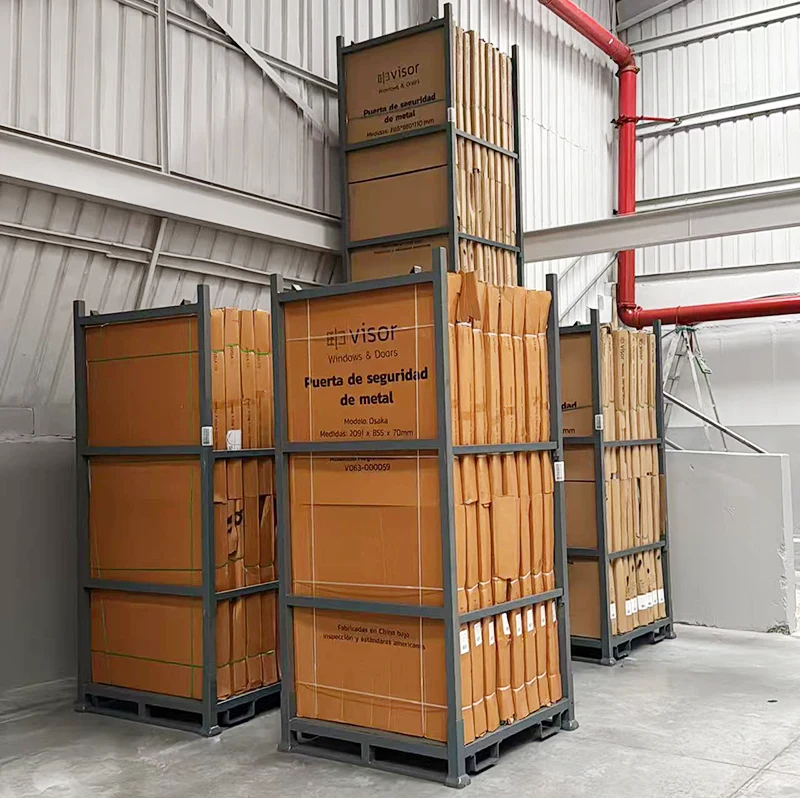
A post pallet separates “carrying the weight” from “being the weight”. The four (or six, or eight) posts and the welded base take the stack load and channel it to the floor. The bags, boxes or tires inside are supported, not compressed. The bottom-layer pressure that caused caking and seam failure simply disappears.
Because the frame is the structure, units stack 4–5 high on the same footprint and still keep each layer individually accessible. Loads stay off the damp floor, airflow passes through, and a forklift can move a whole loaded frame without restacking.
Who Pays for Floor-Stack Damage
- Feed, agriculture and bio-fermentation plants — powder caking, bag-seam failure and mould risk in damp stores.
- Tire warehouses and distributors — bead deformation and bowing under multi-layer stacking.
- Pipe, tube and profile mills — long items bending under their own span when floor-stacked.
- Cold stores and food lines — rust, mould and audit failures from damp wooden pallets and blocked airflow.
Floor Stacking vs Post Pallet: The Real Cost
Floor stacking looks free because there is no rack to buy. The hidden cost is the part you open last. Commonly cited industry experience points to a few recurring penalties:
| Cost factor | Floor stacking | Demountable post pallet |
|---|---|---|
| Bottom-layer cargo loss | Common (crush, caking, seam failure) | Removed by structural load transfer |
| Packaging reuse | Wooden pallets discarded ~every 1.5 yrs | Steel frame reused 20+ yrs |
| Space per footprint | Low, limited by crush risk | 4–5 levels on same area |
| Return / reverse logistics | N/A (single-use packaging) | Posts removed, frames nested; return load cut sharply |
| Humidity / mould risk | High at floor contact | Off-floor, open-frame airflow |
The figures above reflect commonly cited industry experience rather than a single measured project; actual numbers depend on the product, site and handling method. The point is that floor stacking trades a small saving in racking for a recurring loss in damaged goods, packaging and space.
When a Post Pallet Is — and Isn’t — the Right Tool
A post pallet pays off when goods are pressure-sensitive, need off-floor storage, or move in a closed loop where return freight matters. It is less suited to loose bulk that can be dumped, or one-way shipments where a cheap disposable base is genuinely cheaper. Matching post count and base size to the actual load (4, 6 or 8 posts for long items) is what makes the saving real.
For the product detail and load options, see our Demountable Post Pallet and the heavy-duty stack rack ranges.
Frequently Asked Questions
Will empty racks cost a fortune to return?
No. The posts are removable and the bases nest, so a single container carries a large number of empty frames. Return freight is typically a fraction of what single-use packaging would cost on the back haul.
Is the higher upfront cost worth it?
For pressure-sensitive or compliance-sensitive goods, the maths usually favours the frame: it removes recurring cargo loss, lasts decades, and recovers floor space. For truly disposable one-way loads it may not. The decision should be made on total cost over the loop, not on the first invoice.
Need a Custom Storage Solution?
Speak directly with our technical engineers. We offer free structural designs, heavy-duty catalog evaluations, and quick B2B price quotations.
Request a Quote Now →