
When transport teams compare a wooden crate with a metal motorcycle pallet, the first mistake is to look only at the purchase price. In real freight operations, the decision is broader: how many trips the package can survive, how much cube it consumes on the return leg, how much handling time it adds at the dock, and whether the packaging can be reused without turning into waste after one shipment.
For motorcycle programs, that difference matters even more. A wooden crate can still be the right answer for a one-way shipment that needs full enclosure and a simple single-use protective shell. But once the route becomes repetitive, the economics shift. A metal motorcycle pallet is built for circulation: it can be moved by forklift, stacked in the yard, used again and again, and treated as a transport asset rather than a disposable container.
One Shipment Protects the Product. Reuse Protects the Margin.
A wooden crate offers immediate protection. It can block impacts, shield the unit from contact, and give the shipper a familiar enclosed format. That is useful when the route is short, the cargo will not come back, and the customer prefers a single-use shell. The problem is that the crate stops creating value the moment the trip ends. It is often cut apart, discarded, or left to consume storage space before it is recycled.
Mtrack takes a different approach. Its heavy-duty structural steel frame is designed to keep working after the first trip. The palletized format supports mechanical handling, while the rigid framework grid matrix, wheel chock bracket, and tie-down strap hooks help keep the motorcycle stable during loading and transit. Instead of paying again for new packaging every cycle, transport teams keep the same carrier in rotation.
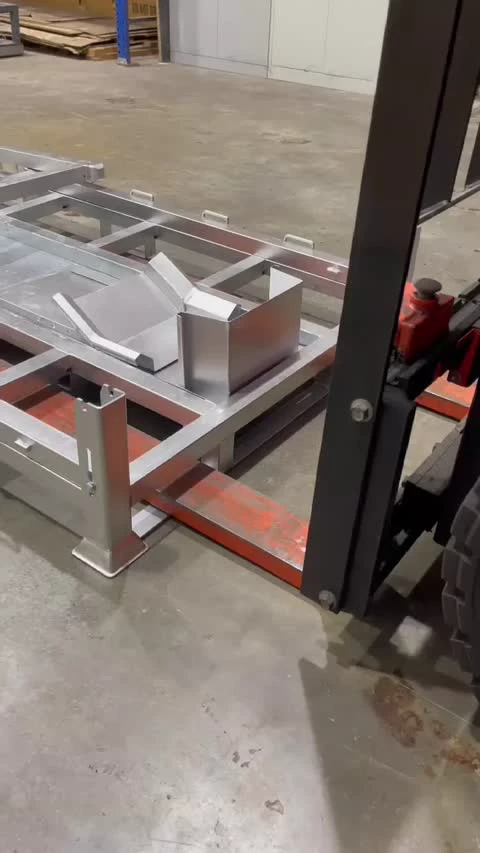
Container Space Is a Freight Cost, Not a Free Detail
For outbound shipping, container volume is as important as protection. A wooden crate usually travels as a fixed-volume box. Even when the route is cleanly one-way, that volume remains locked into the shipment. On the return side, empty wooden packaging is still bulky and awkward to recover. It does not collapse into a lean return stack, and it does not turn into an efficient reverse-logistics asset.
A metal motorcycle pallet helps solve that problem in two ways. First, it is easier to stack in the warehouse and in the container lane because the frame is designed as a palletized transport unit, not a loose box. Second, when the route is planned around repeated circulation, the same pallet can keep moving through the outbound, inbound, and storage cycle without becoming dead cube. For logistics coordinators, that is where the math changes: less empty packaging to ship back, less floor area to store, and fewer manual repacks at the dock.
This is why the conversation is rarely about “metal versus wood” in isolation. It is about whether the packaging is a consumable or a reusable transport system.
When a Wooden Crate Is Still Enough
There are cases where a wooden crate remains the practical choice. If the shipment is truly one-way, the destination will unpack and dispose of the packaging locally, and the protection requirement is focused on a single voyage, wood can be enough. It can also suit programs where the cargo geometry is irregular and the shipper wants a fully enclosed shell with no need to recover the container.
But once the route includes dealer replenishment, assembly-line dispatch, or export programs with repeated empty returns, the single-use model starts to cost more than it appears on the quote. That is the point where Mtrack becomes relevant. It is built for forklift loading and unloading, secure transport without transit damage, and motorcycle stacking storage. In other words, it is aimed at routes where protection is only one part of the business case.
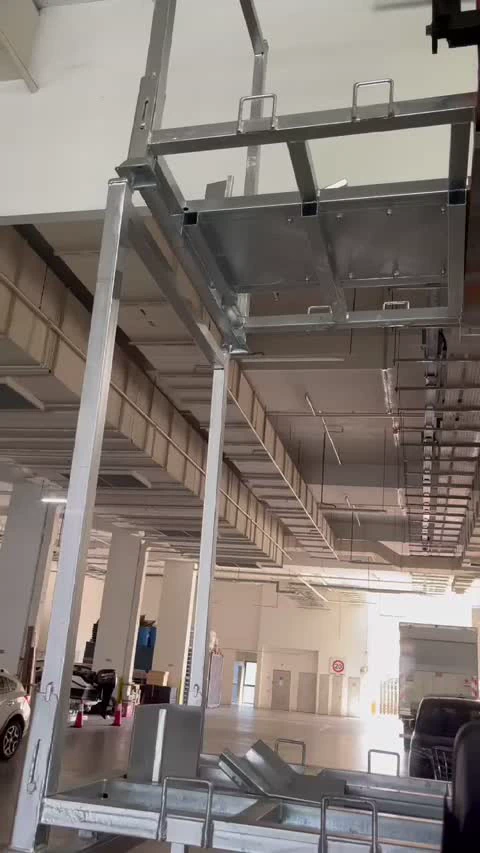
Where Mtrack Fits Best
- Dealer replenishment routes that repeat every week or month
- Export programs that need stable palletized handling and container packing discipline
- Warehouse storage where stacked motorcycle units must stay organized and easy to move
- Reverse logistics flows where empty return volume and handling labor must stay low
If the business needs a single-use shell, a wooden crate is still a valid option. If the business needs a reusable transport asset, the metal pallet model is where the cost starts to fall across the second, third, and tenth cycle. That is the real difference.
FAQ
Is a wooden crate wrong for motorcycle shipping?
No. For one-way protection, a wooden crate can be the simplest and most reasonable choice. The key question is whether the packaging is expected to leave the site only once or circulate through repeated trips.
Why do many transport teams move to a metal motorcycle pallet?
Because the freight equation changes when the same carrier is used again and again. Reuse, stacking, mechanical handling, and lower empty-return cost can outweigh the initial purchase price, especially on routes that run as a regular system rather than a single shipment.
Need a Custom Storage Solution?
Speak directly with our technical engineers. We offer free structural designs, heavy-duty catalog evaluations, and quick B2B price quotations.
Request a Quote Now →