
Invertiertes Rerack-Stapelgestell für Kühlräume ohne Wandbohrungen
Verwenden Sie ein invertiertes Rerack-Stapelgestell in einem Innenkühlraum, ohne die Dämmwand zu bohren. Erfahren Sie mehr über die verbundene Zwei-Gestell-Option, den projektbasierten 100-mm-Gabelstaplerabstand und die Grenzen der Pulverbeschichtung.
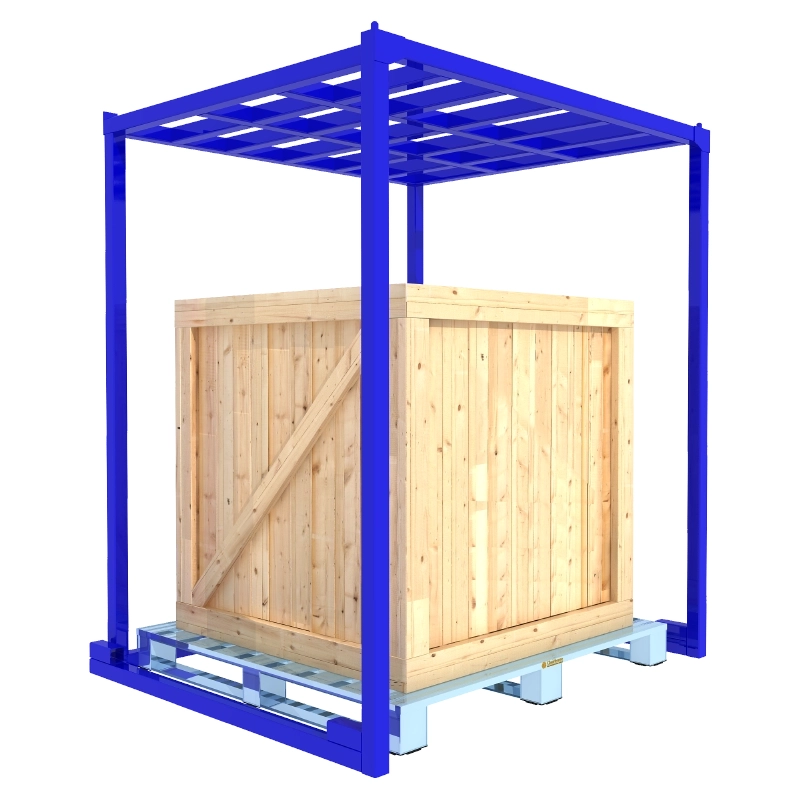
Store frozen goods without drilling the insulation wall
An inverted Rerack uses its steel frame and stacking geometry to create a freestanding storage position in the cold room. It is placed on the floor so the system can be installed without anchors through the insulated wall.
This is a cold room variant, not a universal standard size. The design is checked based on pallet dimensions, loaded height, forklift access, stacking height, and floor conditions. In project example 14306, the pallet was 1200 × 1200 mm, the loaded pallet height was 1700 mm, the reference load was 500 kg per pallet, and the room height was about 4 m for two-level storage. These figures are project values for design discussion, not a general specification for every Rerack.
- No wall drilling: The rack is a floor-standing storage rack and not a wall-mounted system, which protects the insulation envelope.
- Two-rack connection option: A connection pallet with tabs can connect two inverted racks into a wider, more stable group.
- Forklift-compatible clearance: A nesting clearance of 100 mm is a project reference value for fork thickness; it must be checked against the actual vehicle.
- Surface for indoor cold rooms: Electrostatic powder coating is a cost-effective surface for enclosed cold storage; it is not a maintenance-free specification for outdoor use with rain exposure.
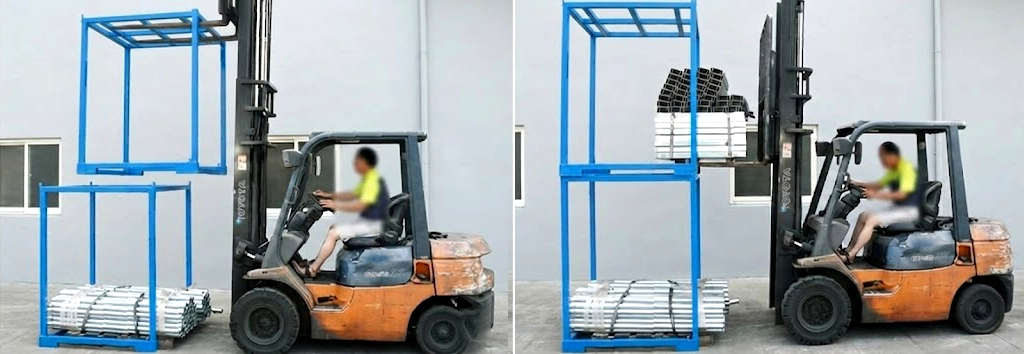
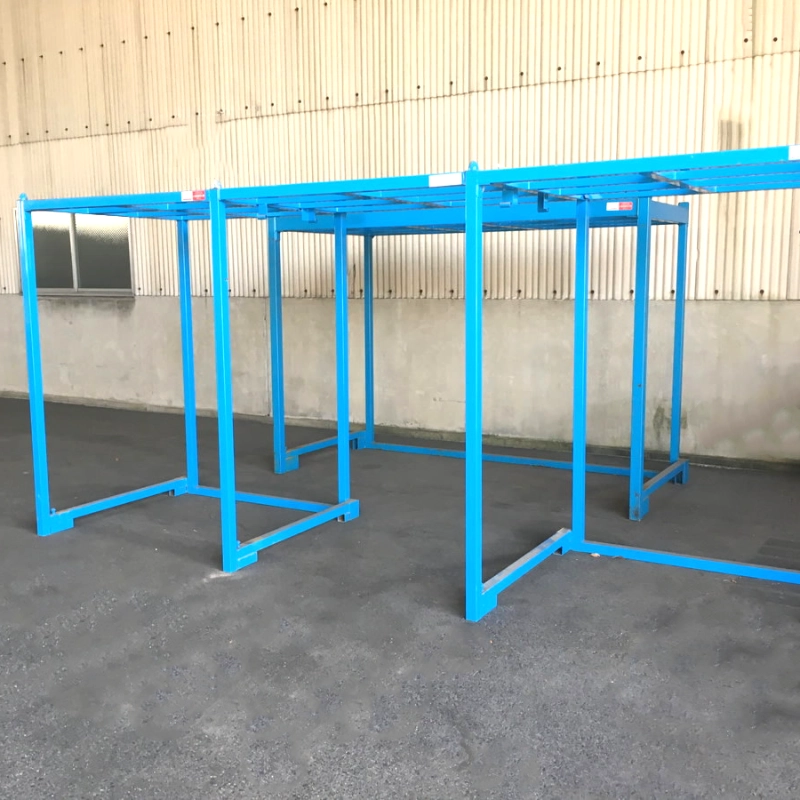
Compare cold room options before specification
INVERTED RERACK
Freestanding cold room stacking
Use the inverted steel stacking rack when you need vertical pallet storage without drilling into an insulated wall and the arrangement should remain floor-based and changeable.
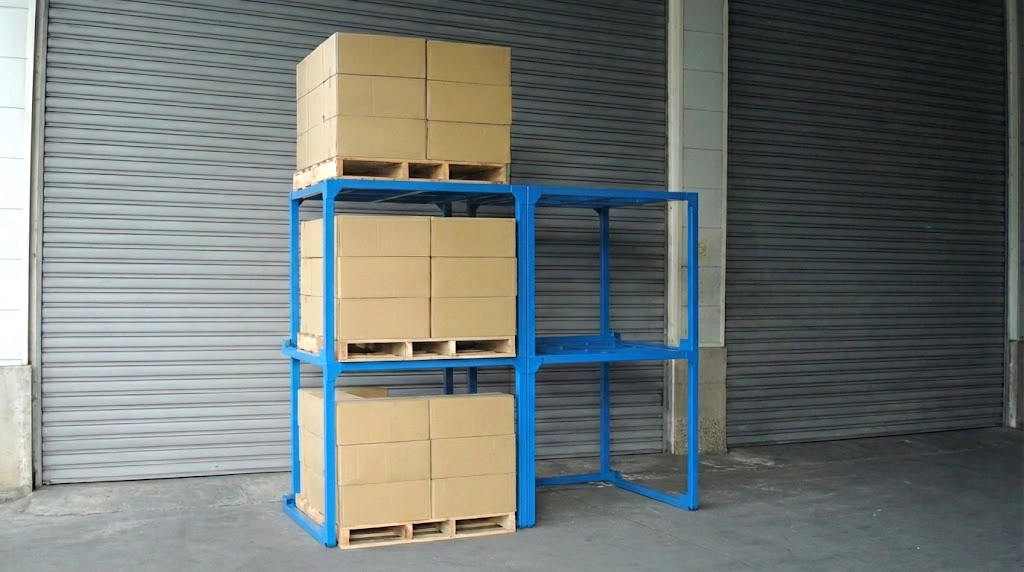
CONNECTED PAIR
Two racks connected by tabs of the connection pallet
Where a wider, more stable group makes sense, the connection pallet sits between two racks and its tabs engage with the rack structure. This can add stability without specifying a heavier individual frame for each position.
 ALTERNATIVE REVIEW
If another rack logic might fit better
Choose a fixed pallet racking system when the arrangement is permanent and the building can accommodate a structural anchoring plan. Consider demountable post pallets when disassembling the posts, reusable bases, or a different handling process are more important.
Protect the room envelope while using vertical capacity
Floor-standing, not wall-mounted
The inverted Rerack transfers the stacking load to the floor through its steel frame. That is why the concept does not require drilling into the insulation wall. The floor, rack spacing, stacking height, and operating clearances must still be confirmed on site.
The connection pallet controls the setup
In project 14306, a connection pallet with tabs connected two racks. The paired arrangement uses a connecting element to improve group stability and can control costs compared with an unnecessarily heavier design for each rack. The exact tab engagement and load path must match the approved drawing.
100 mm is a handling reference
The empty nesting clearance of 100 mm is intended to account for forklift fork thickness in project planning. It is not a universal clearance dimension. Fork thickness, entry direction, nesting sequence, and safe lifting procedure must be confirmed before production.
Powder coating is suitable for indoor use
For an indoor cold room that does not expose the rack to rain, electrostatic powder coating is the specified cost-effective surface option. Long-term rain exposure can allow water to enter the tubular profiles and cause internal corrosion, so this configuration should not be presented as a maintenance-free outdoor rack.
Specify the rack according to how your room operates
Record pallet and load
Send pallet length and width, total loaded height, unit weight, the position of the pallet support legs, and the number of storage levels.
Check room and floor
Confirm the clear height, door path, floor condition, aisle width, positions of the insulation walls, and whether the racks remain in the cold room.
Choose the connection logic
Compare single inverted racks with two-rack groups using a connection pallet and tabs. The choice depends on stability, layout, and cost—not on a universal standard accessory.
Approve handling and surface
Check the forklift fork thickness against the nesting clearance, define the stacking sequence, and confirm that the electrostatic powder coating is suitable for the enclosed indoor environment.
Answers before you use stacking racks in a freezer room
Can an inverted Rerack be used without drilling into the insulation wall?
Ja, sofern der Standortboden und die Betriebsbedingungen eine bodenstehende Ausführung ermöglichen. Das Gestell wird nicht durch die Isolierwand verankert. Es erfordert dennoch eine Projektprüfung der Bodentragfähigkeit, der Gestellgeometrie, der Freiräume, der Stapelhöhe und des Gabelstaplerbetriebs.
Wie verbinden die Verbindungspalette und die Laschen zwei Gestelle?
Im Referenzprojekt 14306 wird die grüne Verbindungspalette zwischen zwei invertierten Gestellen positioniert und enthält Laschen, die in die Gestellstrukturen eingreifen. Dies ergibt ein verbundenes Paar, das die Gesamtstabilität verbessert, ohne dass automatisch ein schwereres Gestell an jeder Position erforderlich ist. Das endgültige Verbindungsdetail ist der genehmigten Projektzeichnung zu entnehmen.
Ist der leere Abstand von 100 mm Standard für jedes Stapelgestell?
Nein. Es handelt sich um einen Projektbezugswert, der die Gabelstapler-Gabelstärke und die gewählte Verschachtelungsanordnung berücksichtigt. Ihre Gabelmaße, die Einfahrrichtung und der sichere Freiraum müssen bestätigt werden, bevor das Gestell für die Produktion freigegeben wird.
Reicht die elektrostatische Pulverbeschichtung in einem Kühlraum aus?
Für die im Projekt 14306 beschriebene Verwendung im geschlossenen Innenraum-Kühlraum wurde die elektrostatische Pulverbeschichtung als wirtschaftlichere Oberflächenvariante gewählt. Das macht das Gestell jedoch nicht geeignet für dauerhafte Regeneinwirkung, Waschvorgänge oder Außenbereichseinsatz. Für diese Bedingungen ist eine separate Oberflächenbehandlungsprüfung erforderlich.
Bedeutet die Last 14306, dass jedes Rerack 500 kg trägt?
Nein. Die Palette 1200 × 1200 mm, die Referenzlast 500 kg, die beladene Höhe 1700 mm und die Zweiebenenanordnung sind Projektwerte. Rerack wird auf Basis der tatsächlichen Palette, Last, Stapelebene und Handhabungsbedingungen ausgelegt; sie dürfen nicht als universelle Tragfähigkeit verwendet werden.
Wann ist dieses Kühlraum-Rerack nicht die richtige Wahl?
It may not be suitable if the rack must remain outdoors, is exposed to long-term rain or cleaning water, uses a permanently fixed building structure, or supports a handling process that conflicts with its stacking and forklift clearances. A fixed pallet rack or a demountable post-pallet construction may be more appropriate after a comparison.
Discover the Rerack stacking rack overview · Read cold room case study 14306 · Read the cold room stacking rack guide
B2B-Regalsystem Tragwerksberechnung
Geben Sie Ihre strukturellen Richtlinien unten ein. Unser Berechnungssystem ermittelt Materialdurchbiegung, Spannungsgrenzen und empfiehlt optimale Profile.
Klicken Sie auf Berechnen, um Spannungsfaktoren zu ermitteln und Empfehlungen für Strukturzeichnungen anzuzeigen.