
Omgekeerd Rerack-stapelrek voor koelruimtes zonder wandboring
Gebruik een omgekeerd Rerack-stapelrek in een binnenkoelruimte zonder in de isolatiewand te boren. Leer over de gekoppelde twee-rekkenoptie, de projectgebonden 100 mm heftruckvrijheid en de beperkingen van poedercoating.
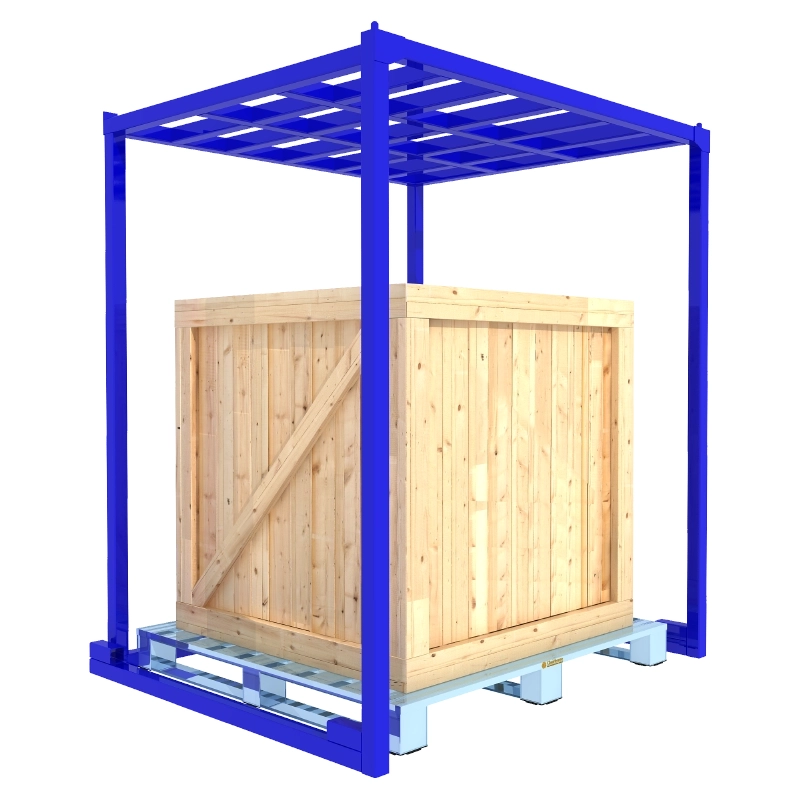
Store frozen products without drilling the insulation wall
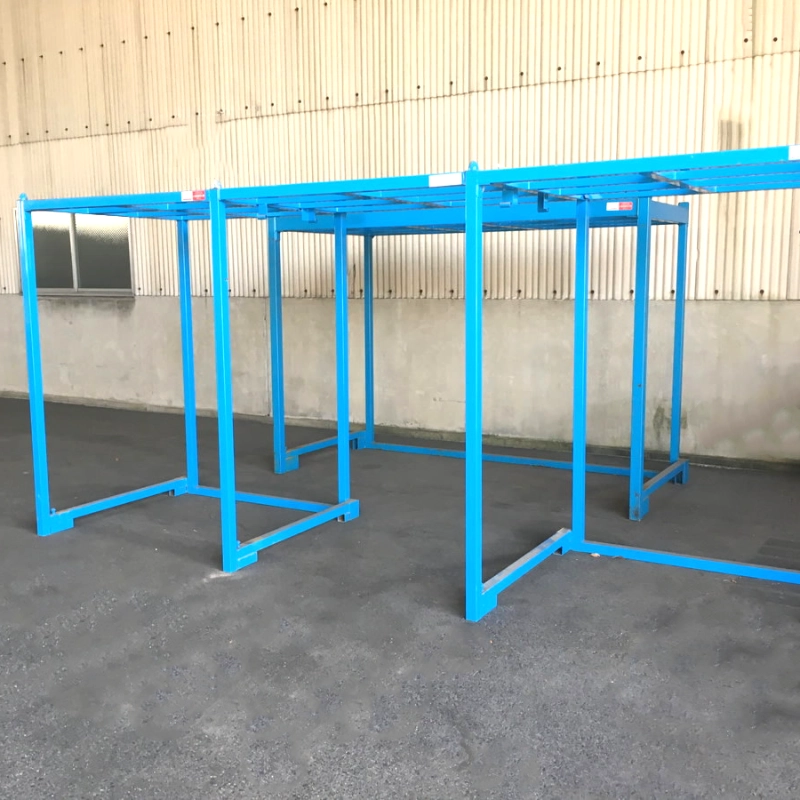
Een omgekeerd Rerack gebruikt zijn stalen frame en stapelgeometrie om een vrijstaande opslagpositie in de koelruimte te creëren. Hij wordt op de vloer geplaatst, zodat de indeling kan worden geïnstalleerd zonder ankers door de geïsoleerde wand.
This is a cold room variant, not a universal SKU with fixed dimensions. The design is checked against the pallet top surface, loaded height, forklift access, stacking height and floor conditions. In project reference 14306, the pallet was 1200 × 1200 mm, the loaded pallet height 1700 mm, the reference load 500 kg per pallet and the room height approximately 4 m for two-level storage. These figures are project values for design discussion, not a general classification for every Rerack.
- No wall drilling: the rack is a free-standing storage frame instead of a wall-mounted system, which helps protect the insulation.
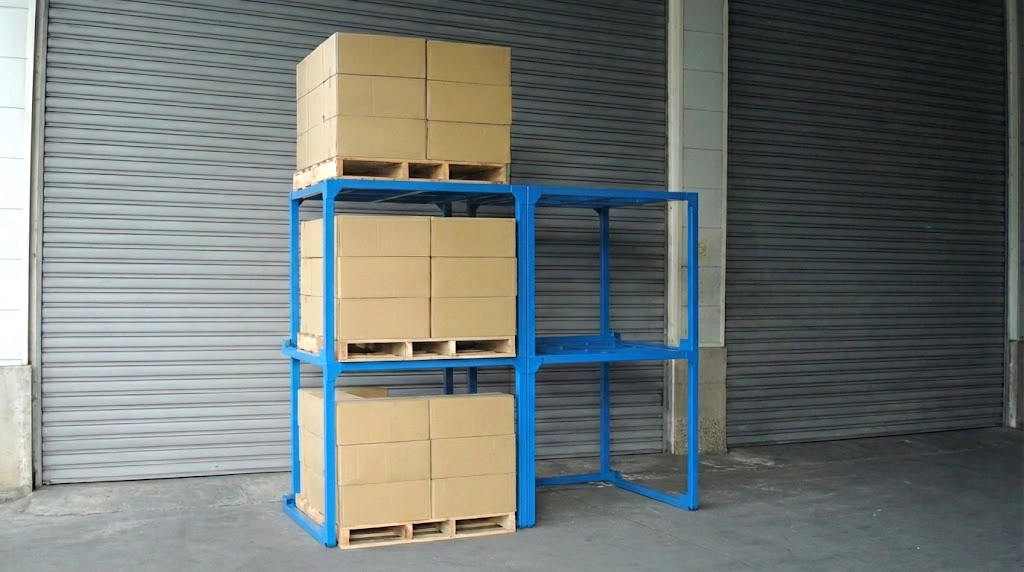
- Option for coupling two racks: a connecting pallet with lips can couple two reverse racks into one wider, more stable group.
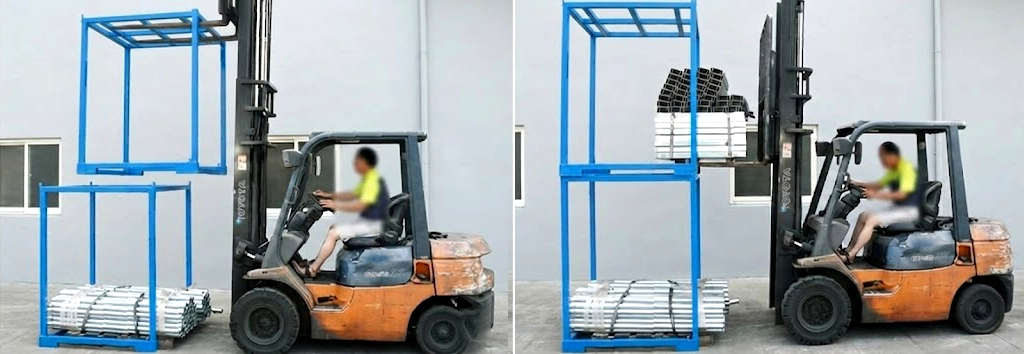
- Forklift-compatible empty space: a nesting space of 100 mm is a project reference for accommodating fork thickness; this must be checked against the actual truck.
- Finish for indoor cold rooms: electrostatic powder coating is a cost-conscious finish for enclosed cold storage; it is not a maintenance-free specification for outdoor exposure to rain.
Compare the cold room options before specifying
REVERSE RERACK
Free-standing stacking in cold rooms
Use the reverse steel stacking rack when you need vertical pallet storage without drilling into an insulated wall and want the layout to remain floor-based and adaptable.
COUPLED PAIR
Two racks coupled by connecting pallet lips
Where a wider, more stable group is useful, the connecting pallet sits between two racks and the lips engage in the rack structure. This can add stability without specifying a heavier freestanding frame for every position.
 ALTERNATIVE ASSESSMENT
When a different rack logic fits better
Choose a fixed pallet racking system when the layout is permanent and the building can accept a structural anchoring plan. Consider demountable post pallets when dismantling the posts, reusable bases, or a different handling workflow is more important.
Protect the room envelope while utilizing vertical capacity
Freestanding on the floor, not attached to the wall
De omgekeerde Rerack brengt de opslagbelasting via het stalen frame over op de vloer. Daarom vereist het concept geen boren in de isolatiewand. De vloer, rekaafstand, stapelhoogte en bedieningsvrijheden moeten nog steeds ter plaatse worden bevestigd.
Connecting pallet determines the build-up
In project 14306, a connecting pallet with lips connected two racks. The coupled system uses a connecting element to improve group stability and can control costs compared to unnecessarily making each rack heavier. The exact lip connection and force path must follow the approved drawing.
100 mm is a handling reference
The empty nesting clearance of 100 mm is intended to accommodate the fork thickness of a forklift in a project design. It is not a universal clearance height. Confirm the fork thickness, entry direction, nesting sequence, and the safe lifting method before production.
Powder coating is suitable for use in enclosed spaces
For an indoor cold room that does not expose the rack to rain, electrostatic powder coating is the stated cost-conscious surface treatment. Prolonged rain exposure can allow water to enter the tube profiles and cause internal corrosion, so this configuration must not be presented as a maintenance-free outdoor rack.
Specify the rack around the way your space functions
Map the pallet and load
Send the pallet length and width, the total loaded height, the weight per unit, the position of the pallet support feet, and the number of storage levels.
Check the space and the floor
Confirm the clear height, the door path, the floor condition, the aisle width, the locations of the insulation walls, and whether the racks remain within the cold room.
Choose the connection logic
Compare some inverted racks with rack pairs that use a connection pallet and lips. The choice depends on stability, layout, and cost—not on a universal standard accessory.
Approve handling and finishing
Verify the forklift fork thickness against the nesting clearance, define the stacking sequence, and confirm that electrostatic powder coating is suitable for the enclosed indoor environment.
Answers before placing stack racks in a freezer room
Can an inverted Rerack be used without drilling into the insulation wall?
Yes, where the floor and the on-site operating conditions support a freestanding design. The rack is not anchored by the insulated wall. It still requires a project review of floor load capacity, rack geometry, clearances, stacking height, and forklift operation.
How do the connection pallet and lips connect two racks?
In reference project 14306, the green connecting pallet is placed between two inverted racks and contains lips that engage into the rack structures. This creates a coupled pair that improves overall stability and avoids the automatic need for a heavier rack at every position. The final connection detail must be taken from the approved project drawing.
Is the 100 mm empty clearance standard for every stack rack?
No. It is a project reference used to accommodate the forklift fork thickness and the selected nesting arrangement. Your fork dimensions, entry direction, and safe clearance height must be confirmed before the rack is released for production.
Is electrostatic powder coating sufficient in a cold room?
For the described use in an enclosed indoor cold room in project 14306, electrostatic powder coating was selected as the more economical finish. This does not make the rack suitable for continuous rain, washing, or outdoor exposure. Those conditions require a separate surface treatment assessment.
Does the loading of 14306 mean that each Rerack carries 500 kg?
No. The 1200 × 1200 mm pallet, the 500 kg reference load, the 1700 mm loaded height, and the two-level arrangement are project values. Rerack is designed around the actual pallet, load, stacking level, and handling conditions; these must not be reused as a universal classification.
When is this cold room Rerack not the right choice?
It may not be suitable if the rack must remain outdoors, is exposed to rain or cleaning for long periods, requires a permanently fixed building layout, or supports a handling process that conflicts with the stacking and forklift clearances. A fixed pallet rack or a demountable post-pallet design may be more suitable after comparison.
Discover the Rerack stack rack overview · Read the cold room case 14306 · Read the cold room stack rack guide
B2B Racking Structurele Engineering Calculator
Voer hieronder uw structurele richtlijnen in. Ons rekensysteem berekent materiaaldoorbuiging, spanningsgrenzen en adviseert optimale profielen.
Klik op Berekenen om spanningsfactoren te berekenen en aanbevelingen voor structurele tekeningen weer te geven.