
Rerack Invertido – Porta-paletes para Câmaras Frias Sem Furação na Parede
Use um porta-paletes empilhável Rerack invertido numa câmara fria interior sem furar a parede de isolamento. Conheça a opção de dois racks conectados, o vão de 100 mm para empilhadeira baseado em projeto e os limites da pintura eletrostática a pó.
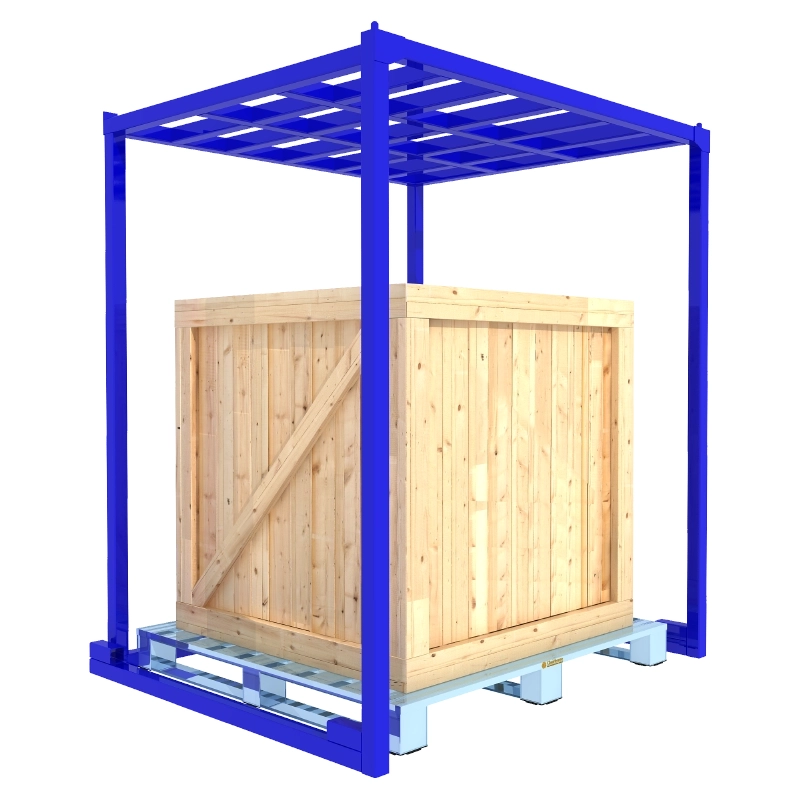
Armazene produtos congelados sem furar a parede de isolamento
Um Rerack invertido utiliza sua armação de aço e geometria de empilhamento para criar uma posição de armazenamento autoportante dentro da câmara fria. Ele é apoiado sobre o piso, de modo que o layout pode ser instalado sem chumbadores atravessando a parede isolada.
Esta é uma variante para câmara fria, não um SKU universal de dimensões fixas. O projeto é verificado conforme o footprint do palete, a altura carregada, a entrada da empilhadeira, a altura de empilhamento e as condições do piso. Na referência do projeto 14306, o palete era de 1200 × 1200 mm, a altura do palete carregado era de 1700 mm, a carga de referência era de 500 kg por palete, e o pé-direito da câmara era de aproximadamente 4 m para armazenamento em dois níveis. Esses valores são parâmetros de projeto para discussão de engenharia, não uma especificação geral válida para todo Rerack.
- Sem furação na parede: o porta-paletes é uma estrutura de armazenamento autoportante, e não um sistema fixado à parede, ajudando a preservar o envelope de isolamento.
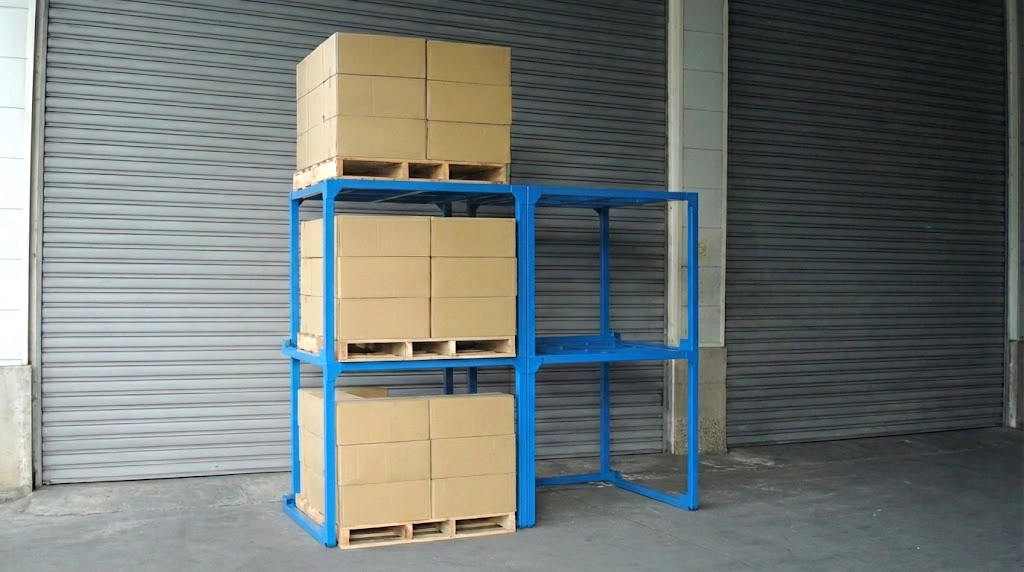
- Opção de conexão entre dois racks: um palete de conexão com abas pode unir dois racks invertidos em um conjunto mais largo e mais estável.
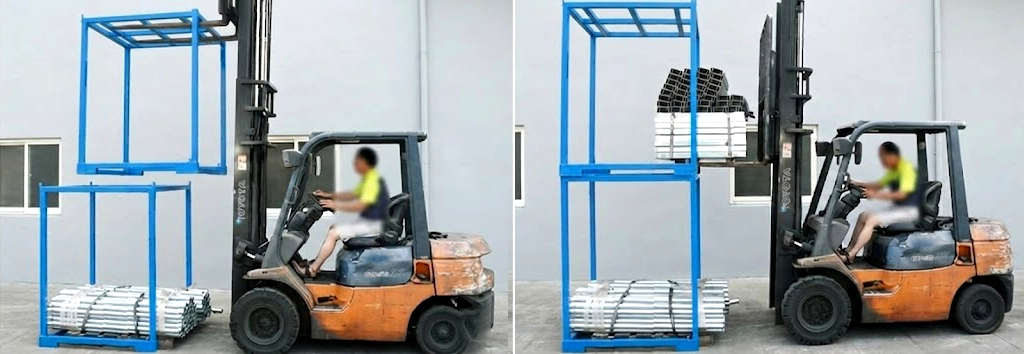
- Vão compatível com empilhadeira: o vão de encaixe de 100 mm é uma referência de projeto para acomodar a espessura do garfo; deve ser conferido conforme o equipamento real utilizado.
- Acabamento para câmara fria interna: a pintura eletrostática a pó é um acabamento econômico para armazenagem refrigerada em ambiente fechado; não é uma especificação livre de manutenção para uso externo exposto à chuva.
Compare as opções para câmara fria antes de especificar
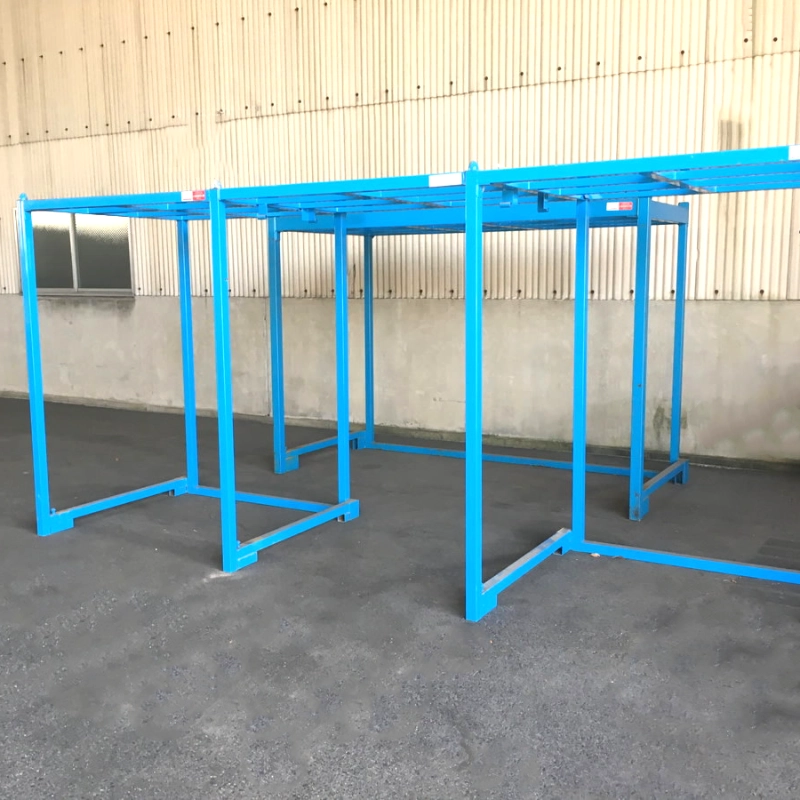
RERACK INVERTIDO
Empilhamento autoportante em câmara fria
Use the inverted steel stackable pallet rack when you need vertical pallet storage without drilling into the insulated wall and want to keep the layout floor-supported and modifiable.
CONNECTED PAIR
Two racks joined by a connection pallet with tabs
When a wider and more stable assembly is desirable, the connection pallet sits between two racks and its tabs fit into the rack frames. This can increase stability without requiring a more robust independent structure for each position.
 ALTERNATIVE REVIEW
When another rack logic may be more suitable
Choose a fixed pallet rack system when the layout is permanent and the building accepts a dimensioned anchoring plan. Consider pallets with removable posts when disassembling the posts, reusable bases, or a different operating flow are more relevant.
Protect the cold room enclosure while using vertical capacity
Floor-standing, not wall-mounted
The inverted Rerack transfers the storage load through its steel structure to the floor. That is why the concept does not require drilling into the insulation wall. The floor, rack spacing, stacking height, and operating clearances still need on-site confirmation.
The connection pallet controls the assembly
In project 14306, a connection pallet with ears joined two racks. The paired arrangement uses a connection component to improve the stability of the assembly and can control cost compared with making each rack unnecessarily heavier. The exact fit of the ears and the load path must follow the approved drawing.
100 mm is a handling reference
The 100 mm empty nesting clearance is intended to accommodate the thickness of forklift forks in one design. It is not a universal clear opening. Confirm fork thickness, entry direction, nesting order, and the safe lifting method before production.
Electrostatic powder coating is suitable for indoor use
For an indoor cold room that does not expose the rack to rain, electrostatic powder coating is the indicated economical finishing route. Prolonged rain exposure can allow water to enter tubular sections and cause internal corrosion, so this configuration must not be presented as a maintenance-free outdoor rack.
Specify the rack according to how your cold room operates
Map the pallet and load
Send the pallet length and width, the total loaded height, the unit weight, the position of the pallet support feet, and the number of storage levels.
Check the room and the floor
Confirm the clear height, door path, floor conditions, aisle width, insulation wall locations, and whether the racks remain inside the cold room.
Choose the connection logic
Compare individual inverted racks with groups of two racks using a connection pallet and ears. The choice depends on stability, layout, and cost — not on a universal standard accessory.
Approve handling and finishing
Check the forklift fork thickness against the nesting clearance, define the stacking sequence, and confirm whether electrostatic powder coating is suitable for the closed indoor environment.
Respostas antes de colocar racks de empilhamento numa câmara de congelação
Um Rerack invertido pode ser usado sem perfurar a parede de isolamento?
Yes, when the floor of the site and the operating conditions support a self-supporting design. The rack is not anchored through the insulated wall. It still requires a verification of the floor capacity design, rack geometry, clear spans, stacking height, and forklift operation.
How do the connecting pallet and the ears join two racks?
In reference 14306, the green connecting pallet is positioned between two inverted racks and includes ears that engage the rack structures. This creates a connected pair, improving overall stability and avoiding the automatic need for a heavier rack at each position. The final connection detail must be taken from the approved project drawing.
Is the 100 mm empty clearance standard for each stacking rack?
No. It is a design reference used to accommodate the thickness of the forklift forks and the selected nesting arrangement. The fork dimensions, entry direction, and safe clearance must be confirmed before the rack is released for production.
Is powder coating sufficient in a cold room?
For the indoor closed cold room use described in project 14306, powder coating was selected as the most economical finish. This does not make the rack suitable for continuous exposure to rain, washing, or outdoors. Those conditions require a separate surface treatment review.
Does the 14306 load mean that each Rerack supports 500 kg?
No. The 1200 × 1200 mm pallet, the 500 kg reference load, the 1700 mm loaded height, and the two-level arrangement are design values. The Rerack is designed around the actual pallet, load, stacking level, and handling conditions; these must not be reused as a universal rating.
When is this cold room Rerack not the right choice?
It may not be suitable if the rack has to remain outdoors, face long-duration rain or washing, use a permanently fixed construction layout, or support a handling process that conflicts with its stacking and forklift clearances. A fixed pallet rack or a design with a removable post pallet may be more appropriate after comparison.
Explore the Rerack stacking rack overview · Read cold room case 14306 · Read the stacking rack guide for cold rooms
Calculadora de Engenharia Estrutural para Racking B2B
Insira suas diretrizes estruturais abaixo. Nosso sistema matemático calcula a deflexão do material, os limites de tensão e recomenda perfis ideais.
Clique em Calcular para computar os fatores de tensão e exibir as recomendações de desenho estrutural.