
How Do I Stop 6 m PVC Pipes from Bending (Banana-ing) in a Stack Rack?
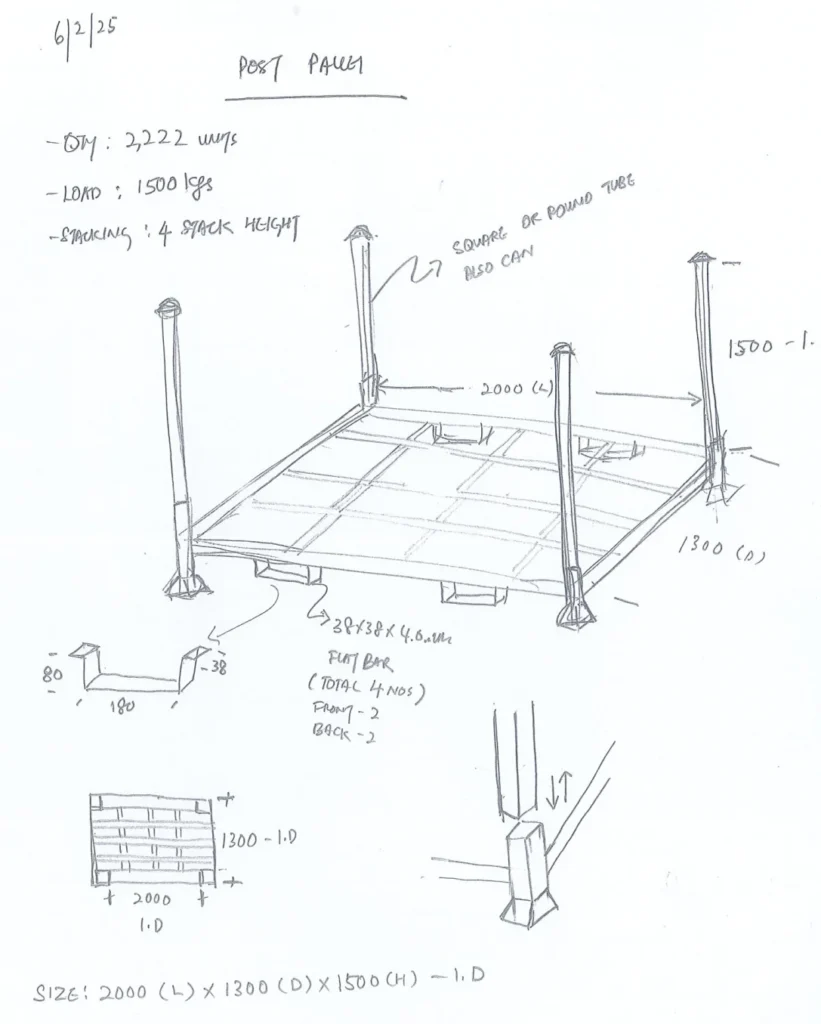
Stop 6 m Pipes from Banana-ing — Add Mid Columns, Cut the Span
A demountable post pallet with 6 or 8 columns puts mid-supports along the long side, so 6 m PVC, PE and aluminium profiles stay straight instead of bowing under their own weight.
Long pipes stored on a simple frame sag in the middle. The cause is the free span: with only corner columns, the pipe bridges the full base length and bends under self-weight — and PVC or PE keeps creeping long after the load is set down. Derack breaks that long span with extra columns, turning one flexible run into a series of short, stiff bays. The frame carries the load; the pipe just rests, straight.
- 6- or 8-column long-side layout shortens the free span and kills mid-span deflection
- 1100–1140 mm outer width for double-row 40 ft container loading
- Forklift handles the whole rack — no bolts, no floor fixing, no on-site assembly
- Hot-dip galvanised frame for damp, cold-store and outdoor yards
Column Count Is a Configuration, Not a Fixed Model
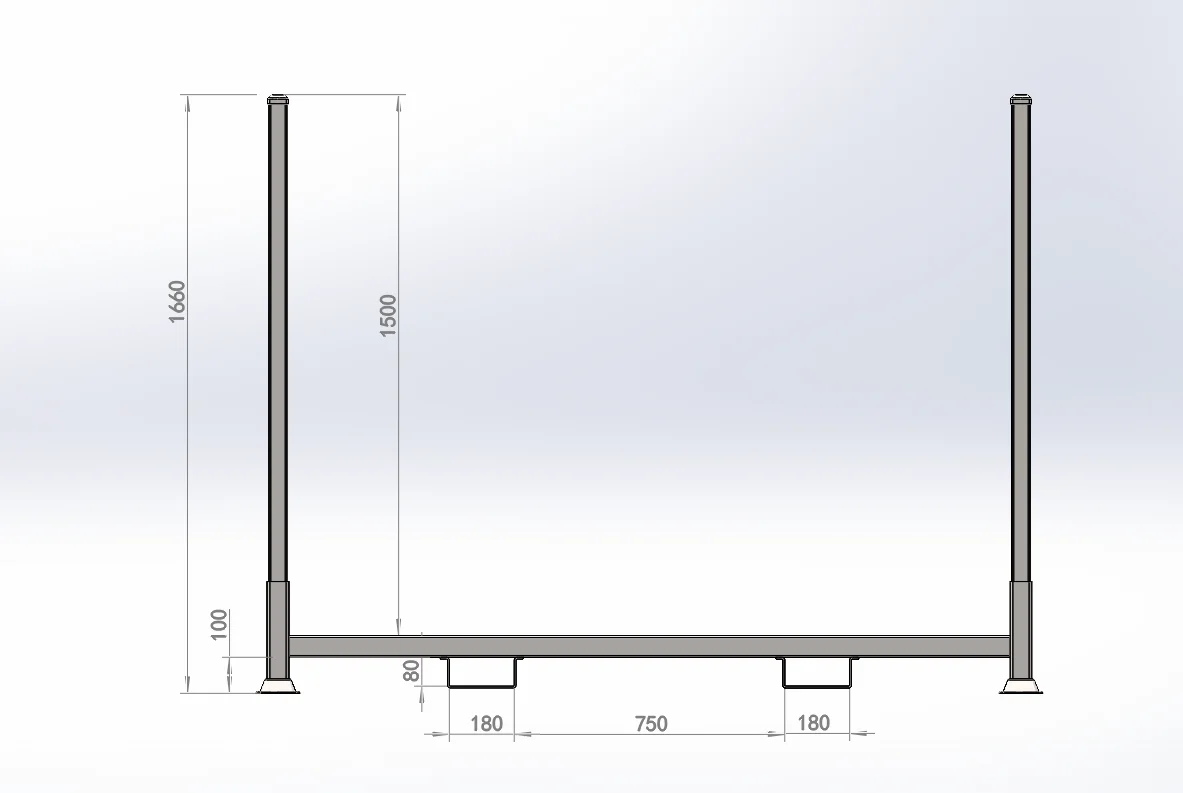
Short / stiff members
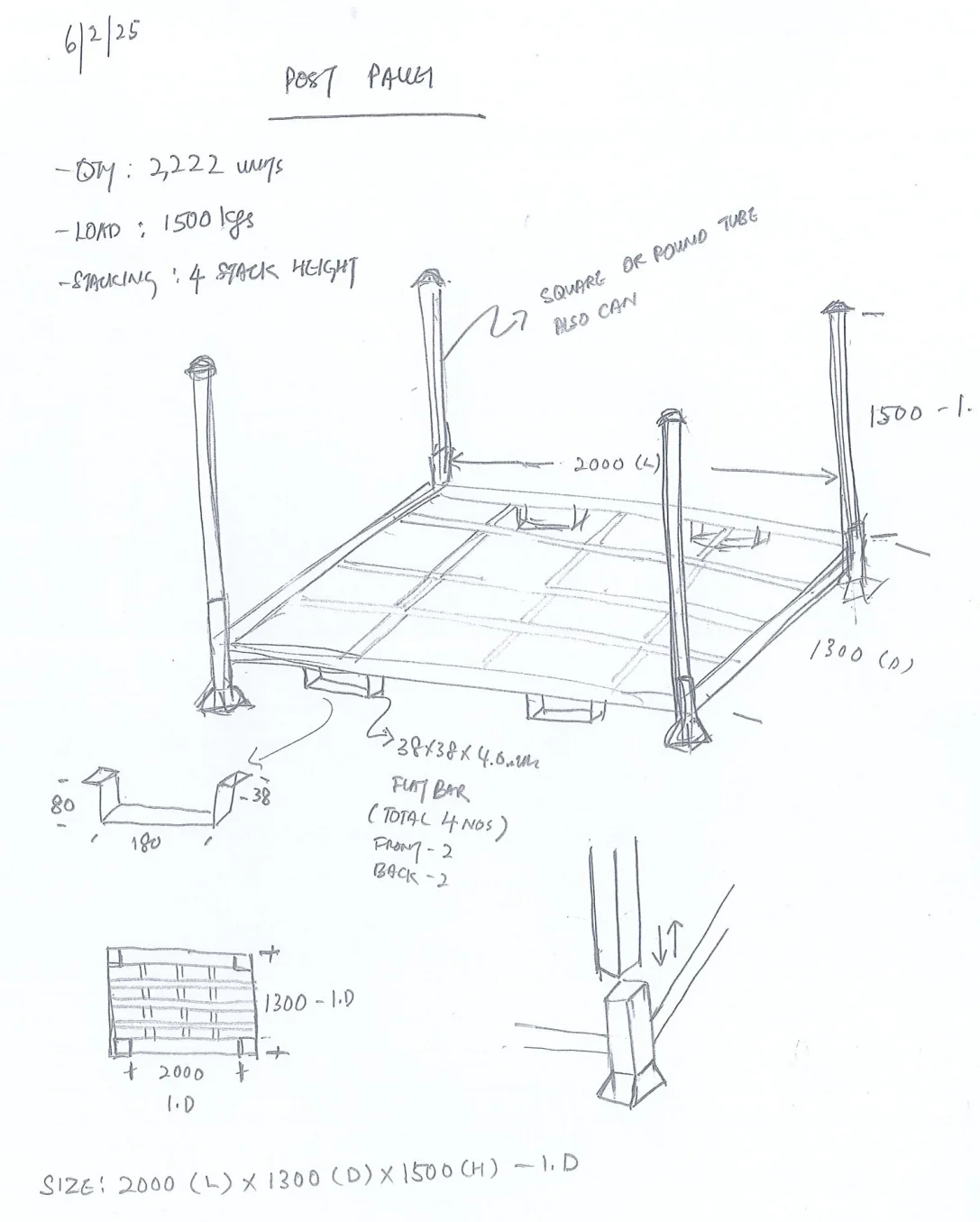
4-Column Base Rack
Best when the member is short or naturally stiff (e.g. cut lengths up to roughly 3 m, or heavy-wall tube). Corner columns only — not for long, thin PVC runs.
Free span: full base length
Use: short / stiff members
6 m class
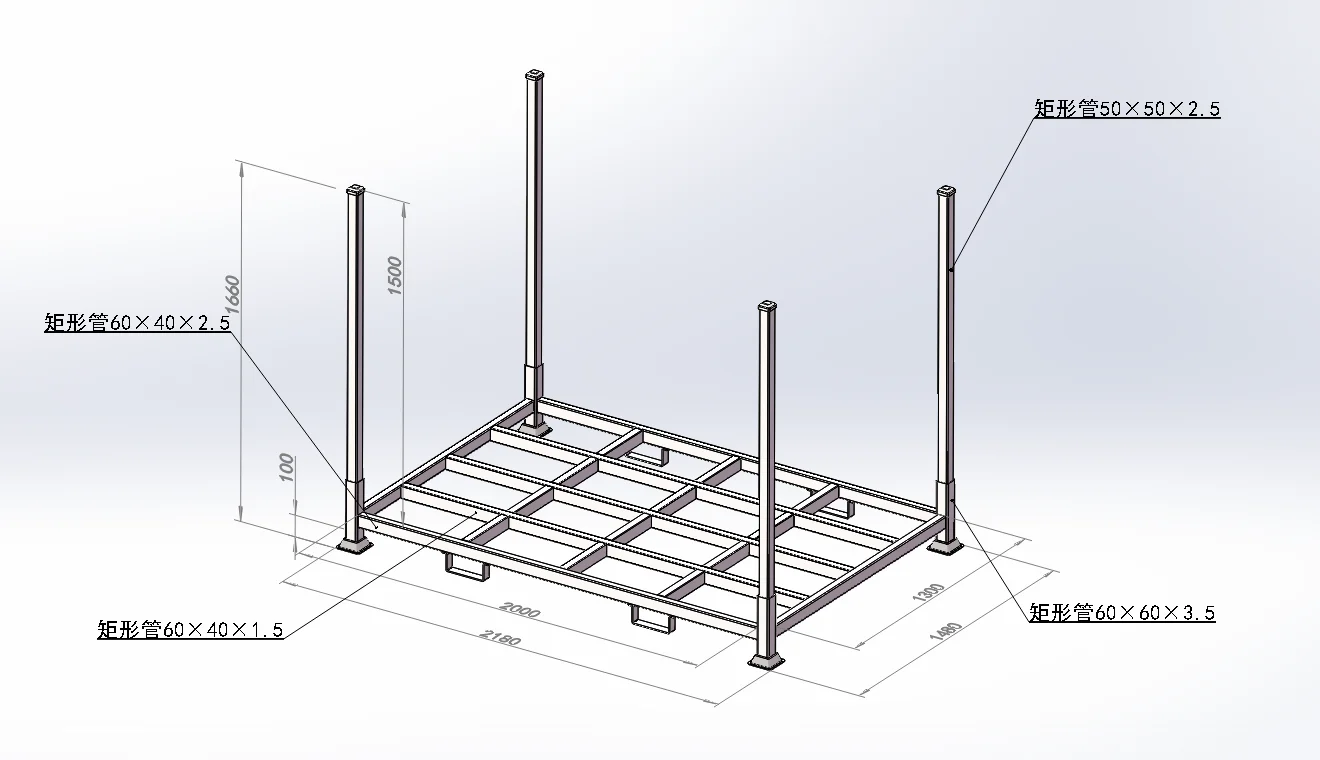
6-Column Long-Pipe Rack
Standard for 6 m PVC/PE and light profiles. Two mid columns on the long side roughly halve the free span. Configured to your pipe length, outside diameter and single weight.
Free span: ~base ÷ 3
Use: 6 m class PVC / PE / AL
8–12 m class
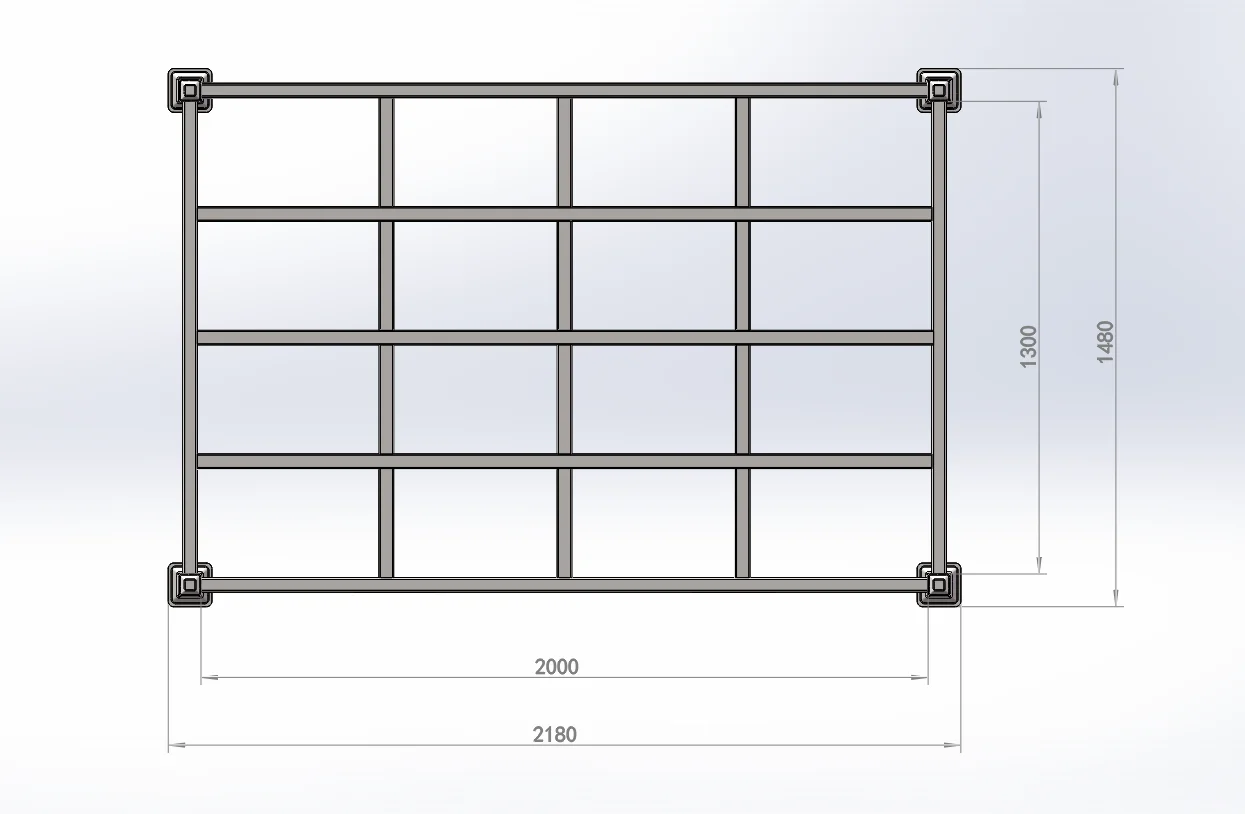
8-Column Heavy / Long Rack
For 8–12 m runs or flexible, low-stiffness profiles. More mid supports keep deflection within spec. The layout is confirmed by project engineering — never assumed.
Free span: short bays
Use: 8–12 m / flexible profiles
Four Reasons Long Pipes Stop Bowing
No more banana-ing
Mid columns turn one long flexible run into short, stiff bays. Beam deflection drops with the fourth power of the span, so a 6-column layout keeps pipes visibly straight.
Creep-proof for PVC / PE
The frame carries the weight; the pipe no longer self-supports across a gap. That removes the slow, permanent sag PVC and PE develop under sustained load.
Container-ready width
An outer width of 1100–1140 mm is the range used for double-row loading in a 40 ft high-cube container. Forklift loads the whole rack — pipes stay put, no re-handling.
Reusable & returnable
Hot-dip galvanised Q235 frame lasts 20+ years; empty racks nest 4:1 to 6:1, cutting return freight 75–80% versus rigid racking — see the nestable return-freight rack (PDP-05).
How We Configure Your Pipe Rack
Send pipe specs
Length, outside diameter, wall thickness / single weight, and your annual volume.
We size the column layout
4, 6 or 8 columns are set by span and load. Engineering confirms the free span and deflection — not a guess.
Build & galvanise
Q235 frame, hot-dip galvanised (typically >45–60 μm) matched to your environment.
Deliver & stack
Forklift handles the whole rack; nest it when empty for the return trip.
Long-Pipe Rack FAQ
Why do long pipes bow in a normal rack?
With only end supports, the pipe bridges a long free span and bends under its own weight. PVC and PE also creep, so the bow becomes permanent instead of springing back.
How do 6 or 8 columns stop it?
They add mid-supports along the long side, splitting one long span into short bays. Beam deflection scales with the fourth power of the span, so cutting the span cuts the sag dramatically.
What outer width fits a container?
We build to 1100–1140 mm outer width — the common range for double-row loading in a 40 ft high-cube container. The exact width is set per your container and pipe layout.
Can I load the rack into a container with pipes still on it?
Yes — the forklift picks the whole rack and sets it in double-row. We confirm stacking height and weight against your container and pipe spec before shipment.
Is it bolted to the floor?
No. It is a demountable, bolt-free load unit — move it with the seasons, no civil works.
What is the longest pipe you can handle?
Column count and span are configured per project; we have run 6, 7, 8 and 12 m class layouts. We do not promise an arbitrary ultra-long span — send your pipe length and weight and we confirm the layout that holds it straight.
B2B Racking Structural Engineering Calculator
Input your structural guidelines below. Our math system calculates material deflection, stress bounds, and recommends optimal profiles.
Click Compute to calculate stress factors and display structural drawing recommendations.