
Mtrack Motorcycle Pallet Rack | Steel Motorcycle Shipping Pallet
Mtrack is a steel motorcycle pallet and rack: wheel slot and front stop, tie-down points, forklift entry, folding uprights, cold zinc option. Transport, storage and display use, configured per bike.
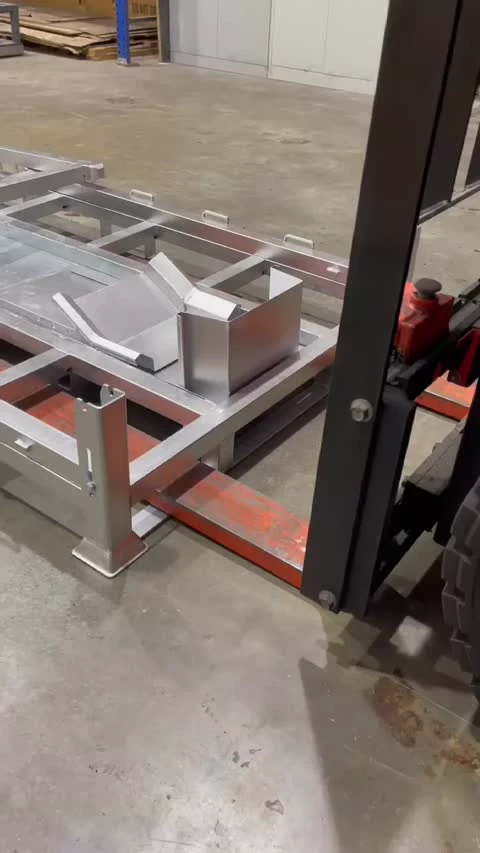
Mtrack is a steel motorcycle pallet that turns one bike into a unit you can forklift, ship and stack
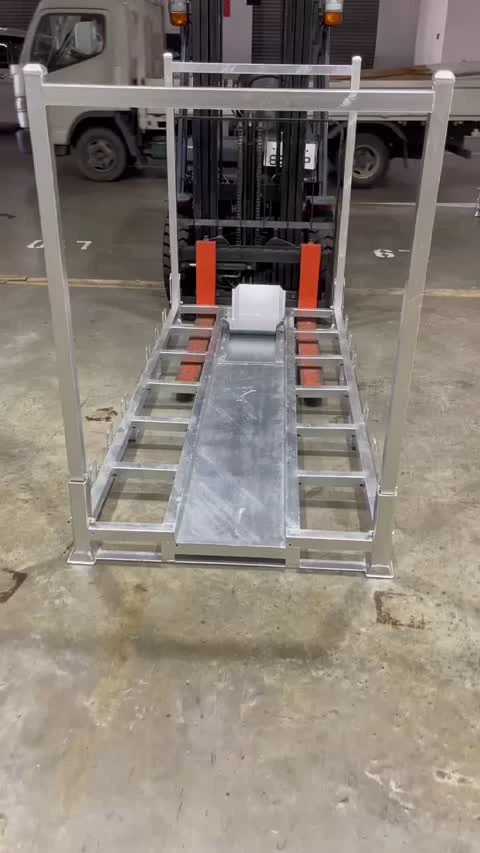
Mtrack is a welded carbon-steel pallet and rack system for motorcycles: a steel base carries the bike, a wheel slot with an entry ramp and a front-wheel stop position it, tie-down points on the frame restrain it, forklift channels underneath move it, and folding or removable uprights let the empty pallet be stacked or stored flat.
It is built for three jobs on one structure. For transport it converts a loose motorcycle into a load a forklift can pick, so the bike can be loaded into a container or trailer in a repeatable position instead of being pushed in by hand. For display and short-term handling it gives the showroom, event or workshop a moving platform that still locates the bike. For storage and stacking it works as a motorcycle storage rack: bikes sit on defined levels instead of spreading across floor space, and empty units take far less room once the uprights are folded or removed.
What Mtrack is not is a sealed crate. It does not enclose the motorcycle, and it does not remove the need to check a bike’s width, height, weight and wheel size against a drawing. Pallet size, load target, upright type, finish, forklift direction and stacking plan are configuration items, agreed per project — there is no single Mtrack dimension or rated load that applies to every motorcycle. The figures quoted on this page are recorded project references, not a series specification.
- Welded carbon-steel tube base and frame; project load targets recorded between 250 kg and 500 kg per pallet, confirmed against each bike and drawing.
- Wheel slot with entry ramp and a front-wheel stop; an adjustable wheel chock is an option where the fixing position has to move between bikes.
- Tie-down points on the outside of the frame; one project asked for four hooks at 130 mm from the outer frame to hook centre — hook count and position follow your restraint plan.
- Two-way or four-way forklift entry, agreed with your forklift, floor and aisle, so handling does not depend on pushing the bike by hand.
- Fold-down, front-folding or plug-in uprights with lock pins for empty return and idle storage; uprights are re-fitted when the pallet is stacked.
- Cold zinc galvanizing option (around 10 µm zinc layer on the project that specified it) as an alternative to powder coating; hot-dip galvanizing is not recommended for this welded structure.
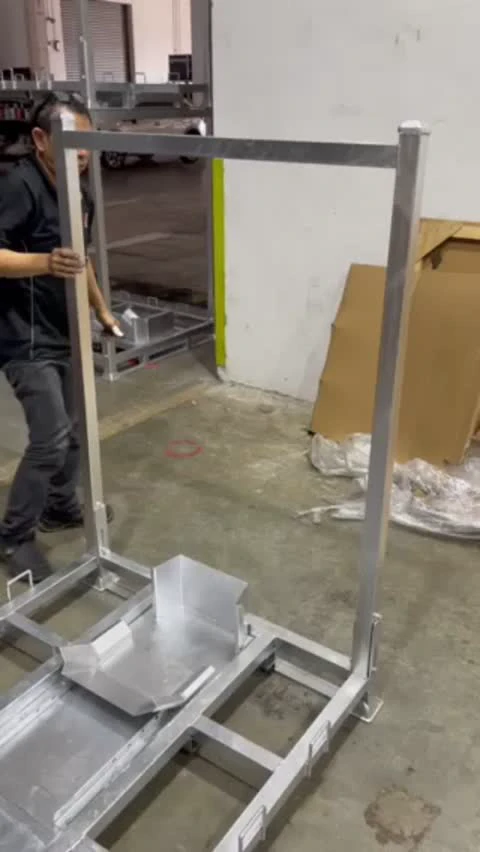
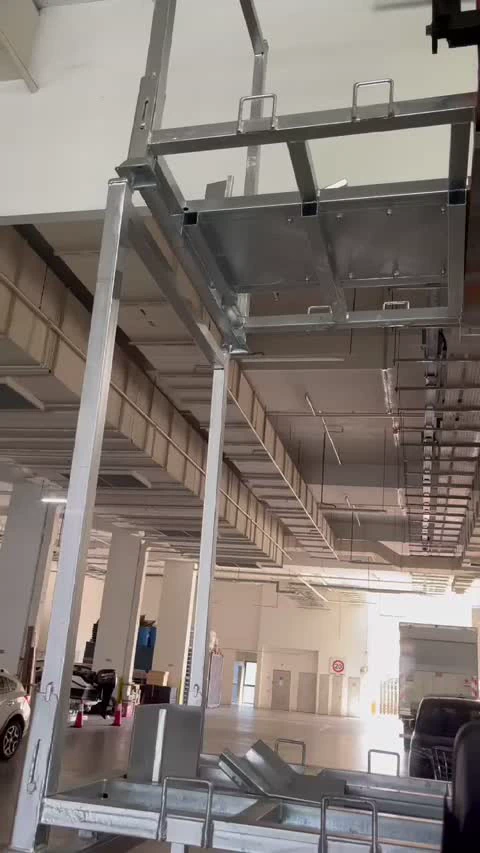
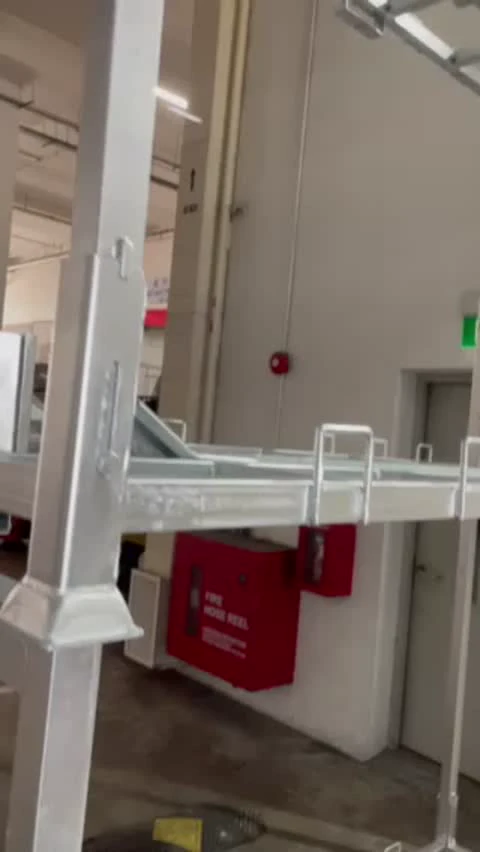
Transport, storage or display — the same frame, different fittings
Transport
Shipping and transport configuration
For motorcycle manufacturers, exporters, logistics operators and event haulers: the pallet is loaded at the factory, picked by forklift and shipped by container or trailer. Loading quantities have to be quoted with the pallet size, folding state, wheel fixing, packing and loading direction attached.
- Forklift entry: two-way or four-way, on the agreed base
- Wheel slot, ramp and tie-down hooks for transport restraint
- Container figures on record range from 28–56 sets per 20 ft and 72–140 sets per 40 ft HC across different pallet sizes and loading plans
Storage
Storage and stacking configuration
For dealers, distribution centres and collections that have run out of floor: bikes are stored on defined levels and the pallet becomes a motorcycle storage rack. Stack level and total height are engineering decisions, not a catalogue number.
- Stacking on uprights; each upper foot has to land fully on the lower upright before the forklift is withdrawn
- Project plans on record cover 2, 3 and 4 levels, with one engineering note asking for total stacked height under 6 m
- Tall bikes can make a second level impossible inside a container and have to be checked per bike
Display
Display and short-term handling configuration
For showrooms, launches, races and workshops: the bike stays located on a platform that can be repositioned with a forklift or pallet truck. Finish and top surface change for this use, because a display unit is looked at as well as loaded.
- Powder coating or a specific top surface can be specified; one display project used a 304 embossed stainless top
- Folding front end and adjustable chock position can be agreed where bikes are swapped often
- Heights and access have to suit the display area, not only the container
Four decisions that make a motorcycle pallet usable, not just strong
Located first, restrained second
A bike held only by straps moves as the straps stretch. Mtrack puts the front wheel in a defined slot, uses a ramp to get it there and gives the frame real tie-down points, so the strap only has to stop movement rather than define position. Where bikes of different sizes share a pallet, the chock position becomes adjustable.
Opening and wheel fixing are quoted together
The opening between the side structures and the wheel fixing are one decision, because the fixing has to reach the wheel. One folding-structure project asked for the opening to be widened to 760 mm once the fixing method was settled. Wheel track, tyre width and handlebar spread are therefore the first numbers we ask for, not the last.
Cold zinc for this welded frame
Cold zinc galvanizing can be applied to the whole frame and was specified at around 10 µm on a project record. Hot-dip galvanizing is not recommended here: the process heat can distort a welded pallet structure. Neither finish is a substitute for drainage and maintenance, so an open yard still needs a coating decision made for that environment.
Empty space counts as cost
A return trip with fixed uprights ships air. Fold-down or plug-in uprights collapse the empty pallet for return and idle storage, then go back on when the unit is stacked. Lock pins hold them in place, and the pins and uprights should be numbered so they come back with the pallet they belong to.
From bike envelope to an agreed drawing
Send the vehicle envelope
Largest and smallest bike: length, width, height, wheelbase, tyre size and weight. Add whether part of the bike may overhang the pallet edge, and whether the same pallet must serve every bike in the fleet or whether two sizes are acceptable.
Fix the handling and storage case
Floor storage, existing racking, container, trailer or several at once; forklift fork size, lift height and side clearance; tie-down points required per side; folding, removable or plug-in uprights; target stack level and total height.
Confirm drawing, finish and packing
The drawing fixes pallet size, load target, forklift entry, wheel slot, chock or front stop, hook positions and upright type. Finish (powder coat or cold zinc), accessories and packing — stretch wrap and banding, or a wooden crate — are agreed in the same step.
Build, load and check
Production follows the approved drawing. Before the load leaves, the loading plan is checked against the actual container or trailer: pallet size, folded or assembled state, wheel fixings and loading direction decide how many units fit.
What buyers ask before specifying a motorcycle pallet
What exactly is Mtrack?
A steel pallet and rack system for motorcycles. The base is a welded tube frame with a wheel slot, entry ramp and front-wheel stop, tie-down points on the outside, and forklift channels underneath. Folding or removable uprights turn the same frame into a stackable unit. It can be used for shipping, for storage and stacking, or as a display platform, and it is configured per project rather than sold as one fixed size.
How is it different from a wooden crate or a wooden pallet?
A wooden crate encloses a bike, but it is usually built once, its size varies between units and re-using it for forklift handling is unreliable. A flat wooden pallet has no wheel slot, no front-wheel stop and no dedicated tie-down points, so the bike can shift. Mtrack is a steel frame with repeatable positioning, forklift entry and a fixed geometry, which suits repeat trips and reuse. The trade-off is real: a steel pallet costs more up front and needs a configuration step before the drawing is released.
How is the opening set, and how is the wheel held?
The opening follows the widest part of the bike that has to pass through the frame — on one folding-structure project the customer asked for it to be widened to 760 mm. Wheel fixing options are a front-wheel stop, a U-plate locator, or an adjustable wheel chock, and not every project needs a chock at all. Because the fixing has to reach the wheel, wheel track and tyre size come first; a pallet quoted without them is a guess.
Is cold zinc galvanizing enough for corrosion protection?
Cold zinc was specified for a whole frame at around 10 µm and is the galvanizing route we recommend for this welded structure; hot-dip galvanizing is not advised because the process heat can distort the frame. How long any finish lasts depends on the site. Mtrack is not meant for permanent open-air exposure: water entering the tubes can rust from the inside and run out at the joints, so covered storage or a project-specific coating and drainage plan is the honest answer for outdoor use.
Can the pallets be stacked, and can they be folded?
Yes to both, within the limits of the approved drawing. Stacking relies on the uprights: each upper pallet foot must sit fully on the lower upright before the forklift is withdrawn. Project records cover 2, 3 and 4 levels, with one engineering note asking for a total stacked height under 6 m — your level count is confirmed against bike height, weight and floor. For empty return, fold-down, front-folding or plug-in uprights reduce the pallet to a flat profile.
Can one pallet carry two motorcycles?
No. A two-bikes-per-rack option appears in one engineering record as a function that cannot currently be delivered, so it is not offered as a Mtrack feature. If you need two bikes moved per forklift trip, the realistic options are two single-bike pallets handled in sequence, or a multi-level rack where each level carries one bike — which is a stacking question, not a two-bikes-on-one-base question.
When is Mtrack the wrong choice?
It is the wrong choice when the bike has to be fully enclosed against weather, dust or theft — that is a crate or container job. It is also wrong for permanent open-yard storage without a coating and maintenance plan, for a site where no forklift or pallet truck can reach the pallet, and for a single one-way shipment where a cheap one-trip crate is genuinely cheaper. And if nobody can supply the bike dimensions, any pallet built now is a risk, because load target, opening and wheel fixing all depend on them.
B2B Racking Structural Engineering Calculator
Input your structural guidelines below. Our math system calculates material deflection, stress bounds, and recommends optimal profiles.
Click Compute to calculate stress factors and display structural drawing recommendations.