
Ttrack Folding Tire Pallet Rack | Storage, Stacking & Export Loading
Foldable tire pallet rack for storage, stacking, forklift handling, and export loading. Base branch and 2,300 mm branch are compared in one page.
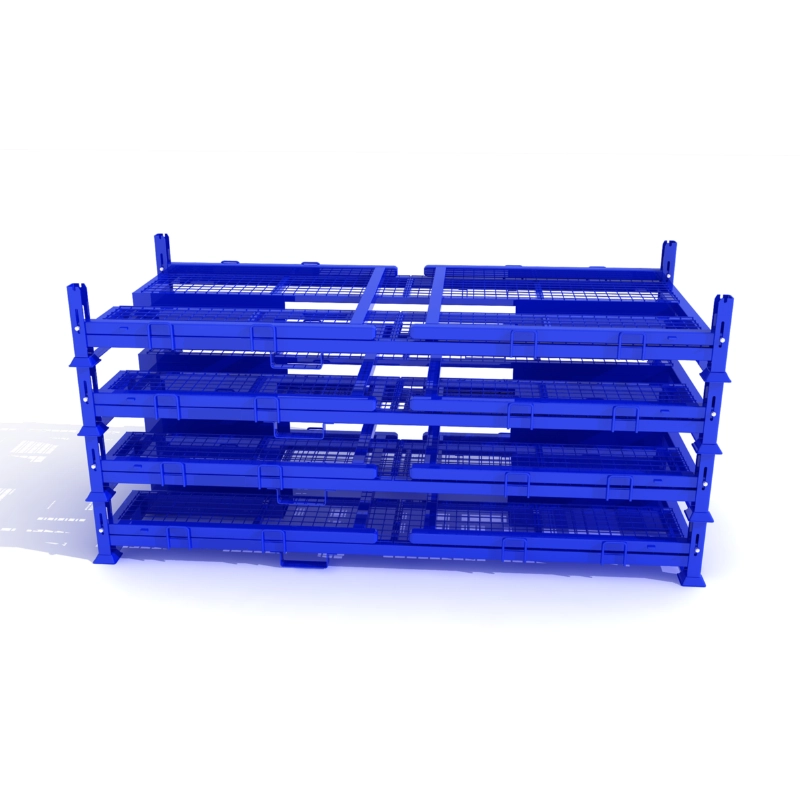
Foldable Tire Pallet Rack for Storage, Stacking, and Export Loading
Ttrack is a reusable steel tire pallet rack for warehouse storage, recovery yards, return logistics, and export container loading. It keeps tires grouped as one load unit, moves by forklift, folds down when empty, and stacks when the approved layout allows it.
The documented base branch uses a 2,230 x 1,190 x 1,770 mm frame, 1.5 t per layer, and 4-high stacking guidance. The 2,300 mm branch is the container-loading option for car and truck tire layouts that need a longer footprint and a horizontal loading pattern. Share your tire size, quantity, and container target before selecting a branch.
- Containment: keeps the load organized instead of leaving tires in loose floor piles.
- Fold-down side frames: reduces empty return volume and yard footprint.
- Forklift pockets: lets operators move the whole rack without repacking.
- Stackable corner interfaces: supports multi-layer storage when the layout is approved.
- Packing options: stretch film plus straps is the standard note; wooden crate packing can be quoted when surface protection matters.
This is a tire-specific steel basket, not a generic flat pallet. It is a fit for tire warehouses, distributors, recycling flows, and export staging. It is not the right choice for random loose loading or for unverified tire dimensions that have not been checked against the final layout.
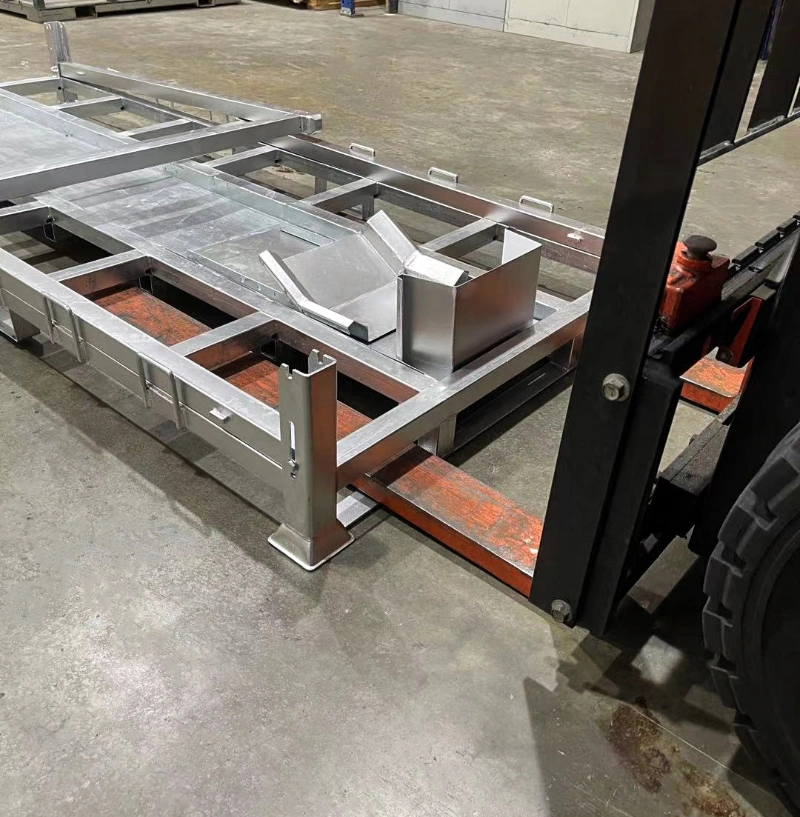
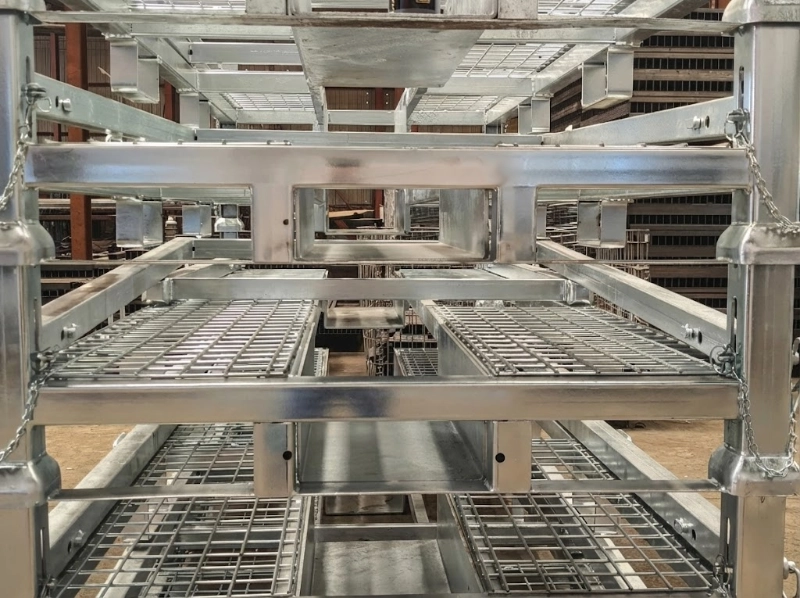
Base model, 2300 mm export branch, and packing options
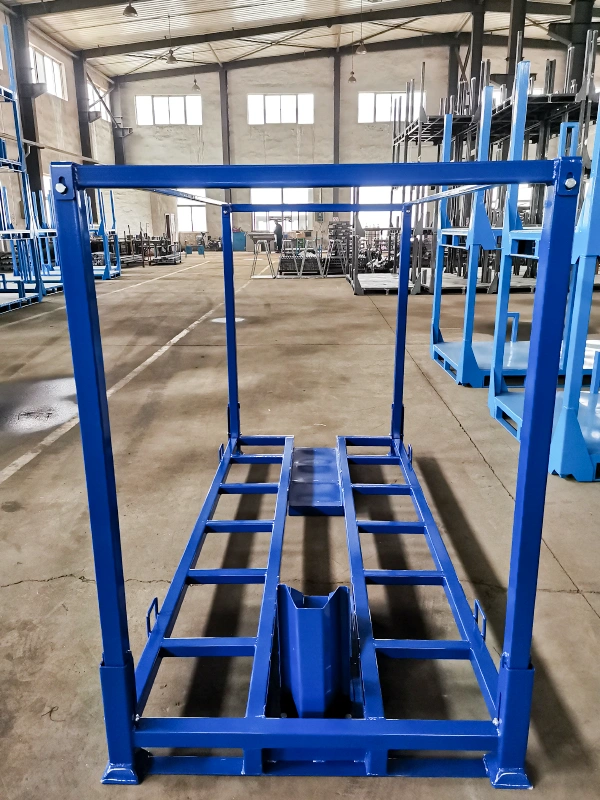
Base model
2,230 x 1,190 x 1,770 mm base branch
Use this for standard tire storage and returnable handling when 1.5 t per layer and 4-high stacking are the target. The source note lists 72 units per 40HQ using 8 units per stack and 9 stacks.
- 1.5 t per layer
- 4-high stacking guidance
- Forklift compatible
- Fold-down side frame concept
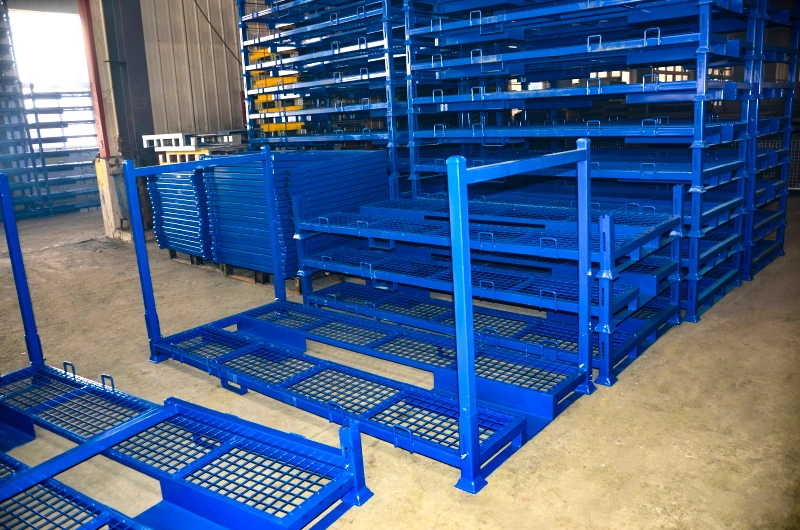
2300 mm branch
2,300 mm export branch
Use this when car or truck tire layouts need a longer footprint and the loading plan is driven by horizontal container entry. The branch note lists 80 units per 40HQ.
- 2,300 mm length branch
- Car/truck tire layouts
- 80 units per 40HQ note
- Project layout confirmation required
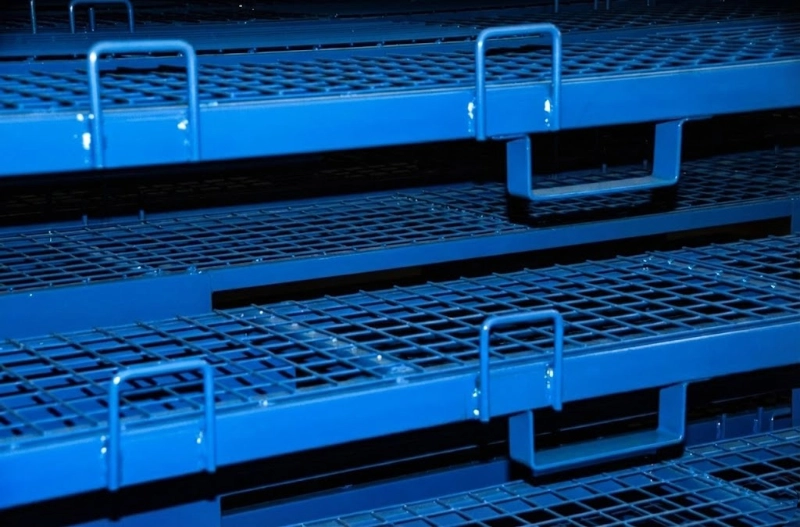
Packing options
Packing and surface protection
Stretch film plus straps is the documented standard. A wooden crate can be quoted separately when the route, handling frequency, or finish protection level needs more shielding.
- Standard wrap and strap pack
- Optional wooden crate
- Project-based quote
- Return-logistics friendly
Why a folding tire pallet rack is better than loose piling
Contain the load
Loose tires and floor piles are hard to count, harder to move, and easier to damage at the edges. A rack turns the pile into one controllable unit.
Save empty return volume
When the side frames fold down, empty units can nest or stack more efficiently, which cuts the return freight burden and yard footprint.
Move as one unit
Forklift pockets let the operator pick up the full rack without repacking tires by hand, which reduces touch points and handling risk.
Plan the container
The base branch and the 2,300 mm branch are different answers to different loading maps. Choose by tire size, quantity, and whether horizontal container entry is the priority.
Best fit
Tire warehouses, distribution centers, recovery yards, exporters, and any mechanical handling flow that needs repeatable storage and export loading.
Not the right fit
Random loose loading, unknown tire geometry, or projects that cannot standardize the tire layout. Confirm the tire list first.
How to choose the right branch
Send the tire data
Share tire outer diameter, width, total count, stack target, aisle width, and container type.
Confirm the branch
We check whether the base branch or the 2,300 mm export branch fits the loading map and handling flow.
Lock the packing route
Choose stretch film plus straps as standard, or quote a wooden crate when protection and route risk require it.
Receive the layout quote
You get the layout, stacking logic, and container-loading recommendation before production starts.
Common questions buyers ask before ordering
Why use a tire pallet rack instead of loose floor stacking?
Because the rack keeps the tires as a single controlled unit. That makes counting, forklift handling, and damage control much more predictable than a loose pile on the floor.
How does the folding structure save space?
The side frames fold down when the rack is empty, so empty units can nest or stack more tightly. That reduces the space needed for return storage and return transport.
How does the forklift move the whole unit?
The base is designed with forklift pockets so the operator can lift the complete rack instead of repacking the tires. That cuts labor and reduces handling touches.
What do the 72 and 80 unit figures mean?
The 72-unit figure comes from the documented base branch note: 8 units per stack and 9 stacks in one 40-foot high-cube container. The 80-unit figure comes from the 2,300 mm branch note.
When should I choose the 2,300 mm branch?
Choose it when your car or truck tire layout needs the longer footprint and the container-loading plan depends on horizontal entry. If your tire spec is standard, the base branch is usually the first option to check.
B2B Racking Structural Engineering Calculator
Input your structural guidelines below. Our math system calculates material deflection, stress bounds, and recommends optimal profiles.
Click Compute to calculate stress factors and display structural drawing recommendations.