
Carack Blog / Outdoor Storage
Outdoor storage of cable reels: galvanizing and drainage rules that actually reduce rust
When cable reels must remain outdoors, the real question is not only whether the rack is coated. It is whether the entire storage layout prevents standing water, internal moisture traps, and rust stains that spread to the reels, the floor, and the site's image.
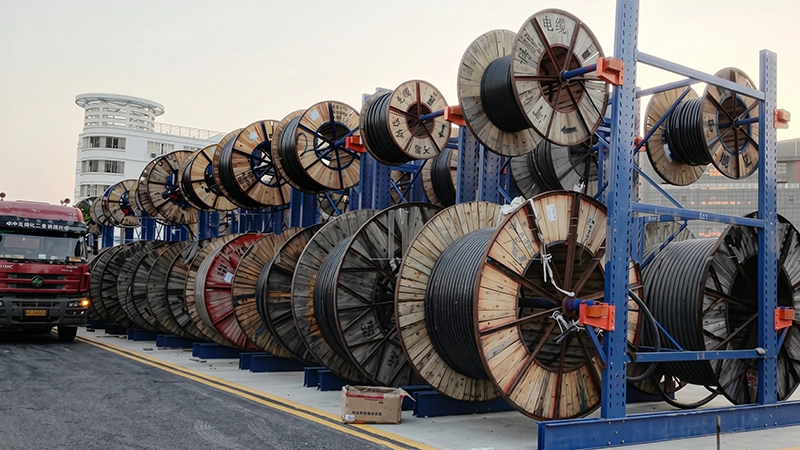
Can outdoor cable reels stand in the rain?
Short answer: not for prolonged, unattended exposure. A cable reel rack can be placed outdoors for short cycles, site overflow, loading, and temporary storage, but direct rain should never be treated as a maintenance-free condition. If water remains around the frame, the coating ages faster, hardware corrodes sooner, and rust-water discoloration becomes a daily cleaning issue.
The right approach is to separate surface protection from moisture managementGalvanizing helps make the steel resistant to weather, but it does not remove water. If the rack sits in a low point, or if the base and support pockets catch drainage, the system will still collect moisture and create internal rust risks.
Why galvanizing helps, and why it alone is not enough
Hot-dip galvanizing is useful because it slows surface corrosion and gives the rack a better chance to survive humidity, condensation, and incidental rain. But galvanizing is not a shield against standing water, mud splashes, or rainwater that enters a tube, bracket, or connection and cannot escape. Therefore, outdoor storage of cable reels must be designed as a system.
In practice, this means the user must pay attention to three things at once: a protective finish, a drainage-friendly support layout, and access for routine inspection. If one of these three is missing, the rack can still function, but it will age unevenly and require more cleaning.
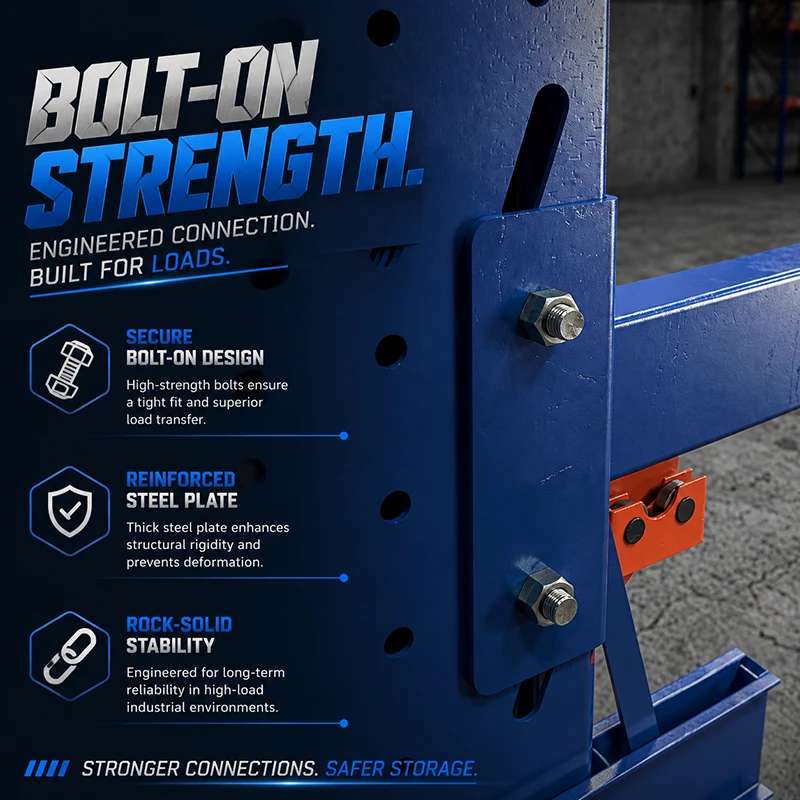
Where water really gets trapped
Rust rarely starts on the most visible panel. It usually starts in hidden places: under the base plate, around bolt holes, in the support pocket, or where a reel contact surface retains moisture after a storm. The bolted base connection above is a good reminder that the connection design must allow space for drainage rather than creating a sealed cavity.
For outdoor use, the drainage strategy should be simple:
- keep the rack slightly elevated from the ground;
- avoid flat pockets that hold water under the bottom frame;
- leave an escape path for rainwater around support seats and fasteners;
- make inspection points visible, so maintenance does not depend on guesswork.
Therefore, "anti-rust" is not just a coating claim. It is a layout choice.
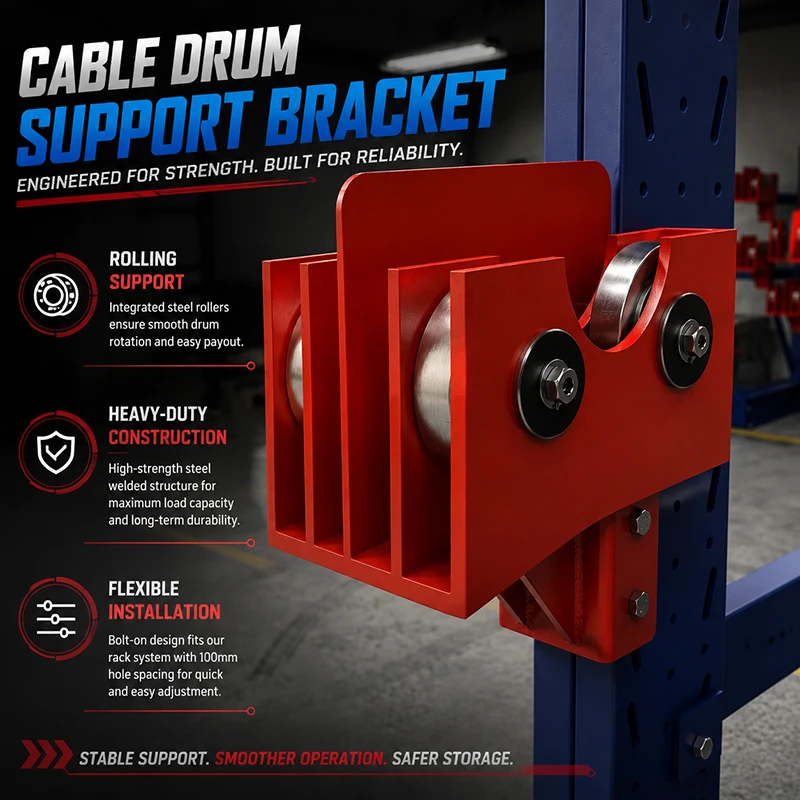
How to prevent water in the support zone
The support bracket and roller area deserve special attention because they combine contact, load, and moisture exposure. A reel parked wet can drip into the bracket zone. If that zone is closed or difficult to reach, water remains longer and accelerates corrosion. The safer option is a support design that can be quickly inspected, wiped clean, and kept free of debris.
For outdoor stored cable reels, the best sequence is: park, let drainage escape, inspect the support zone, and only then resume long-term storage. If your site experiences frequent storms, the rack should be used with a covered buffer strip, not as a permanent open-field solution.
How often should maintenance take place?
There is no universal interval that fits every site, but a practical rule is clear: inspect after heavy rain, check weekly during the rainy season, and perform a deeper monthly check of coating condition, fasteners, and drainage paths. In drier periods, a quarterly check may suffice if the site is sheltered and the rack is not exposed to splashing water or standing water.
Maintenance should focus on the parts that actually fail first: the bottom frame, bolt heads, support seats, roller contact points, and any place where rust water can streak onto the reel or floor. If those areas remain clean and dry, the rack has a much better chance of staying presentable and functional.
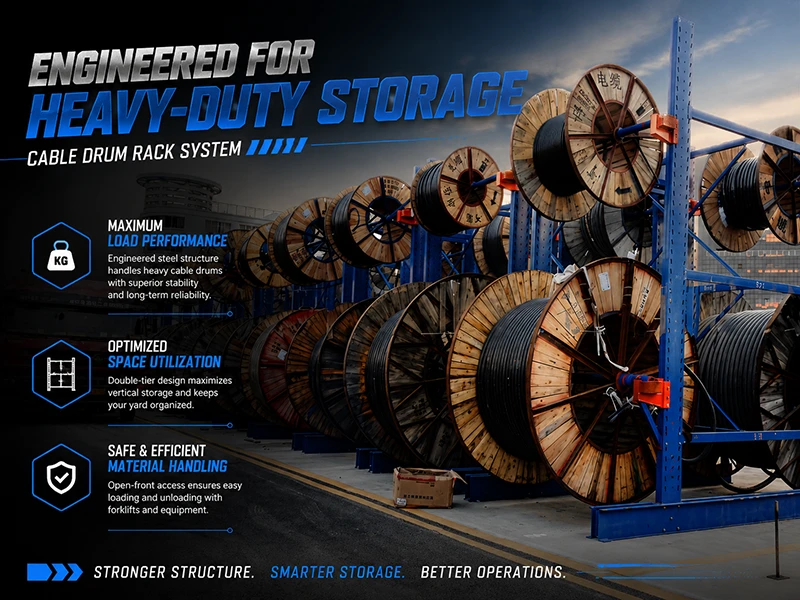
When outdoor storage makes sense, and when it does not
Outdoor storage makes sense for temporary staging, seasonal overflow, and sites that already have a disciplined inspection routine. It does not make sense if the reels must remain outdoors for extended periods without a roof, drainage slope, or cleaning access. In that case, move to a covered buffer area or split the project into indoor reserve plus outdoor short-term staging.
When comparing options, use this rule: choose galvanizing for weather resistance, choose a drainage-ready support design for water management, and choose a maintenance plan for long-term reliability. Each of these alone is incomplete.
Heeft u een op maat gemaakte opslagoplossing nodig?
Spreek rechtstreeks met onze technische ingenieurs. Wij bieden gratis constructieontwerpen, evaluaties van zwaar belaste catalogi en snelle B2B-prijsopgaven.
Vraag nu een offerte aan →