
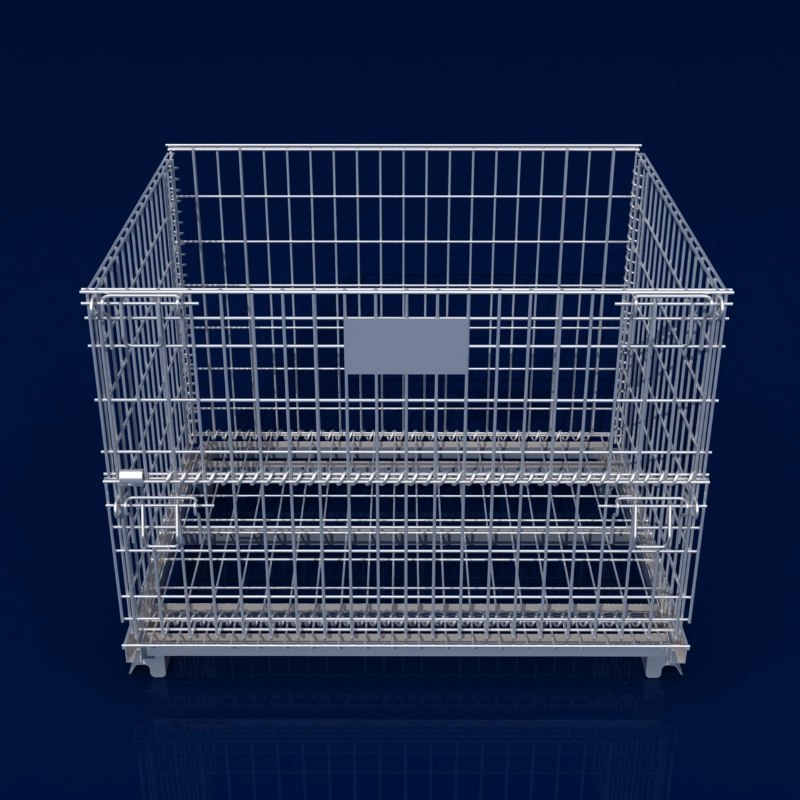
A shortage on the production line, a stack with two stacked steel wire mesh containers, and nobody wants to unload a full cage to find out whether the last batch of castings is actually missing. That is the practical question behind "can I count the parts inside a wire mesh container without opening it?" — and the honest answer is partly yes, because it is the mesh that does the work.
In the recorded design settings of this collapsible wire mesh container, the mesh is specified at 50 × 50 mm. That mesh gives the supervisor a direct line of sight to the load from the aisle: full, half full, empty, or short at the gate. It is a visual check, not an automatic count. Below: what the mesh lets you see, what airflow through it prevents, what happens with small parts, how the half-height gate eliminates unstacking, and when a mesh container is the wrong choice.
What Mesh Opening Do You Need to Count Parts Without Opening the Container?
The 50 × 50 mm mesh is the specification recorded in the design settings kept for this container — for example, 1000 × 800 × 840 mm, 1050 × 1050 × 1000 mm, and 800 × 1200 × 890 mm constructions — with recorded wire diameters between 5.8 mm and 6.0 mm. These are design records and not a single universal specification, so the approved drawing for your construction is what governs the opening, the wire, and the finish.
Na pilha, essa malha significa que qualquer componente cuja menor dimensão seja claramente maior que a abertura permanece onde foi carregado e se apresenta como um bloco visível de material. Cargas organizadas em camadas são as mais fáceis de ler: cilindros usinados dispostos em fileiras, peças fundidas empilhadas horizontalmente, subconjuntos em caixas. Um supervisor pode caminhar pela fileira no início do turno, ver quais gaiolas estão ficando baixas e puxar a que está com falta para frente sem tocar em um portão.
O que a malha não oferece: a camada frontal e o topo da carga são o que você vê. Peças escondidas atrás da primeira fileira, peças no canto inferior sombreado e peças atrás do quadro do portão e da placa de identificação não são visíveis, e peças pequenas soltas misturadas em uma carga a granel não podem ser contadas uma a uma através do arame. O controle de inventário visual através da malha reduz o número de vezes que uma pilha precisa ser desfeita para verificar uma suspeita. Isso não substitui a contagem cíclica, e nenhuma especificação de malha a transforma em uma contagem com zero erros.
Por Que a Ventilação da Malha Aberta é Tão Importante Quanto a Visibilidade
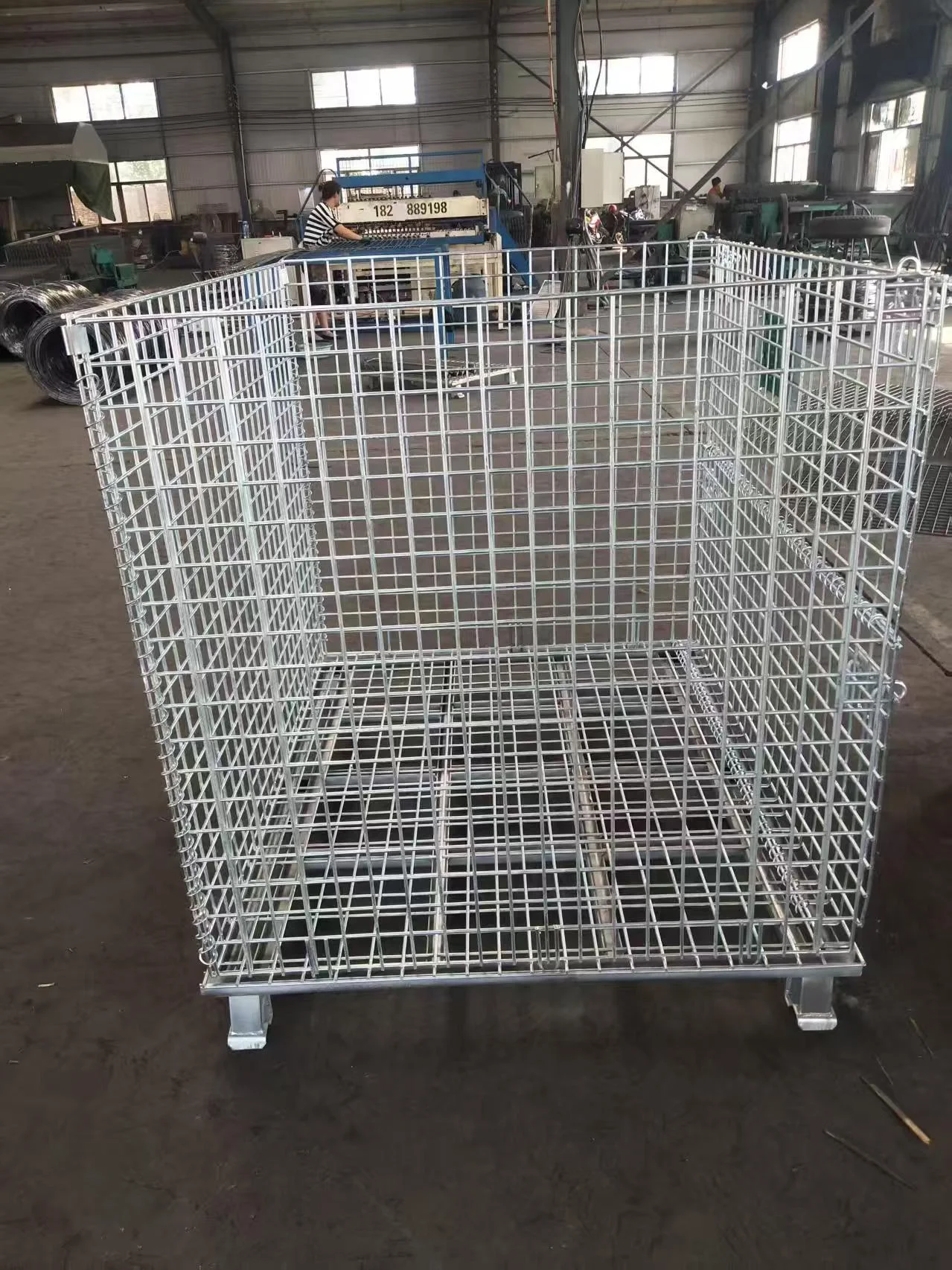
Um painel fechado mantém a carga e seu microclima no mesmo compartimento. Umidade evaporando das peças após a lavagem, condensação sobre aço frio, ar quente e úmido em um pátio parcialmente ao ar livre — dentro de um contêiner selado, tudo isso permanece no fundo, e a camada do fundo é o último lugar a secar. As faces em malha permitem que o ar se mova através do contêiner, de modo que uma carga que chegou úmida pode secar no próprio local, a condensação não fica sobre superfícies usinadas, e uma base molhada ou uma peça com vazamento é visível a partir do corredor em vez de ser descoberta na próxima vez que o contêiner for aberto.
Two limits matter here. First, an open mesh is not a dust barrier and not waterproof: dust, splashes and airborne particles pass straight through it. Second, corrosion performance in damp or outdoor storage environments follows the zinc finish you select, and the recorded design options are not a single value — cold galvanizing around 10 μm on some builds, hot-dip galvanizing around 40 μm on others. Do not treat a single coating thickness as the available range, and confirm the finish against the actual storage environment before ordering.
Will Small Parts Fall Through the Mesh?
They can. If a loose part's smallest dimension is smaller than the mesh opening, it can drop through the bottom or side mesh, and precision parts can also rub against the wire during handling. The recorded notes on this container flag both risks. There are three documented ways to deal with this:
- PP hollow-sheet inner lining. A hollow-sheet panel fitted inside the cage creates a physical barrier on the faces you line. The image records show black and light-green liners on this container, used to keep small parts and metal dust away from the mesh and to prevent scratches on precision surfaces.
- Finer mesh. A tighter mesh is a design specification and not a catalog standard. The opening you need follows the smallest part you handle, and it should be confirmed on the drawing.
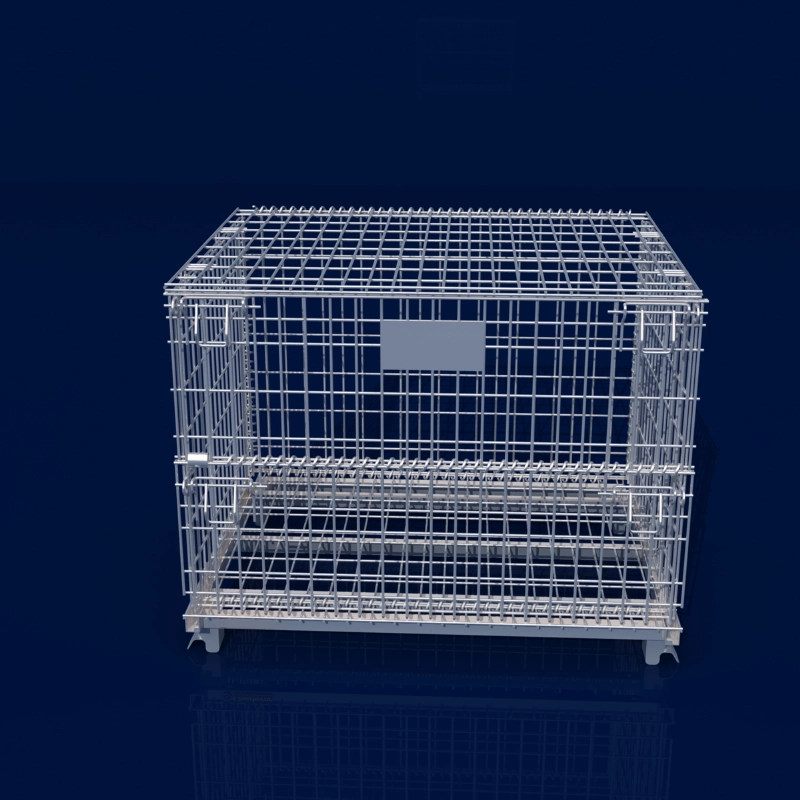
- Lid. A locking top lid is a documented variant of this container. It keeps loose parts inside during handling and closes the top opening when the container is stored or transported.
If the parts are genuinely small and the count is critical, an inner liner is a palliative, not a fix — a closed container is the honest alternative, and it is worth saying so before a batch order.
Removing Parts from a Stack Without Tipping the Ganja
Visibility answers "is anything missing." Access answers "how do I take one part out without dismantling the stack." In this container the answer is the half-height gate: the top half of the front panel folds down about 180°, leaving a reach-in opening at working height, so an operator can pull parts from a stacked container without lowering the stack or tipping the ganja onto the floor. Two conditions decide whether it works on your line — the gate face has to point at the picking aisle, and the part has to be within arm's reach. Long, heavy or awkwardly shaped parts still need a cutaway or another face.
Wire Mesh Container vs Fully Closed Steel Box: What Changes in Practice
The two designs answer different requirements, and the choice is usually settled by process, not by price:
- Visibility. Mesh shows the load from the aisle; a closed box has to be opened, or checked by weight or level.
- Ventilation. Mesh vents and lets a damp load dry; a closed box holds a sealed microclimate around the parts.
- Dust and moisture. A closed box is a barrier; a mesh container needs a liner or a lid when dust control is part of the requirement.
- Security and containment. A lockable lid is a documented variant of the mesh container; a fully closed box is closed by design.
- When mesh is not the answer. Parts smaller than the unlined opening, dust-sensitive loads, and processes that require a sealed or opaque container.
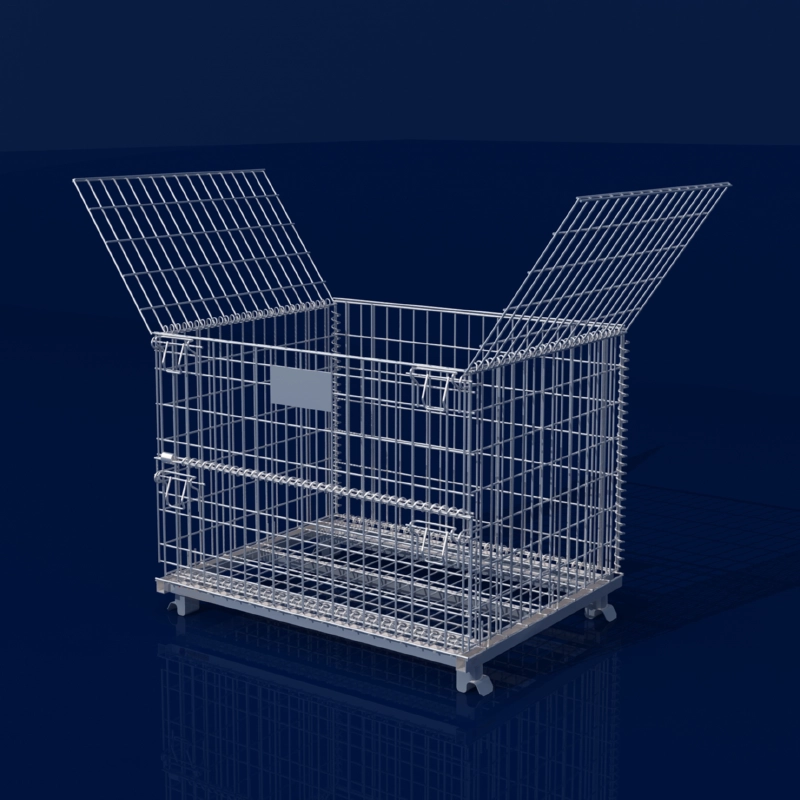
Este contêiner é uma caixa de armazenamento de tela metálica dobrável e empilhável. Não é estantes de armazém, não é grade de segurança e não é uma caixa de aço totalmente fechada — se a especificação exige vedação, especifique um contêiner vedado em vez de acrescentar acessórios a uma caixa de tela.
Onde o Controlo de Inventário Visual Através da Tela Compensa
- Buffers WIP ao lado da linha onde a falta de um componente para uma estação.
- Filas de caixas com peças cilíndricas maquinadas, verificadas visualmente no início do turno e puxadas para frente quando baixas.
- Picking através da porta de meia-altura a partir de um contêiner empilhado, em vez de o descarregar.
- Áreas de expedição e devolução de vazios, onde caixas vazias ou carregadas são confirmadas visualmente antes do carregamento.
Perguntas Frequentes
Posso contar todas as peças através da tela sem abrir o contêiner?
Não. Trate-o como uma verificação visual com linha de visão desobstruída, não como uma quantidade contada. Peças atrás da camada frontal, no fundo sombreado ou atrás do caixilho da porta permanecem invisíveis, e peças soltas misturadas numa carga a granel não podem ser separadas à vista. Use a tela para detetar precocemente uma escassez e para decidir se a porta precisa de ser aberta — depois confirme com uma contagem cíclica.
Um contêiner com tela de 50 × 50 mm é à prova de poeira?
Não. A tela é aberta por design: ventila a carga e permite vê-la, e também deixa passar poeira, pulverizações e partículas finas. Quando o processo exige uma barreira, especifique um forro de placa oca de PP, uma tampa ou um contêiner fechado.
E se os meus componentes forem menores do que a malha?
Então a malha não os reterá. As opções são um forro de placa oca dentro da caixa, uma tela mais fina confirmada no desenho, uma tampa para contenção superior ou um contêiner fechado. Qual é a opção correta depende do tamanho da peça, da criticidade da contagem e da limpeza exigida na área de armazenamento.
A tela altera a forma como o contêiner é manuseado?
The handling interface remains unchanged: the recorded project settings are handled by forklift and manual pallet truck, with stacking limits defined per project. Confirm the input geometry, stacking tiers and top container load for your build on the approved drawing, and not on a generic image.
If you are sizing a line-side buffer or a visual inventory configuration, the useful data are the part mix, the smallest dimension you handle, the storage environment and whether the door face can face the aisle. The recorded settings of the Stbox wire container are summarized on the product page of the collapsible wire mesh container.
Precisa de uma Solução de Armazenamento Personalizada?
Fale diretamente com nossos engenheiros técnicos. Oferecemos projetos estruturais gratuitos, avaliações de catálogos de alta capacidade e orçamentos rápidos para B2B.
Solicite um Orçamento Agora →