
Stackable Wire Container for Automotive Line-Side WIP Buffering
Configure Stbox stackable wire mesh containers for automotive line-side WIP buffering. Use half-drop access, project-defined stacking limits and takt-based cage quantities.
Keep automotive parts moving between processes
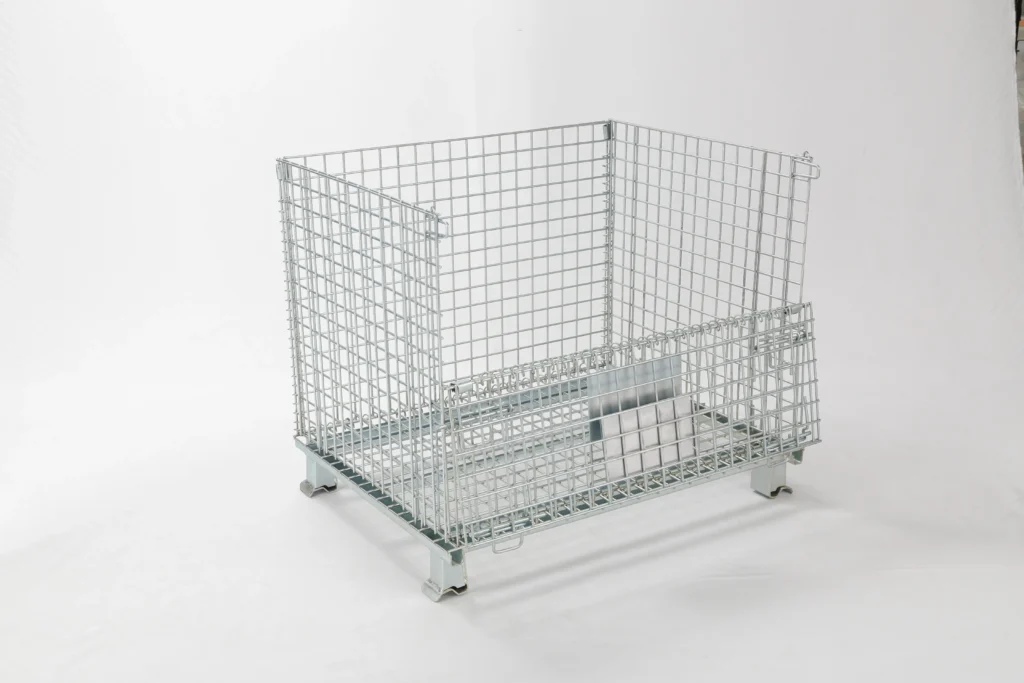
Stbox is a collapsible wire mesh container for line-side parts storage and work-in-process buffering. Its front half-drop gate gives operators a direct picking opening while the four-corner formed feet support controlled vertical stacking.
For the 13967 project configuration, the opening is located on the 800 mm side. The project technical table records 800 × 1200 × 890 mm, 50 × 50 mm mesh, 5.8 mm wire, electro-galvanized finish of at least 8 μm, and a 47 kg empty-unit weight. These figures belong to that project configuration and must be reconfirmed against the final drawing before quotation.
- Pick without full destacking: lower the front drop gate to reach parts near the container base.
- Stack with a defined rule: the 13967 proposal recommends no more than 4 loaded tiers, with each upper container limited to 500 kg; feet must be fully seated before release.
- Move by warehouse equipment: forklift and pallet-jack handling are shown, but fork clearances, load centre and equipment rating require project confirmation.
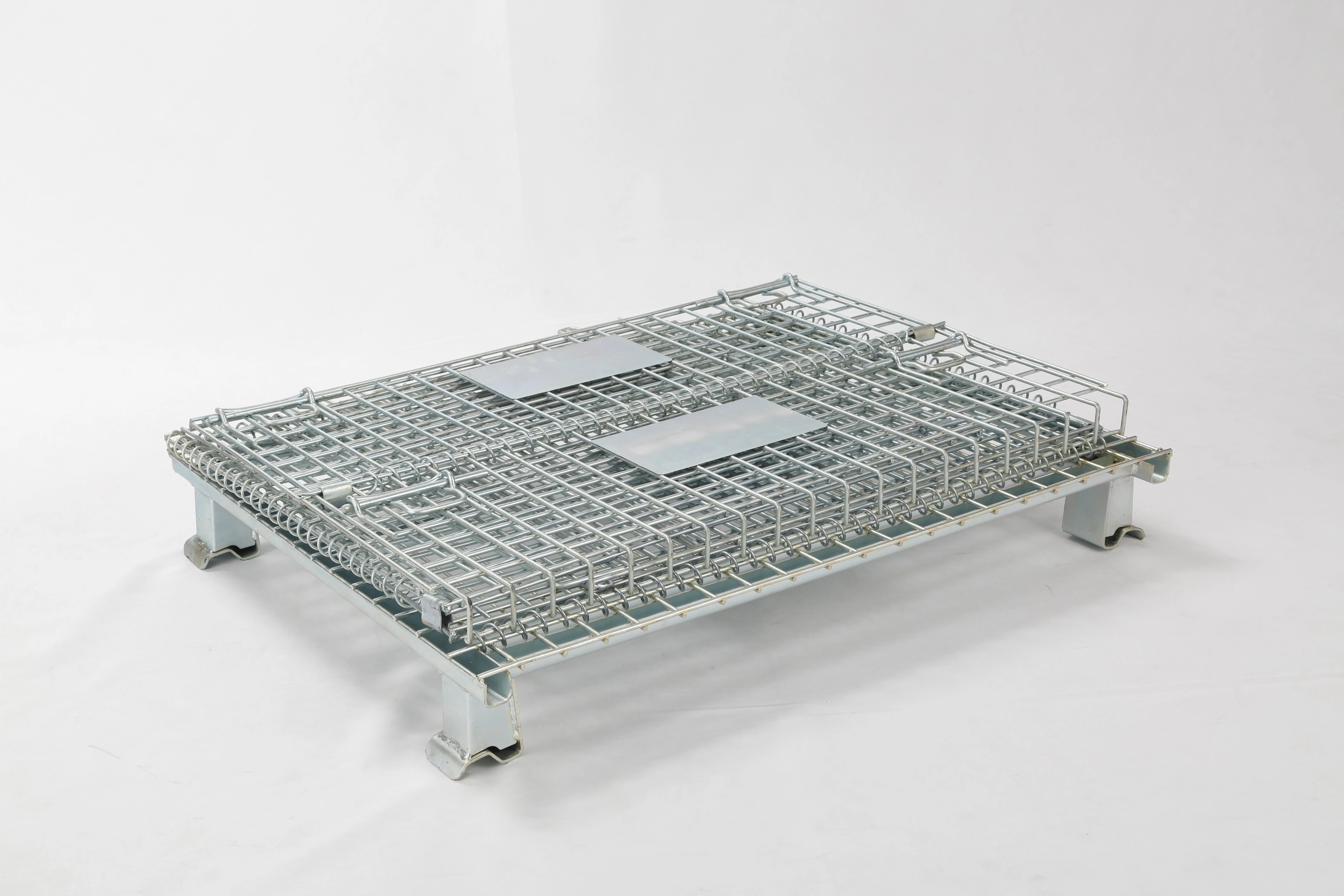
- Fold empty units: the 13967 project records a 190 mm folded height and 10 empty units per stack; do not apply this figure to other sizes without confirmation.
Build the container around the material flow
LINE-SIDE ACCESSHalf-drop gate
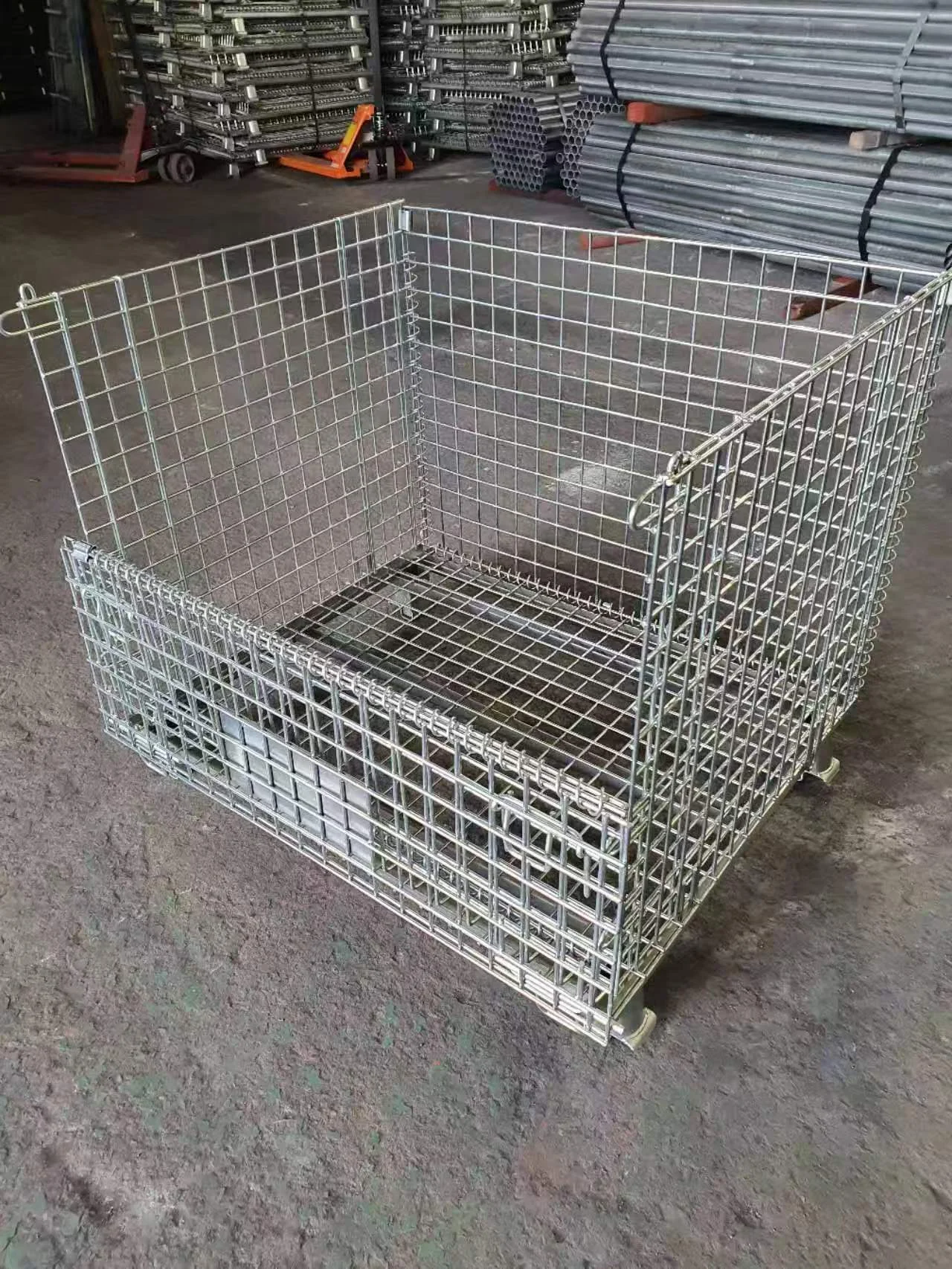
Use the opening on the selected access side for manual picking and replenishment without removing the upper stack. The 13967 configuration places the opening on the 800 mm side.
 PARTS PROTECTION
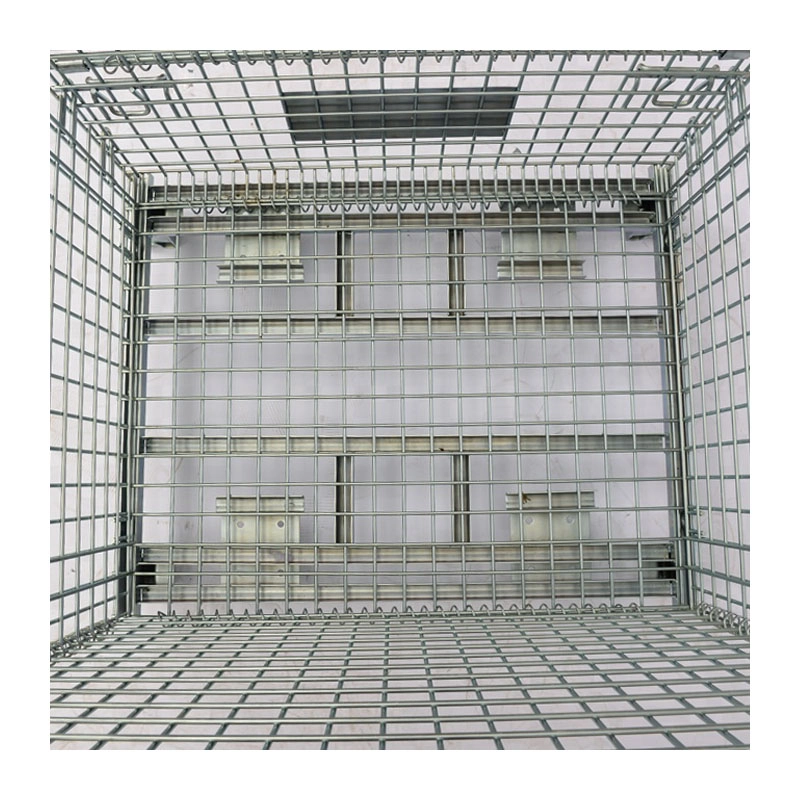
PP liner for small or sensitive parts
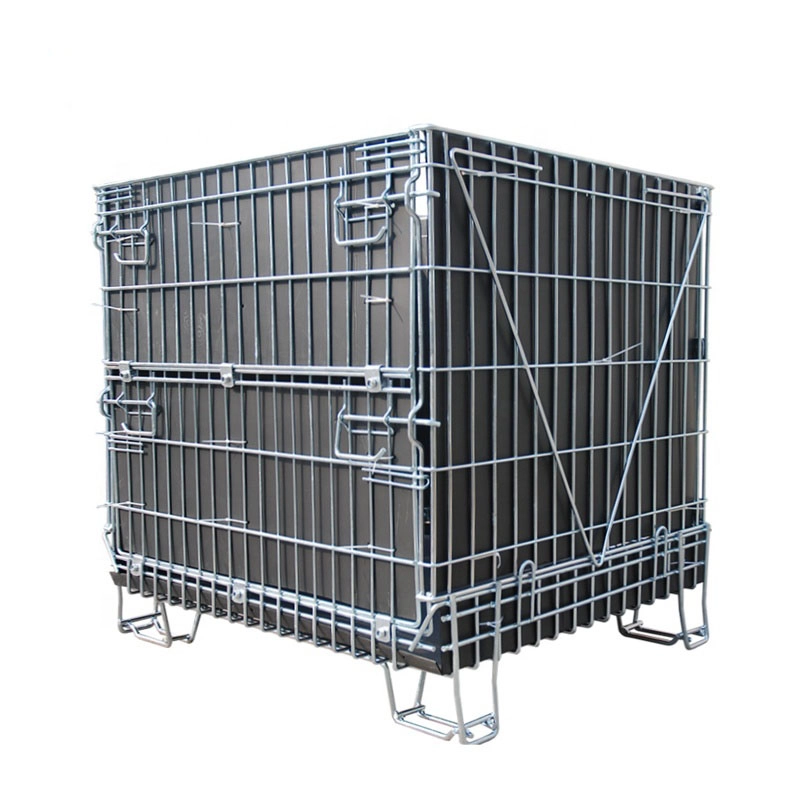
A black corrugated PP liner can reduce contact between parts and mesh and help prevent smaller components from falling through the grid. Board thickness, coverage and fixing method are quotation items.
EMPTY RETURN FLOWCollapsible empty storage
Fold empty containers to reduce return and staging volume. The 13967 project records 10 empty units per stack at approximately 1240 × 1240 × 1600 mm; final packing depends on the approved size.
A visible, movable buffer between two operations
Use vertical space deliberately
Four-corner formed feet locate on the lower container’s upper area. For the 13967 project, use up to 4 loaded tiers and keep each upper container at or below 500 kg, subject to the approved project rule.
Pick from the access side
The half-drop front gate creates a lower loading and picking opening. Keep the gate side facing the operator aisle; the final opening direction must match the layout and drawing.
Keep parts countable
The welded mesh allows visual inspection and airflow. A PP liner should be evaluated for small, scratch-sensitive or dust-sensitive components rather than assumed as standard.
Separate facts from assumptions
Load, mesh, coating, fork interface and accessories vary by project. We confirm the load case, centre of gravity, aisle width and handling equipment before finalizing a line-side configuration.
From takt time to the right number of cages
Map the process gap
Share the upstream and downstream operations, part family, batch size, replenishment interval and the maximum WIP you need to buffer.
Set the access geometry
Mark the operator side, aisle width, gate swing/drop clearance and whether the 800 mm-side opening in the 13967 configuration fits your station.
Calculate cage quantity
As a planning formula, cages per station should cover WIP required during the replenishment lead time plus a controlled changeover allowance, divided by usable quantity per cage, then rounded up. Confirm with actual takt data.
Validate handling and stack rule
Confirm load distribution, fork or pallet-jack access, floor condition and the project stack limit. For 13967, check no more than 4 tiers, upper-unit weight no more than 500 kg, and complete foot seating.
Answers before you release the layout
How many layers can Stbox be stacked?
For the 13967 project configuration, the recommendation is no more than 4 loaded layers, with each upper container at no more than 500 kg. This is not a universal Stbox rating. The feet must be fully seated, the floor must be suitable, and the final stack rule must follow the approved drawing and load case.
Which side does the half-drop gate open from?
The 13967 customer requirement places the opening on the 800 mm side. The pictured gate is a front downward-drop access arrangement. Confirm which side faces the operator aisle and the required opening clearance on the final layout; do not infer the door direction from a generic image.
How many cages should each workstation receive?
There is no safe universal number. Use the station’s takt time, parts per cycle, quantity per cage, replenishment interval, WIP limit and changeover buffer. A practical starting calculation is required WIP during replenishment plus changeover allowance, divided by usable quantity per cage, rounded up. Send these figures with aisle width for a cage-count proposal.
Can the cage be used for every part?
No. The 50 × 50 mm mesh is suited to many industrial parts, but small, delicate or scratch-sensitive components may need a PP liner. Dust, ESD, food-contact, chemical, outdoor and anti-theft requirements require separate material and accessory review.
How is Stbox moved at the line side?
Project images show forklift and manual pallet-jack handling. Move at a steady speed, avoid impact or off-centre entry, and verify equipment rating, fork clearance and load centre for the final base. Do not treat an accessory caster version as equivalent to a static stackable unit.
What should be confirmed before quotation?
Confirm outer size and tolerance, opening side, load definition, part weight and centre of gravity, stack rule, wire and base reinforcement, coating and environment, liner/lid/caster options, packing, quantity, delivery location and inspection method.