
One-Tonne Practical Load Boundary for Mesh-Panel Wire Cages in Short-Cycle Parts Handling
Approximately 1 t is the practical load boundary for a mesh-panel STBOX wire cage, not a certified rating. The load path through mesh panels, edge members and base frame, why project records of 1000 kg, 1400 kg and 1000 kg must stay separate, and when a square-tube frame becomes the right container.
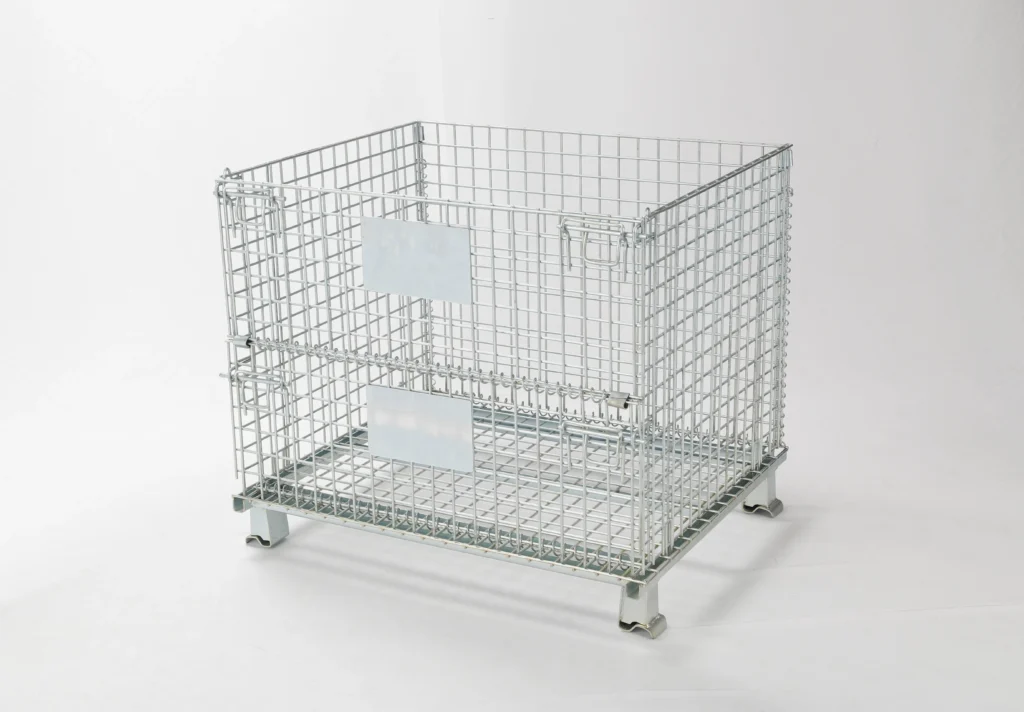
About one tonne is a practical boundary, not a certified load rating
In our STBOX and square-tube folding box comparison, the working figure for one STBOX mesh cage is approximately 1 t. That number is a selection guideline taken from the comparison material. It is deliberately not written as a certified rating, and it is not a value we put into a contract as it stands.
The reason sits in the structure. A STBOX is built around wire-mesh panels: the payload is carried by the mesh body, the mesh-panel edge members and the base frame, with formed stacking corner feet transferring load into the cage below. That load path is what makes the cage light, compact when folded and cheap to move, and it is also what sets the ceiling. Short-cycle parts handling, delivery staging and temporary storage are the positions where this cage earns its place; a long-term loaded stack position is not.
- Load path: mesh panels, panel edge members and the base frame carry the payload — not square-tube uprights.
- What the figure covers: a single-unit working figure from the product comparison, not a test certificate and not a guaranteed minimum.
- Where the cage belongs: short-cycle parts handling, in-plant staging, one-time or limited-use delivery, export volume shipment.
- Where to change direction: above approximately 1 t per unit, or when loaded stacking must hold long term, the square-tube frame option takes the load through its uprights instead.
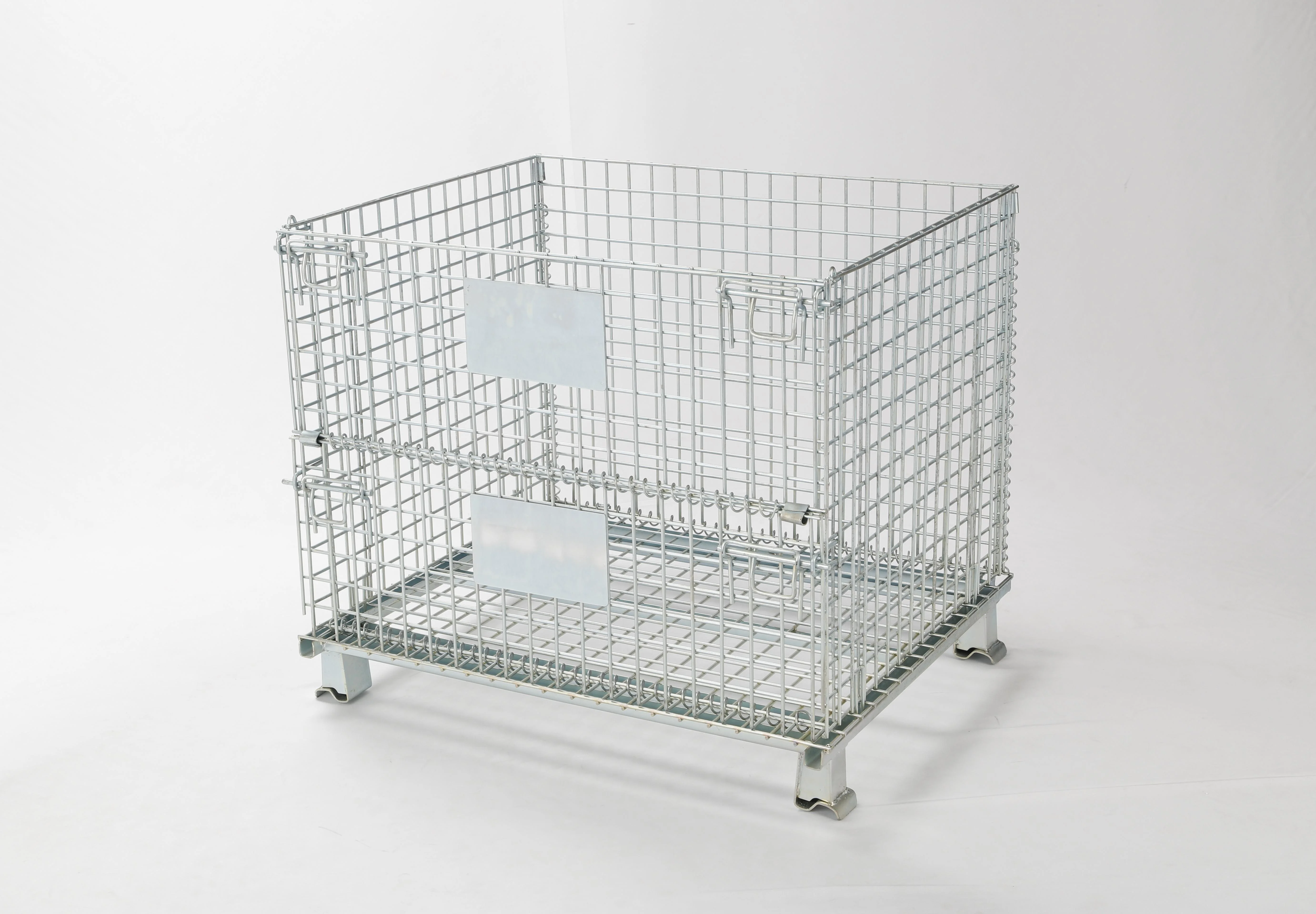
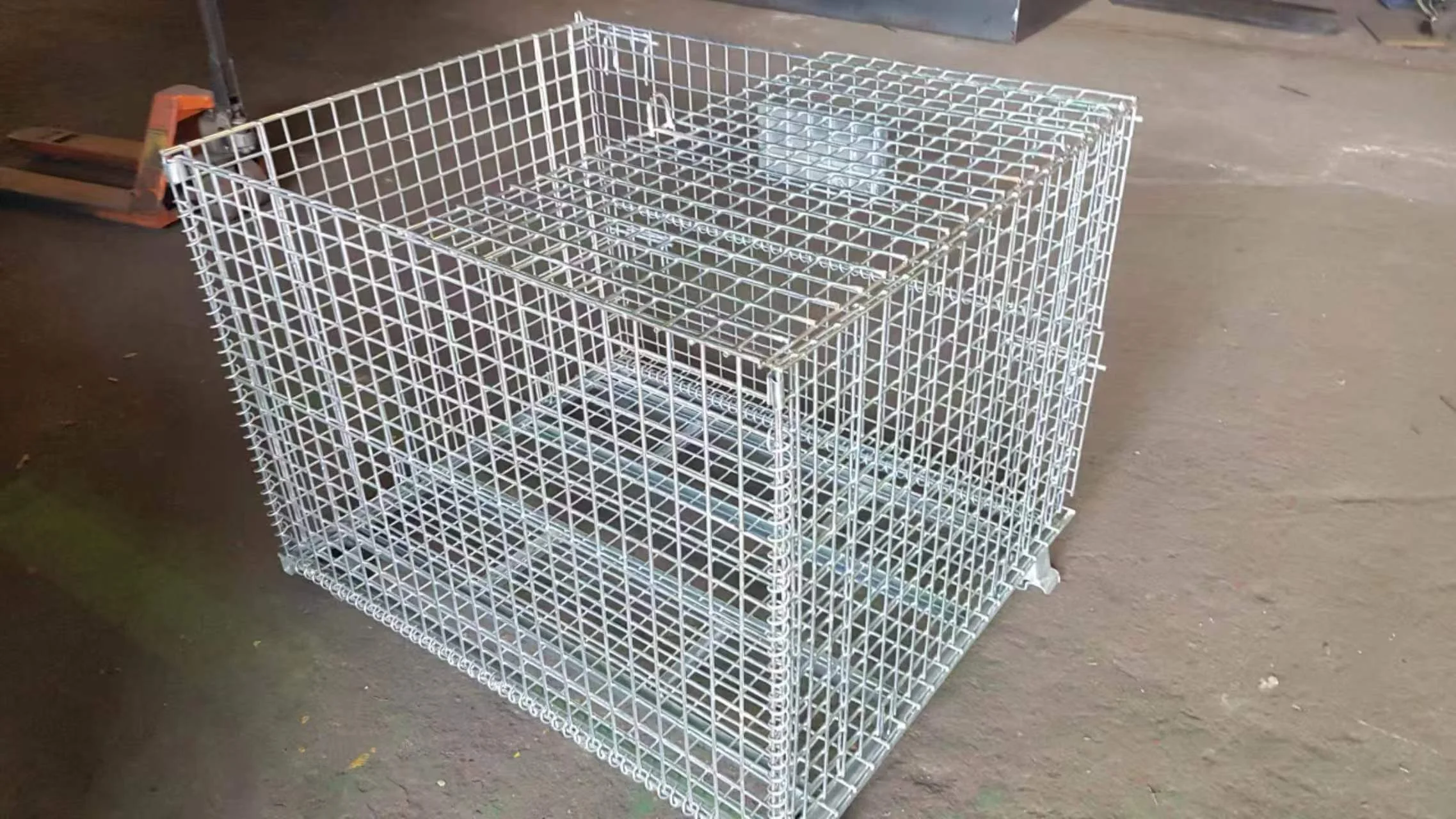
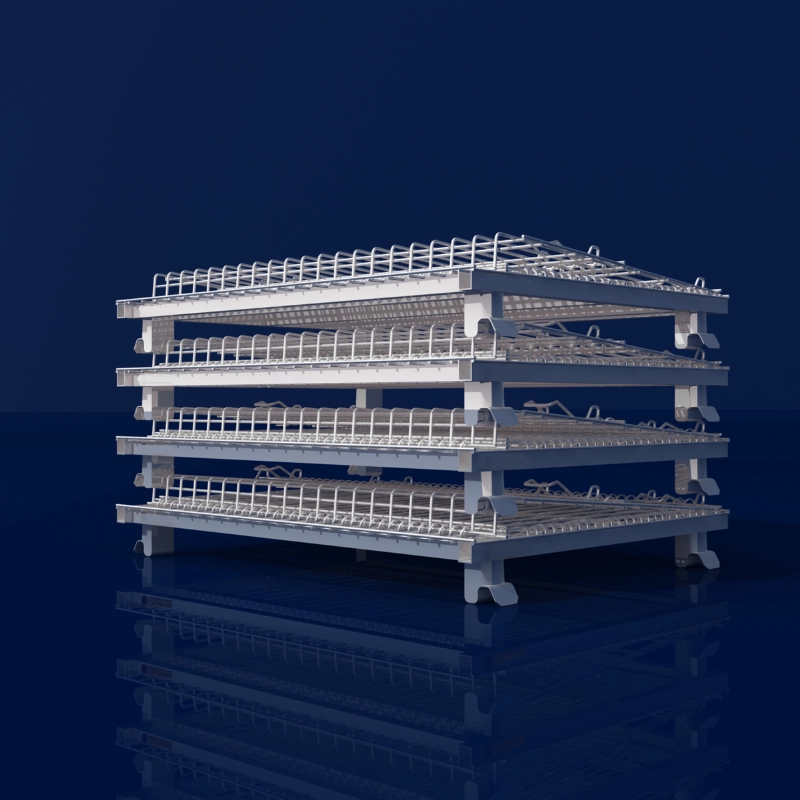
Three projects, three load records — never one standard rating
Every load figure below belongs to one project opportunity and one released configuration. They differ in size, wire gauge, finish, stacking cap and even in the definition of the recorded load, so they are published side by side and read individually. Taking any single figure and calling it “the STBOX rating” would misstate all three.
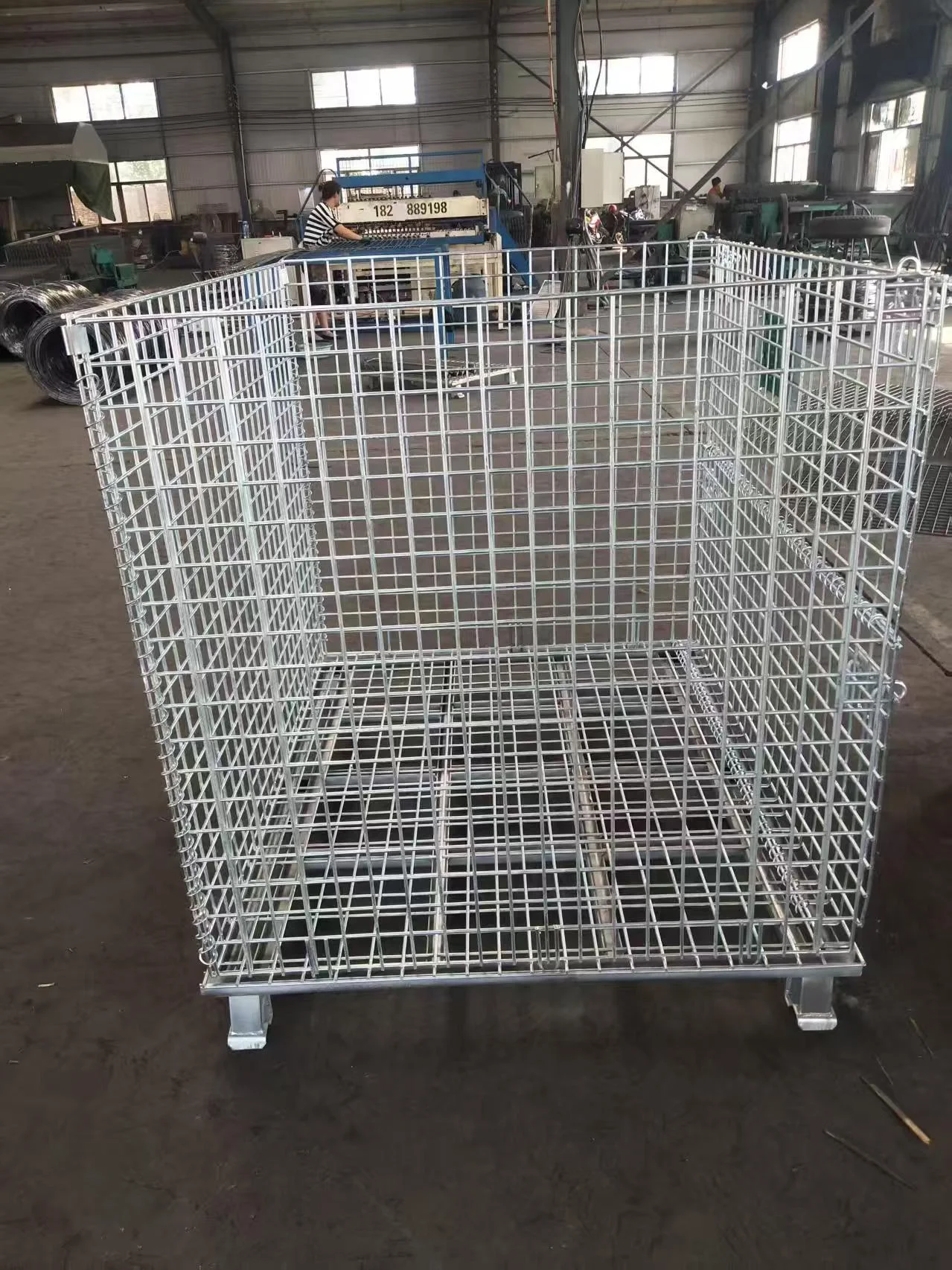
Project 13967
800 × 1200 × 890 mm — dynamic load recorded as 1000 kg
A narrower footprint with the opening required on the 800 mm side. The project sheet defines the recorded value as a dynamic load, which is not the same definition used in the other two projects.
- External size: 800 × 1200 × 890 mm (customer wording: width 800 mm, length 110 ± 10 cm)
- Load record: dynamic load 1000 kg in the project technical sheet
- Stacking: up to 4 levels, each upper cage ≤ 500 kg
- Grid and wire: 50 × 50 mm, 5.8 mm wire
- Finish and weight: electro-galvanised ≥ 8 µm, 47 kg
- Folded height: 190 mm; ten empty units per bundle
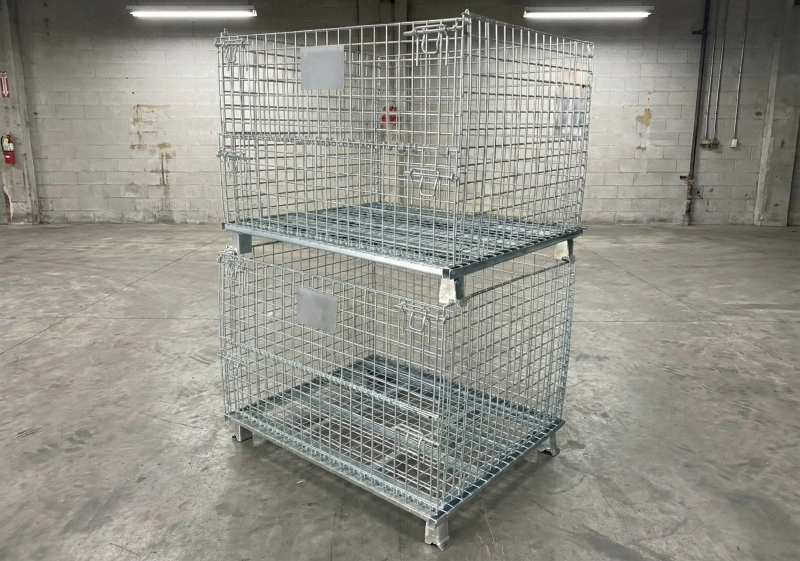
Project 15059
1000 × 800 × 840 mm — 1400 kg per unit in the project record
The highest single-unit figure of the three, recorded for a Q235 cage with full-gauge Φ6 mm wire. It is a per-unit figure at one level; it does not authorise loading every level of a four-high stack to 1400 kg.
- External size: 1000 × 800 × 840 mm
- Load record: 1400 kg per unit
- Stacking: 4 levels; upper cages ≤ 2000 kg total when stacked
- Grid and wire: 50 × 50 mm, Φ6 mm, Q235
- Finish: cold or hot-dip galvanised, around 10 µm / 40 µm in the project sheet — which option applies per surface still needs confirming
- Weight and shipping: 42 kg; about 250 units per 20 ft, about 638 per 40 ft HC, roughly 30 days for the 40 ft quantity
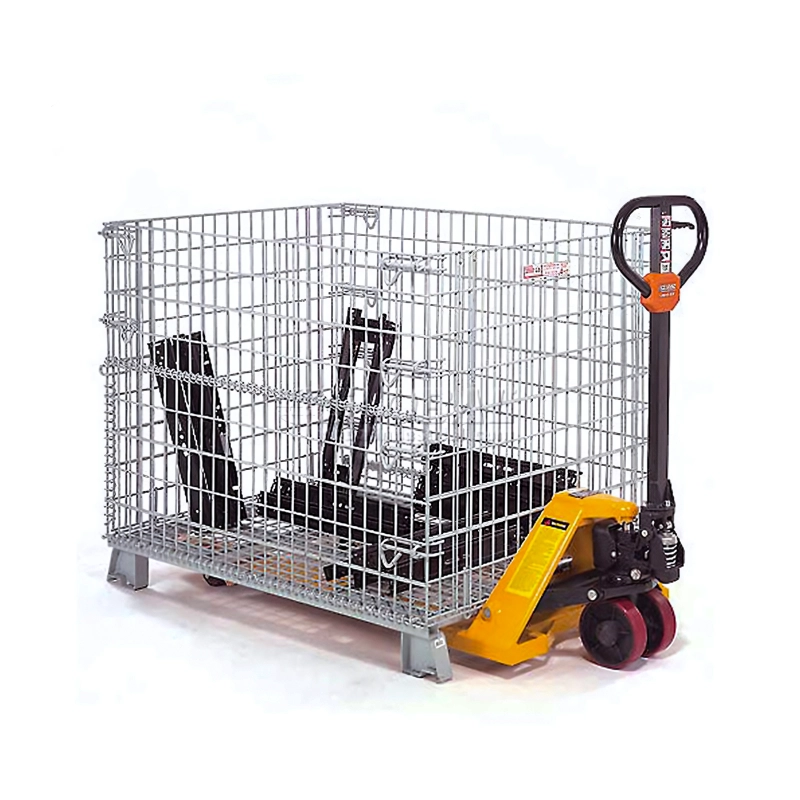
Project 15217
1050 × 1050 × 1000 mm — 1000 kg per unit in the project record
The largest footprint and the tallest of the three, with a tighter stacking cap than project 15059. Its upper-load limit of 1200 kg is written in the stacking context, not as a second unit rating.
- External size: 1050 × 1050 × 1000 mm
- Load record: 1000 kg per unit
- Stacking: 4 levels; upper cages ≤ 1200 kg total when stacked
- Grid and wire: 50 × 50 mm, Φ6.0 ± 0.1 mm (the requirement text also mentions ≥ 5.9 mm)
- Finish and weight: cold galvanised around 10 µm, 53 kg
- Shipping: about 150 units per 20 ft, roughly 25 days for that quantity
Why one tonne cannot simply become a contract figure
Where the figure comes from
The approximately 1 t figure is stated in the STBOX and square-tube folding box comparison we use to direct selection: below it the mesh cage is the practical direction, above it the square-tube frame is. It is an operating guideline from that comparison, nothing more. A published maximum, a recommended operating limit and a stacked-load limit are three different numbers, and only the last two govern day-to-day handling.
What a contract figure actually needs
A load value that can be ordered against needs a released drawing for that size, a stated load definition (static or dynamic, distributed or concentrated), a declared stacking rule, and inspection points for the base, weld points and stacking feet. A comparison figure supplies none of these, and a forklift handling scene photographed in the plant is not a test certificate for a different size.
The mesh is the limiting member
Because the payload travels through the panels and their edge members, side-mesh compression or distortion is the first visible sign the boundary has been passed. Continuing to load after visible deformation raises the risk of progressive distortion and stack instability. Reduce the payload, reduce the stack height, or change the product — do not “test it a bit further”.
A stack is one structure
The bottom cage carries everything above it, so the controlling figure is the combined payload above the bottom unit, not the nominal load of the unit you happen to be filling. A three-level stack with 500 kg in each of the two upper levels sits at the approximate limit with no margin left; 600 kg in each upper level is beyond it. Empty-stack demonstrations prove nesting, not loaded capacity.
Four steps from a weight on paper to a load basis you can order against
Send the real numbers
Unit gross weight, how the load is distributed, how many loaded levels will be stacked, and the handling equipment (forklift, pallet truck, lifting gear). A single average weight hides the concentrated-load case that decides the answer.
Match to the closest project record
We check which of the recorded configurations is nearest on size, wire gauge, finish and stacking cap — 800 × 1200 × 890 mm, 1000 × 800 × 840 mm or 1050 × 1050 × 1000 mm — and say plainly where your requirement does not match any of them.
Confirm the load basis on the drawing
The released drawing fixes the size, the wire, the base reinforcement and the stacking rule, and states which load definition applies to your case. Base reinforcement is available as a project option, but the number of channel members and their section must come from that drawing rather than from a general promise.
Write it into the order
The confirmed load basis, the stacking rule and the inspection points go into the written confirmation with the product image, so the packing list and the receiving department work from the same statement. The seven points worth confirming in writing are listed separately.
The four questions behind the one-tonne figure
Where does the one-tonne figure come from, and can we write it into the contract?
It comes from our STBOX and square-tube folding box comparison, which uses approximately 1 t per unit as the practical limit for the mesh cage. As it stands, no — it is not a certified rating and we do not put it into a contract as one. A contractual load value is issued against a released drawing for your size, with a defined load basis and stacking rule. If you need the comparison figure for early-stage planning, use it as a selection guideline and treat the drawing confirmation as the binding step.
Our parts are heavier than one tonne per container. What are the options?
Three routes, in order of preference. First, move to the square-tube frame folding box, where the tube frame and square-tube uprights carry the load instead of the mesh panels — that is the design case above approximately 1 t. Second, keep the mesh cage but cut the payload or the number of loaded levels until the combined stack load is inside the boundary. Third, ask for a project-specific structural assessment where the base and stacking area are reinforced, which is how project 15059 reached its 1400 kg unit figure. If the load varies between light and heavy across the year, the larger-margin option is the safer purchase.
Why can’t the three project loads be combined into one rating?
Because they are three separate opportunities with different external sizes, different wire control values (5.8 mm, Φ6 mm, Φ6.0 ± 0.1 mm), different finishes and different stacking caps (upper cages ≤ 500 kg, ≤ 1200 kg and ≤ 2000 kg). Project 13967 also records its figure as a dynamic load, while the other two record a per-unit load. Averaging or selecting the highest of them would produce a number that no drawing, no base reinforcement pattern and no stacking rule actually supports — and it would fail the first time a customer built a real stack on it.
Can you supply a load test report?
We do not convert a product-comparison figure, or a photographed handling scene in our plant, into a certificate for your configuration. If a test report is a purchase requirement, the test method, load pattern, duration and deformation limits have to be agreed as a project deliverable before quotation, so the report describes your cage and your loading case rather than a demonstration unit.
Where is this cage the right purchase instead of the stronger option?
When the load stays inside the boundary, the cage is folded flat for empty storage and return freight, and the job is a short cycle: line-side staging, temporary storage during a delivery, or export volume shipment where container utilisation decides the delivered cost. When the same unit must survive years of repeated loaded turnover at the top of its range, the square-tube frame is the cheaper container per use even at a higher unit price. Confirming which product is being quoted is worth doing before either number is compared.