
When a team searches for tire rack vs floor stacking, the real decision is rarely about one piece of hardware alone. It is about handling flow, empty return volume, warehouse discipline, and how much rework you accept every time the load moves.
Ttrack is a returnable steel rack and pallet platform designed for repeated handling, stacking, and forklift movement. That makes it a useful benchmark against four common storage paths: a stackable rack, floor stacking, standard shelving, and a dedicated tire rack. The right choice depends on how often the load circulates, whether it must travel as one unit, and whether you need the empty frame back with minimal volume.
1) Stackable rack: the strongest fit for repeat circulation
A stackable rack makes sense when the load is not staying still. It works best when the same unit moves from receiving to storage to dispatch and then back into circulation. The advantage is not only capacity. It is the fact that the frame keeps the load organized during forklift handling, preserves the storage pattern, and turns many small steps into one controlled move.
In documented Ttrack configurations, the steel frame, locating interfaces, tie-down points, and forklift-ready base are built for that type of workflow. Some configurations also use folding or removable side and upright elements when the frame is empty, which helps reduce return volume. If your operation needs a load to behave like a handled asset instead of a loose pile, this is usually the first option to look at.
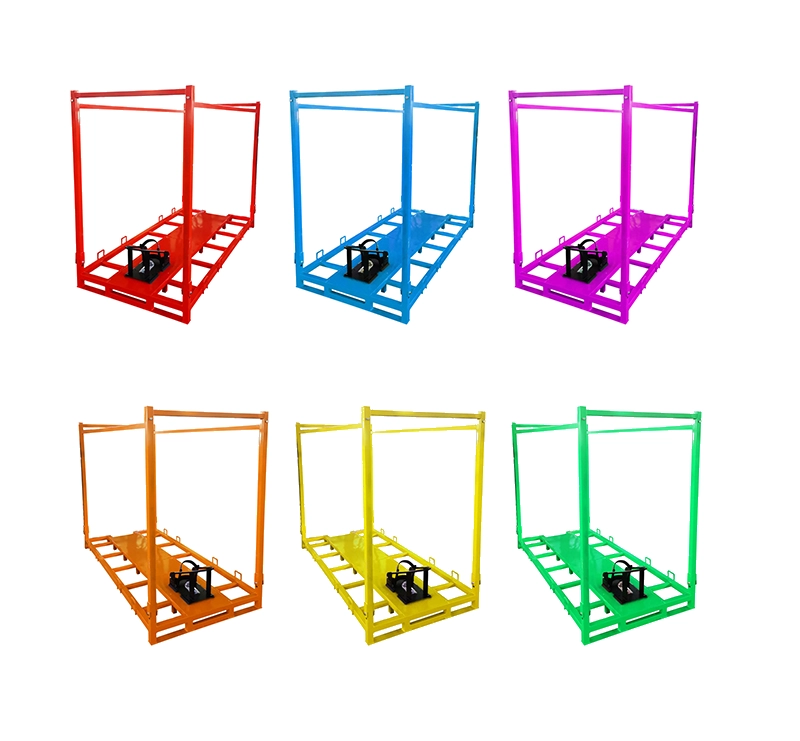
Choose a stackable rack when you want repeatable handling, cleaner counting, and a path that can move from warehouse to truck or container without repacking. That is also why this option often works better than a static shelf when empty return is part of the business model.
2) Floor stacking: the lowest entry cost, but the highest discipline burden
Floor stacking looks attractive because it asks for almost no capital up front. If the volume is small, the storage window is short, or the team is still testing demand, it can be a valid choice. The problem appears as soon as the pile grows. Floor stacking eats horizontal space first, makes location control harder, and forces more manual checking during picking and counting.
It can also slow forklift work because the operator must manage a looser arrangement with more contact risk. In a fast-moving warehouse, the apparent savings often move into labor time, rework, and lost floor area. So floor stacking is fine when the load is temporary and the budget is tight, but it usually becomes the bottleneck when turnover rises.
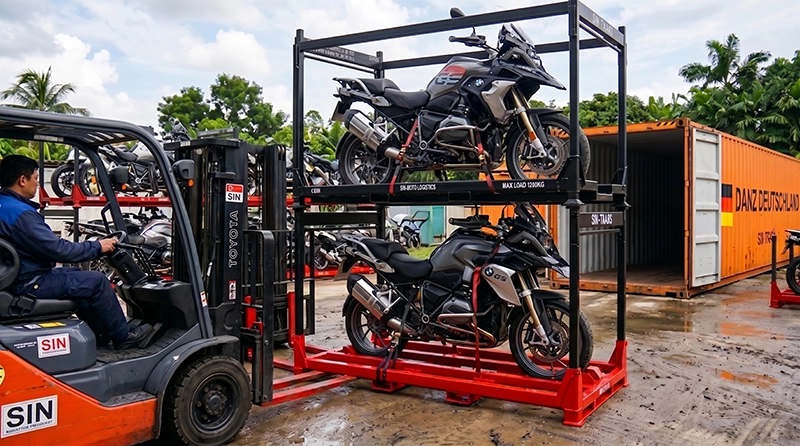
If your site only needs a temporary buffer and does not rely on returnable circulation, floor stacking may still be the right answer. If you need faster dispatch or cleaner export loading, it is usually the first method to outgrow.
3) Standard shelving: organized, but not always vehicle-friendly
Standard shelving is a sensible solution for boxed inventory, small parts, or hand-picked stock. It gives you levels, labels, and a clear location system. But a tire program or other wheel-based load is a different problem. A shelf organizes storage; it does not automatically solve transport, return flow, or load restraint.
That is why standard shelving often works best when the goods stay in the building and the picking process is manual. Once the load needs to be moved by forklift as a complete unit, shelving starts to look less efficient than a palletized frame. In other words, the shelf is strong on order, but weak on circulation.
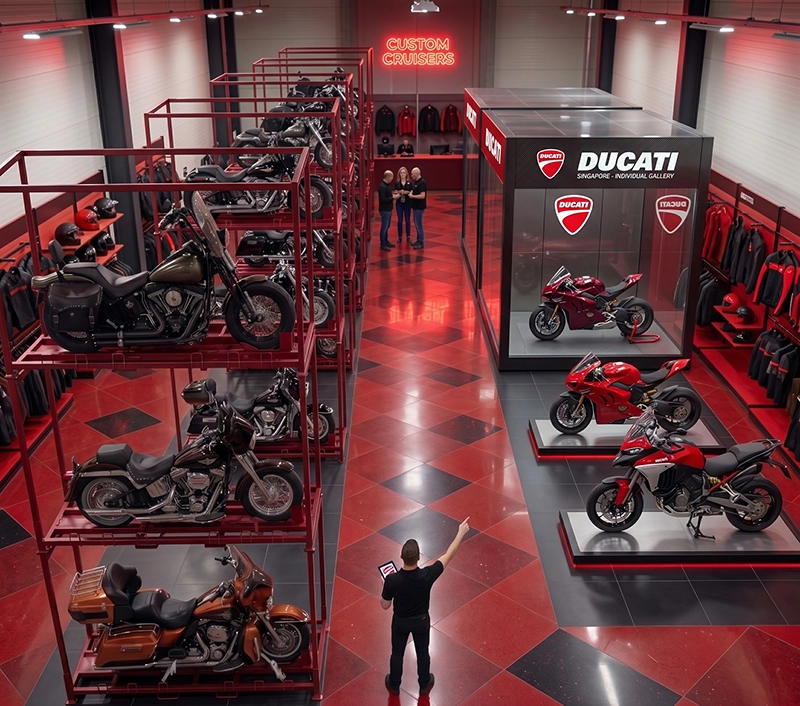
If your inventory is small, stable, and rarely ships out as a handled unit, a shelf may be enough. If the same load must be stored, moved, and returned as one piece, a stackable rack usually gives you a cleaner operating path.
4) Dedicated tire rack: the best fit when the job is tire-only
A dedicated tire rack is worth the investment when the whole process is built around one tire family and one storage pattern. It can be the cleanest answer for a tire-only workflow because the layout is engineered for that specific item, not for mixed handling. That specialization can improve space use and reduce unnecessary movement.
The trade-off is flexibility. A purpose-built tire rack is often less adaptable when the load mix changes, when the room must handle more than one product type, or when the same unit also needs to act as a returnable transport frame. In those situations, a reusable steel rack can offer a better balance between storage, shipping, and empty return logistics.
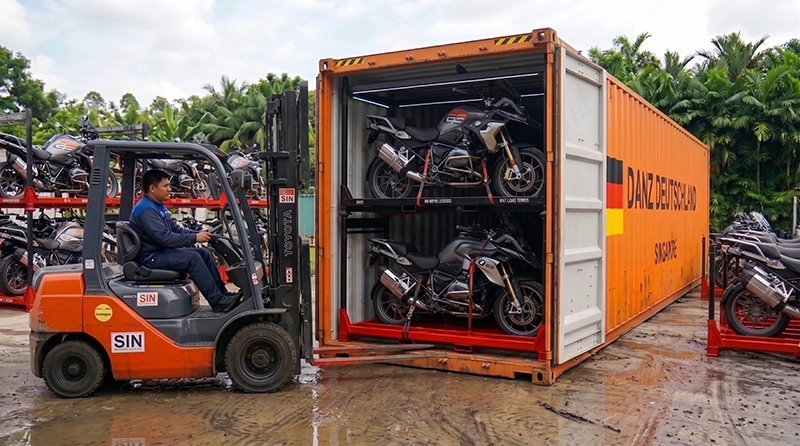
That container-loading view shows the real value of a returnable frame. The same unit can serve the warehouse, the truck, and the container, then come back with less empty volume when the frame is stacked or nested in its approved configuration.
What the four options mean in practice
- Choose a stackable rack when repeated handling, forklift moves, and empty return are part of the workflow.
- Choose floor stacking when the budget is tight and the load is temporary.
- Choose standard shelving when the inventory is small, hand-picked, and unlikely to travel on a palletized unit.
- Choose a dedicated tire rack when the operation is tire-only and wants a fixed-purpose internal layout.
When not to choose a stackable rack
Do not choose a stackable rack if you never plan to move the load by forklift, if the inventory will not circulate, or if the space pressure is low enough that floor stacking remains acceptable. It is also the wrong choice when the load is so small that a basic shelf does the job and the extra steel structure would only add complexity.
On the other hand, if your operation needs a returnable unit that can move from storage to truck to container and back again, a stackable rack usually gives you a more practical operating model than a one-way storage method.
FAQ
Is floor stacking ever better than a rack?
Yes. If the quantity is small, the stay is short, and handling is temporary, floor stacking can be the simplest answer. It is the cheapest way to start, but rarely the cheapest way to scale.
Can one rack system cover storage and export loading?
Yes, if the frame has a forklift-ready base, stable stacking points, and a return plan for empties. That is where a returnable steel rack can outperform a fixed shelf or a one-way storage method.
If you are comparing storage, shipping, and empty-return flow, review the product detail pages and case study pages to match the right configuration to your operation.
Need a Custom Storage Solution?
Speak directly with our technical engineers. We offer free structural designs, heavy-duty catalog evaluations, and quick B2B price quotations.
Request a Quote Now →