
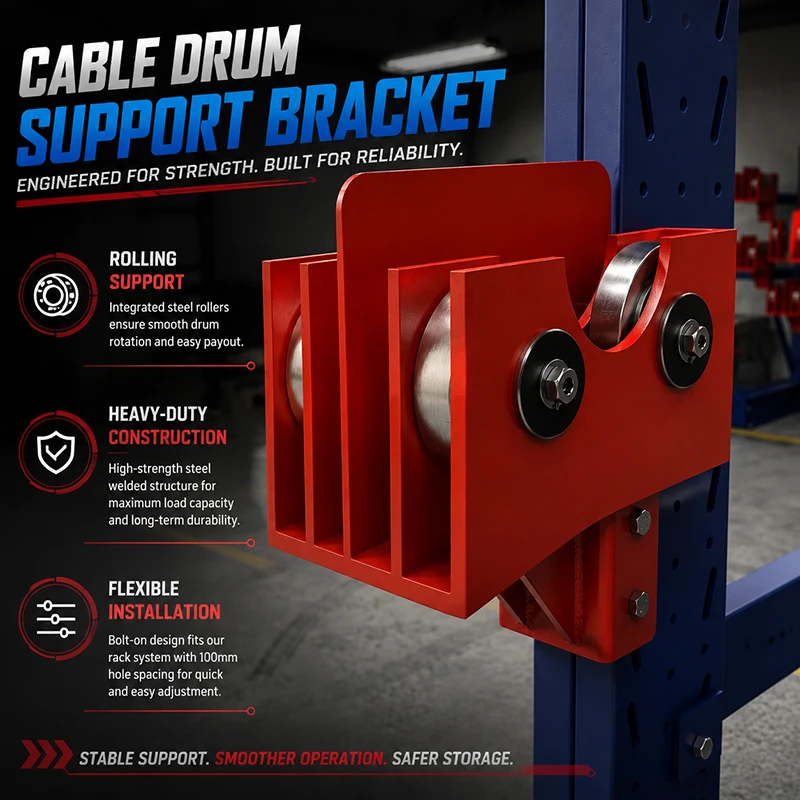
A cantilever rack already standing in your yard looks like the cheapest way to get cable reels off the floor. The arms are there, the uprights are there, the base plates are already bolted down. The problem is that a cantilever arm is designed to carry long goods that rest on top of it, while a cable reel has to be held on a spindle or on rollers, and that load has to travel through a bracket into the upright and down to the floor. Those are different load paths.
The retrofit set we quote for this kind of conversion is deliberately small: support tubes of Ø60 mm, a support bracket that projects 500 mm, and a stated working envelope for reels up to Ø1,000 mm. Those figures come from one documented retrofit record and apply only when the existing rack connection has been verified. They are a reference set for a conversation, not an approval to drill into whatever frame you happen to own.
What the Retrofit Accessory Set Actually Contains
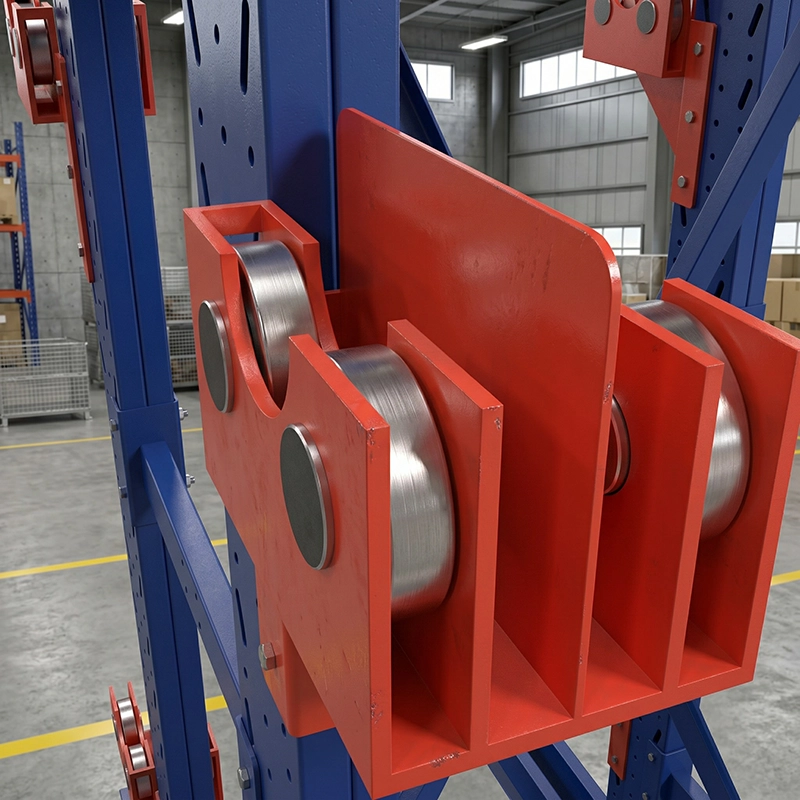
The conversion hardware is a support tube plus a bracket that reaches out from the existing structure and carries the reel. In the documented record the tube is Ø60 mm, the bracket extends 500 mm from the rack face, and the reference quantity was quoted as either 20 or 100 pieces at about 32 kg per set. That is the physical scope of the accessory side of the job. Everything that decides whether the conversion is safe sits outside that scope, in the condition and geometry of the rack you already have.
The 500 mm projection is the figure that most often surprises buyers, because it is measured outward from the existing rack face. If your aisle was planned to the old rack outline, the usable aisle shrinks by that projection on each side of a row. On a two-sided installation the reel positions sit on both faces, so the aisle calculation has to be redone before anything is ordered.
Pre-Checks That Must Be Completed Before Any Cutting or Drilling
Treat this as a measurement list rather than a formality. Each item can stop the project on its own.
1. Connection geometry
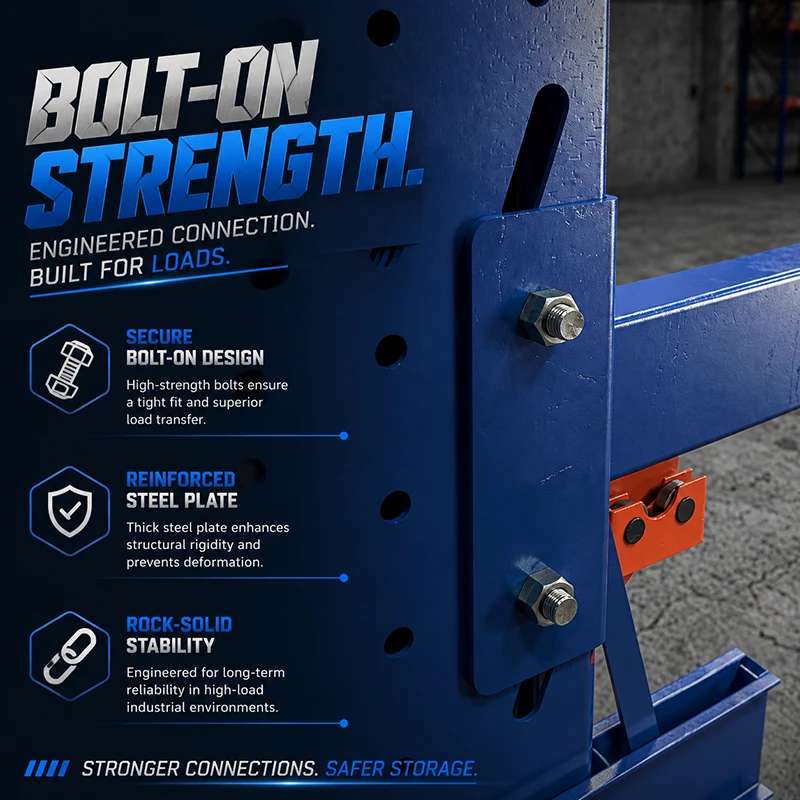
Record the upright profile, the hole pattern and pitch, the plate thickness at the connection point, and whether a through-bolt can be fitted at the exact height the reel needs. In the documented retrofit the connection dimensions were still subject to confirmation at quotation stage, which is the normal position: the accessory is defined, the interface is not until someone measures it. A rack with a proprietary or unknown hole pattern, or one where the original drawings are gone, cannot be confirmed from a photograph.
2. Load path and existing capacity
The reel load must reach the upright and the base. The original arm capacity has no bearing on this, because the reel is not sitting on the arm in the way the rack was designed for. Check what the rack was originally rated for, how many levels carry load today, and whether the base plate anchorage and the floor slab are still adequate for the new loading pattern. If the rack is already loaded to its original design basis, the conversion adds load rather than replacing it.
3. Stability and centre of gravity
Moving from long goods resting on arms to reels carried on projecting brackets changes the overturning moment, especially on double-sided rows and on racks that rely on base plates alone. Check base plate condition, anchor condition, and whether the row is tied to anything else.
4. Upright condition
Look for bent or twisted flanges, cracked welds, impact damage from forklifts, elongated or ovalised holes, and corrosion with measurable section loss. Any of these makes the upright unverifiable as a support for a new bracket.
Reel Size, Support Height and Forklift Access
Support height is not continuous. The dedicated cable reel upright profile used on this product family has installation holes at 100 mm intervals, so the reel support position is set in 100 mm steps around the actual drum diameter. An existing cantilever upright will have its own pitch, and that pitch decides which reel diameters can be supported at a sensible height. If the available positions put a small reel too high or a large reel into the floor, the retrofit is not the right route.
Forklift access is the second half of the same problem. A reel has to be brought in, positioned on the support, and lifted out again without the forks striking the bracket or the upright. Confirm the approach direction, the fork spread and the removal clearance against the real aisle, not against the drawing. Where operators also need to pull cable off a reel while it stays in place, the support has to be a roller-bearing type rather than a static cradle; that is a different accessory from a plain support tube and should be specified as such.
Which Existing Racks Should Not Be Converted
Some racks fail the pre-check before any calculation is done. Do not convert:
- Racks whose upright hole pattern and connection details cannot be measured or confirmed, or where no original documentation exists and the frame has been modified since.
- Racks showing deformation, cracked welds, impact damage or corrosion with section loss on the uprights or base plates.
- Light roll-formed cantilever frames that were sold for light long goods; their uprights were never sized for a projecting reel bracket carrying a reel of several hundred kilograms or more.
- Free-standing rows with no adequate base plate anchorage, or rows standing on a floor slab whose condition and capacity are unknown.
- Rows already carrying their original design load, where the reel positions would be added on top of it.
- Rows where the 500 mm bracket projection cannot be accommodated inside the existing aisle, or where the aisle cannot be re-planned without blocking a fire route or a forklift turning area.
Where the Reference Numbers Stop Being Valid
The Ø1,000 mm reel limit, the 500 mm bracket projection and the Ø60 mm tube belong to one documented retrofit configuration. They are not a general rating for cantilever racks. If your reels are larger than the reference envelope, or heavier than the reel list behind that record, or if you need multi-level arrangements, the answer may be a purpose-built cable reel rack with main and auxiliary frames rather than a conversion.
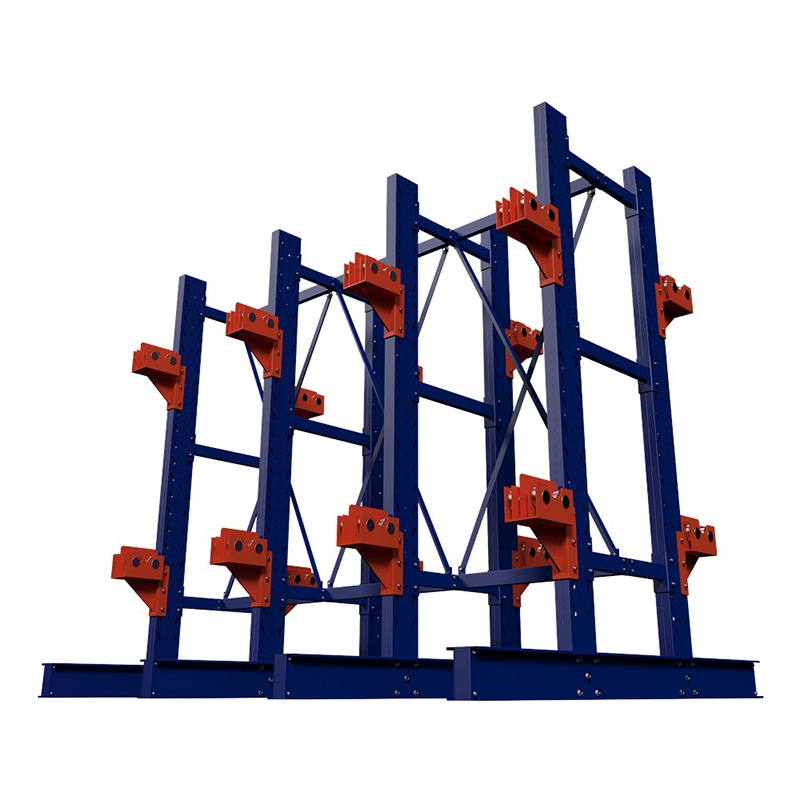
Be equally careful about the frame family itself: on this product family the auxiliary frames are not independent units. They rely on the main frame upright for support, so an accessory count cannot simply be multiplied across a row of frames that were never designed as a set.
Finally, finish and location matter. Outdoor yards need a corrosion-control specification agreed before the work is done, and the operating limits for the installation, including forklift insertion and lifting practice, periodic inspection of brackets and welds, and protection from prolonged standing water, belong in the handover document rather than in a verbal briefing.
What a Verified Retrofit Package Should Contain
- Measured upright profile, hole pitch and connection detail, taken from the rack on site.
- Reel list with diameter, width and weight per reel, plus the cable type and whether the reel stays in place during withdrawal.
- Bracket projection and support height positions confirmed against the real aisle and the real drum diameters.
- Roller-bearing support specified explicitly where cable is drawn off the reel in place.
- Base anchorage, floor condition and stability re-checked for the new loading pattern.
- Finish and corrosion-control specification agreed for the actual storage location, indoor or outdoor.
Frequently Asked Questions
Can every cantilever rack be turned into a cable reel rack?
No. The conversion depends on a verifiable connection between the existing upright and the reel support bracket, and on the rack having enough remaining structural capacity and stability for the new load path. Where the hole pattern is unknown, the uprights are damaged, or the frame was only ever sized for light long goods, the honest answer is a purpose-built rack instead.
What should I measure first?
Start with the upright: profile, hole pattern and pitch, plate thickness at the connection point, and the height range where a support can actually be bolted. Without those numbers the accessory set cannot be matched to your frame, and the Ø1,000 mm and 500 mm reference figures cannot be confirmed as applicable.
Does a retrofit give me reel rotation for cable pay-out?
Only if a roller-bearing support is specified. A plain support tube holds the reel in position; it does not by itself give controlled rotation for drawing cable off a reel that stays in the rack. Say clearly at enquiry stage whether the reel is stored and removed whole, or whether cable is pulled from it in place.
Do I lose aisle width?
Yes, by the bracket projection on each loaded face. In the documented configuration that projection is 500 mm, so a row loaded on both sides takes 1,000 mm more of the aisle than the bare rack did. Re-check the aisle, the forklift turning path and the fire route before committing.
Next Step
Send photographs of the existing rack, the measured upright hole pattern and connection detail, and your reel list with diameters and weights. We will tell you whether the frame can be verified for a reel support conversion, which of the two answers applies, or whether the site needs a purpose-built cable drum rack instead. If the retrofit route is confirmed, the accessory set and the bracket projection can be quoted against your own frame rather than against a reference drawing.
Need a Custom Storage Solution?
Speak directly with our technical engineers. We offer free structural designs, heavy-duty catalog evaluations, and quick B2B price quotations.
Request a Quote Now →