
When an engine block or another dense casting is placed into a wooden pallet, timber crate, or plastic box, the visible failure is usually blamed on the last lift. The deeper problem is often load concentration: a heavy part, a small contact area, impact during placement, and a container that was selected for general handling rather than the actual load path.
The result is more than a broken base. A cracked pallet or split box can interrupt picking, damage parts, contaminate a work area, create a recovery job, and make the next transport move less predictable. A wire mesh container with a reinforced steel base is worth evaluating when the operation needs a reusable load carrier for heavy parts, forklift or pallet-jack movement, and controlled warehouse storage.
Why concentrated casting loads break ordinary containers
A container can look large enough and still be unsuitable for a dense casting. Engine blocks, machined housings, and other heavy components often transfer force through a few feet, edges, or irregular contact points. During loading, a drop, a tilted fork, or a hard set-down can multiply that local stress. Timber can split at a weak grain or joint; plastic can flex, crack, or lose shape when the load is concentrated and repeated. Moisture, oil, damaged corners, and uneven floors make the margin smaller. The practical check is not only total weight: review the part footprint, contact points, center of gravity, loading motion, and how the base is supported.
The chain reaction after a pallet or box collapses
The first cost is the container, but the operational cost usually travels further. A broken base can force an unplanned repack, manual sorting, forklift rework, and a temporary quarantine of parts. Splinters and fragments can scratch or mix with components; a cracked plastic wall can allow parts to shift or fall; an unstable load can delay a production-side delivery or return trip. Repeated replacement also hides the real cause, because the warehouse keeps buying another light-duty carrier instead of correcting the load path. A better decision compares the full handling cycle: damage risk, cleanup, repacking time, safe access, return logistics, and whether the carrier remains stable after repeated movement.
Choose the carrier around the part, not the other way around
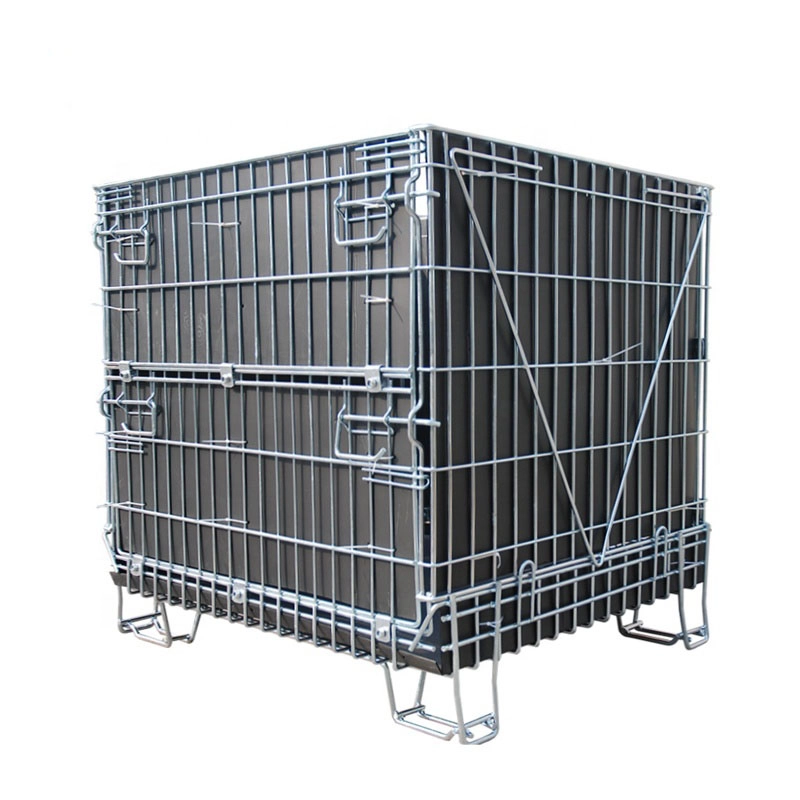
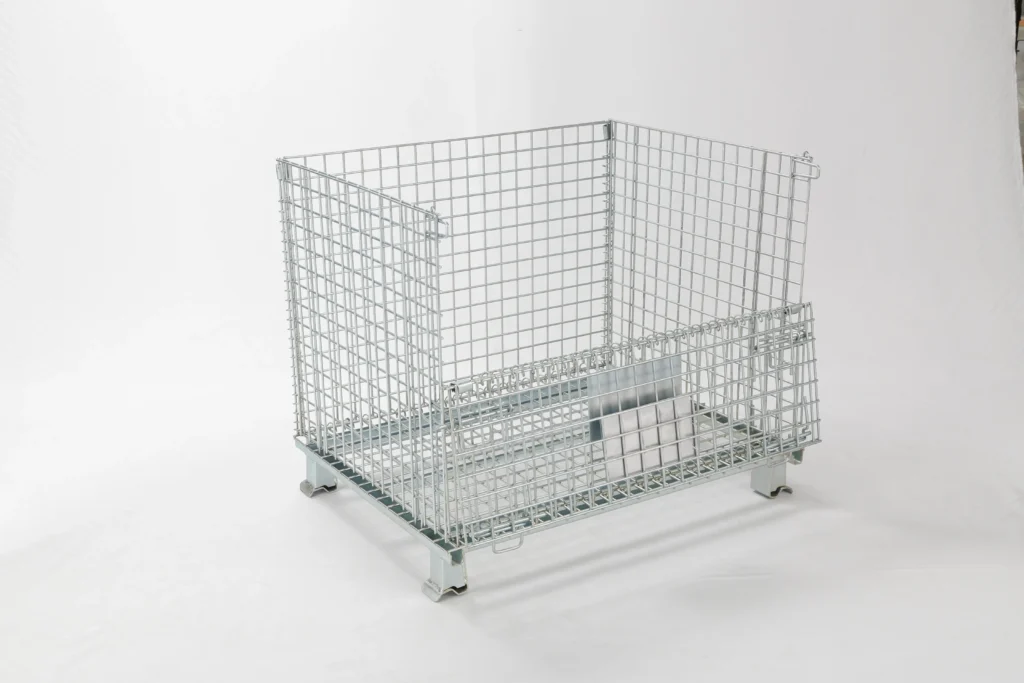
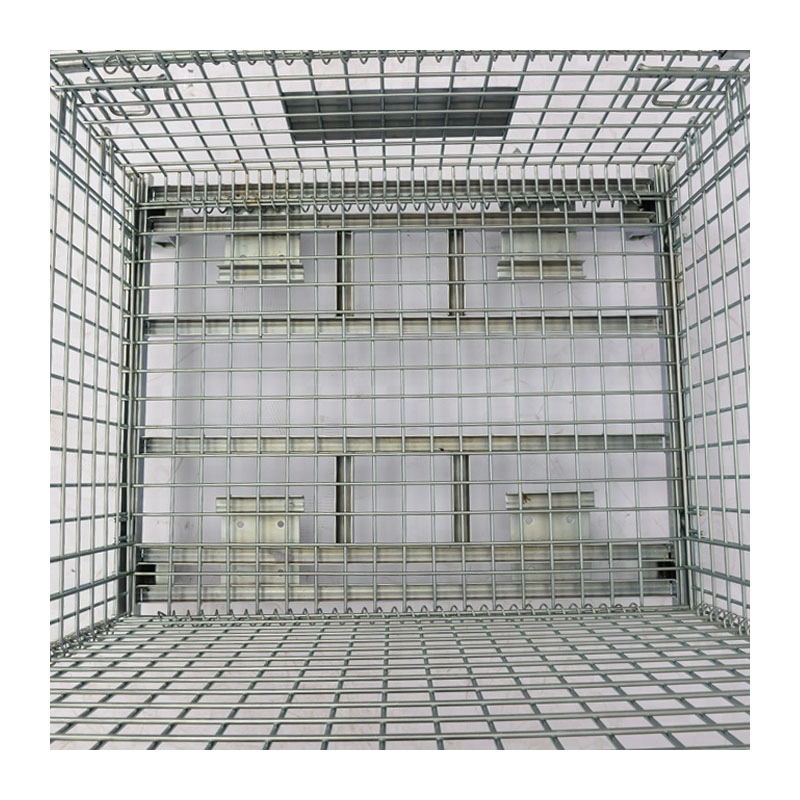
There is no single best container for every route. A wooden pallet or timber crate can remain reasonable for light, one-way shipments where cushioning, low initial cost, and disposal are more important than repeated circulation. A molded plastic box can suit clean, lighter parts and standardized manual picking, provided its base and walls are rated for the real load and impact pattern. A steel box or wire mesh container is the stronger direction to evaluate for dense castings, repeated internal transfers, forklift or pallet-jack handling, and warehouse visibility. The stbox format adds a collapsible wire structure and can be specified with a protective liner when parts must be separated from the mesh. Before approval, confirm the actual part weight, footprint, center of gravity, handling equipment, stacking plan, finish, gate, and any liner or lid requirement with the supplier.
Where a collapsible wire mesh container can make sense
- Automotive and casting plants moving dense engine, transmission, housing, or other metal parts through repeat internal logistics loops.
- Warehouses that need a reusable industrial storage cage with forklift or pallet-jack access rather than a one-time wooden carrier.
- Operations that need visual access and easier picking from a stacked position; a drop-gate configuration may be evaluated where the actual handling method permits it.
- Sites that need to reduce empty-return volume and want to compare a collapsible crate with a rigid steel box, plastic container, or timber solution.
Questions to settle before changing the container
Does a steel wire mesh container automatically solve every heavy-casting problem?
No. It addresses the carrier structure and handling format, but the complete solution still depends on the part footprint, contact points, center of gravity, loading impact, equipment, floor condition, stacking rules, and any required liner or dunnage. Ask for a configuration review rather than treating a catalogue image as a load approval.
When should we keep using wood or plastic instead?
Keep them in consideration when the shipment is light or one-way, the load is well distributed, manual handling dominates, or the carrier will not be exposed to repeated impacts and return transport. If the same dense casting repeatedly cracks bases, shifts in transit, creates debris, or demands repacking, compare the total handling cost with a reusable steel container option.
Need a Custom Storage Solution?
Speak directly with our technical engineers. We offer free structural designs, heavy-duty catalog evaluations, and quick B2B price quotations.
Request a Quote Now →