
Laser & Flame Cutting Workshops
A production supervisor or operations director at a metal cutting shop, flame or laser, knows the default plate habit too well: sheets landed flat, stacked in piles across the bay, then dragged and flipped by overhead crane or forklift every time a size is needed. Flat stacking eats the floor, buries the label, and scratches the face of the very sheet you are about to cut. Terack telescopic cantilever racks stand those plates upright in drawer-style tiers, lift them straight with the overhead crane, and let one operator crank a sheet out, scratch-free, without walking the aisle.
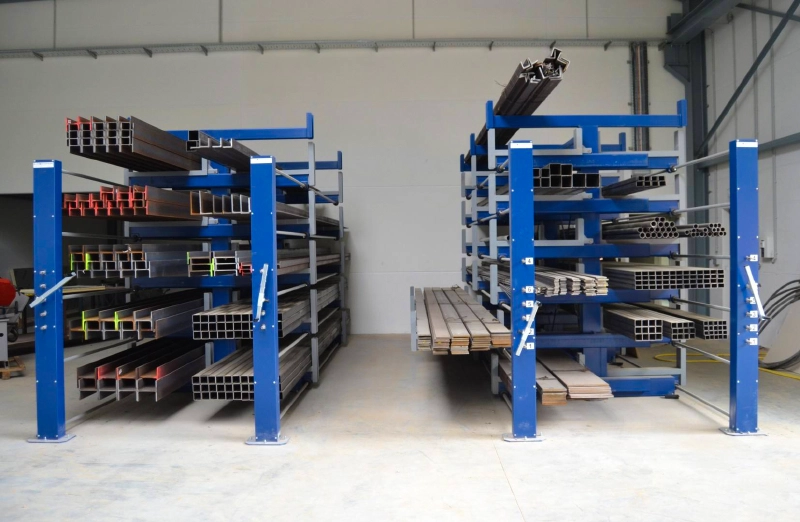
| Product | Telescopic / Crank-Out Cantilever Rack (Terack) |
|---|---|
| Load per arm | Up to 1500 kg dynamic, 4500 kg static per arm |
| Operation | Hand-crank, single-operator extension to crane pick point |
| Reach | 100% full-extension pull-out for overhead crane access |
| Plate protection | Roller-guided arms, no floor drag, scratch-free retrieval |
| Structure | Q235 carbon steel uprights, EPDM-padded contact |
Flat-stacked plates are the most expensive floor you own
For a production supervisor at a laser or flame cutting shop, plate arrives on the flatbed and gets dropped where the truck stops. Sheets pile across the bay, the size and heat-number disappear under the stack, and the cutting cell waits while someone hunts the right thickness. The shop is not short of square metres, it is short of usable floor, because every flat-stacked pile is rent paid on space that cannot feed a machine. As order mix widens, the piles multiply and the bottleneck moves from the cutter to the material crib.
Flipping plates on the floor is where the damage and risk start
The real cost of flat stacking shows up at retrieval. A worker slings the pile, the overhead crane lifts and swings it over the aisle, and the sheets are dragged, flipped and separated by hand to find the one marked size. That is where the scratch on the cut face comes from, and where the crane, the fork truck and the people converge in the same aisle at the same time. For an operations director weighing supplier quotes, the silent line item in every cheap floor plan is rework from handling damage and the insurance cost of crane-people cross-traffic no rack ever addressed.
A drawer-style cantilever rack lifts the plate, not the people
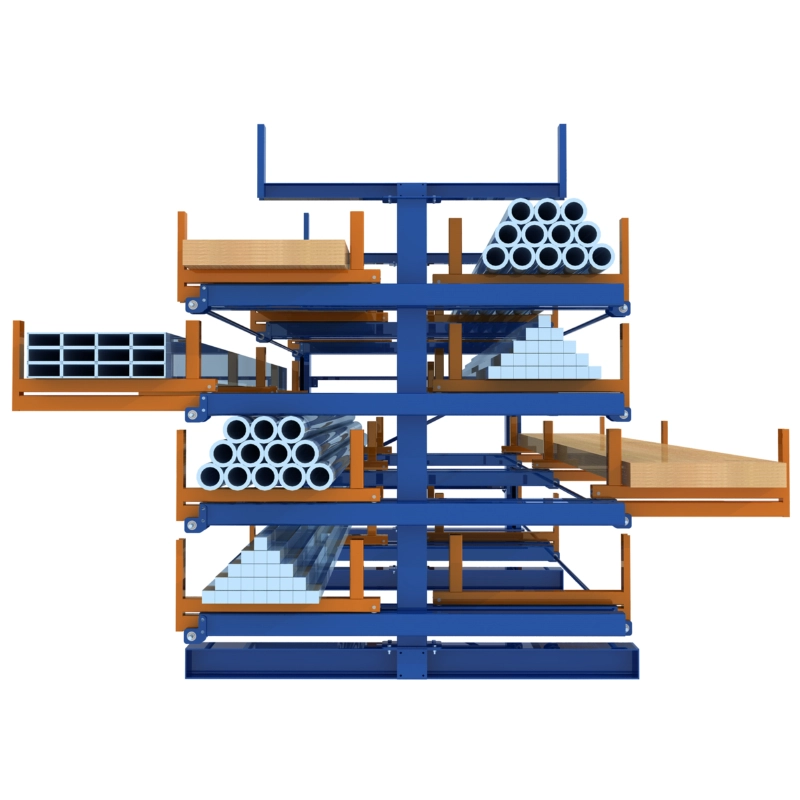
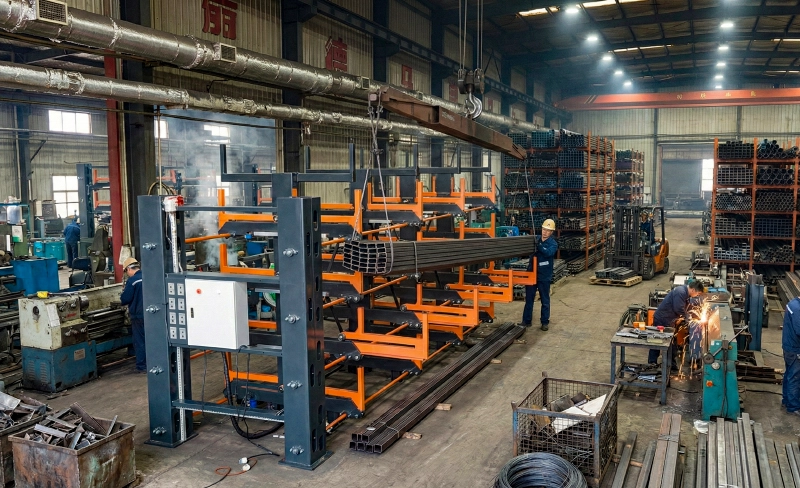
Terack telescopic cantilever racks answer the cutting-shop brief directly. Plates stand upright in drawer-style tiers, each size on its own labeled level, so the overhead crane hooks the rack arm and lifts the sheet straight, no floor drag, no flip. One operator turns the hand crank and the loaded arm rolls out 100% to a fixed crane pick point, so the aisle stays clear and the pick is a single controlled motion. For a supervisor comparing vendors, this is the proof: a storage system engineered so the crane and one person do the work the old floor plan asked three people and a swing to do.
Rated arms and padded contact are what protect the cut face
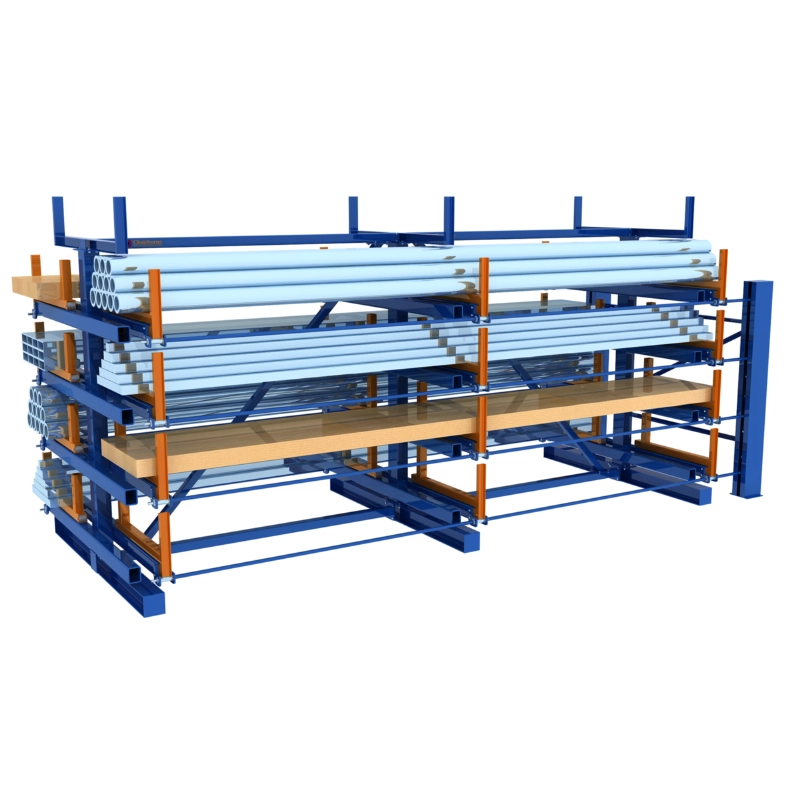
Structurally, the uprights are Q235 carbon steel and the arms are roller-guided and EPDM-padded at the contact edge, so a sheet is supported on a cushioned rail instead of scraped across steel. Every arm is rated to 1500 kg dynamic and 4500 kg static and the bay tonnage is locked by calculation, not guessed, so a full drawer of plate extends to the crane without deflection. The result for the cutting shop is a material crib that feeds the laser instead of blocking it: plates are visible by size, lifted scratch-free, and the floor the piles used to occupy comes back to the cutting cell and the fork aisle.
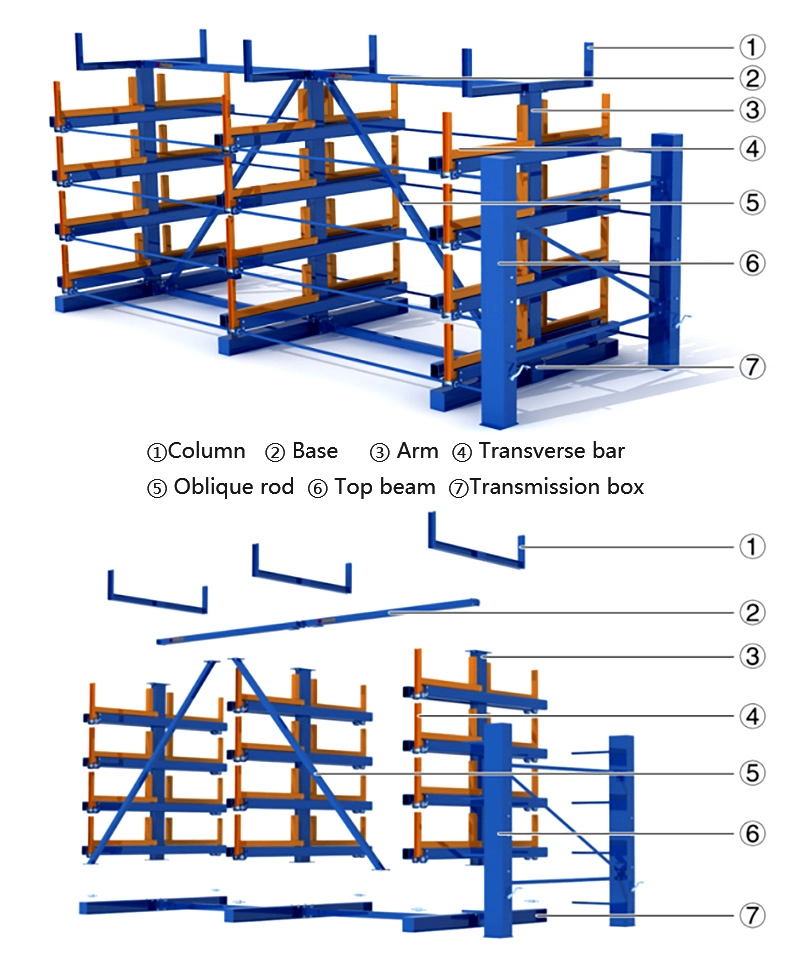
- Plates stored upright in drawer-style tiers, lifted straight by the overhead crane
- One operator cranks a sheet out; no floor drag, no scratch, no aisle cross-traffic
Get the Terack Telescopic Cantilever Specification Sheet
Need a Custom Storage Solution?
Speak directly with our technical engineers. We offer free structural designs, heavy-duty catalog evaluations, and quick B2B price quotations.
Request a Quote Now →