
Adding casters to an Stbox mesh container changes the operating system of the unit. A fixed container transfers the load through its designed base and stacking feet. A container on casters transfers the load through a small number of wheel contact points, introduces rolling and braking forces, and places the load higher above the floor. Therefore, a mobile mesh container must not be treated by default as the same statically stackable crate.
The short answer is simple: do not stack a roll-mounted cage before the wheel configuration, load situation, floor and stacking interface have been assessed together. The Stbox image bank shows both static stacking and mobile versions, but the mobile version is a configuration option—not a standard approval for every use.
What changes when wheels are mounted on a mesh container?
The first change is height. Casters lift the cage shell and contents above the normal support surface. That can raise the combined center of gravity, especially when a heavy load is placed high or is unevenly distributed. The second change is load transfer: instead of four steel feet or the specified base structure distributing the pressure, the wheel set concentrates the force on the mounting plates and floor contact surfaces.
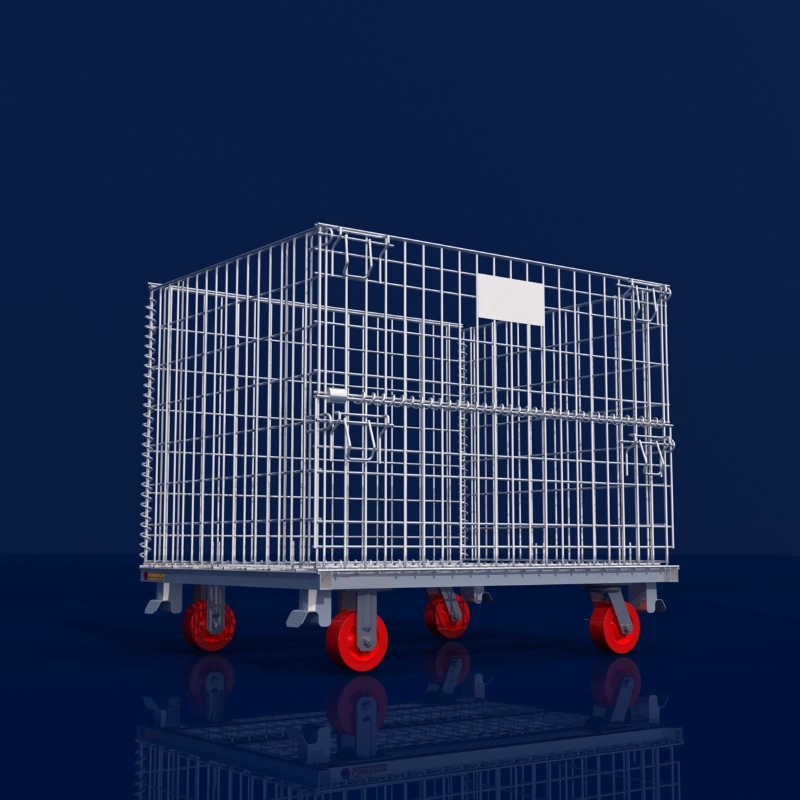
Movement adds another difference. Starting, stopping, turning, thresholds and uneven floors cause forces that do not exist in a stationary stack. A caster that seems suitable under a centered empty crate may not be suitable for a full crate, a sloping route or repeated use in supermarket and line-bound handling. The wheel material, wheel diameter, mounting method, swivel design and brake specification must therefore be selected based on the actual route and load—not copied from the original specification of the static container.
Can a roll-mounted Stbox still be stacked?
Only when the complete mobile configuration is specifically confirmed for stacking. The standard static setup is based on aligned steel feet and a stable top frame. The photo below illustrates that static interface; it must not be read as approval to place a caster structure on another cage.
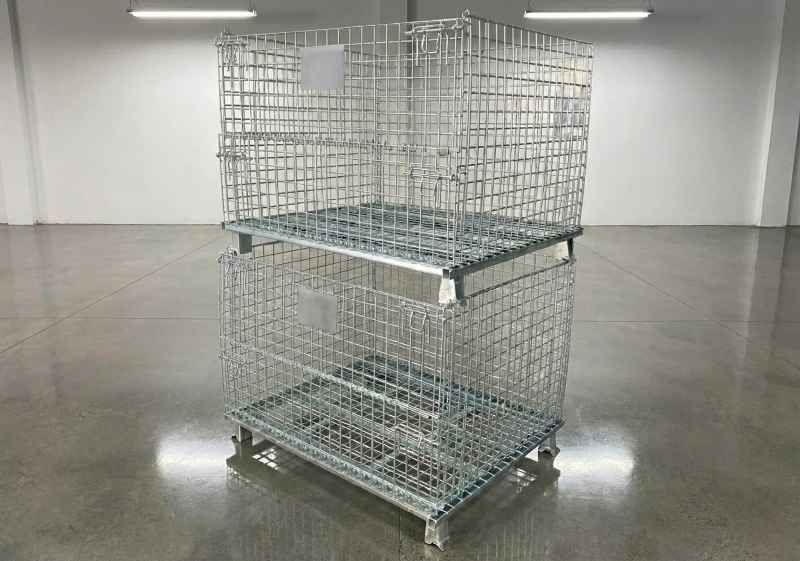
Before stacking, confirm whether the wheels are removed, retracted, isolated from the compression path, or supported by an interface designed for this purpose. Confirm the permitted empty and loaded conditions separately. A folded empty cage may have a different contact pattern and center of gravity than a mounted cage filled with parts. Unless the supplier has confirmed the exact configuration and operating rule, use the roll-mounted unit exclusively as a mobile container and keep it out of a static stack.
How should the wheel load and floor capacity be checked?
There is no universal wheel group rating that can be safely assigned to every Stbox. The required rating must be confirmed based on the total operating load, load distribution, number of effective load-bearing casters, movement frequency, surface condition, thresholds and braking or turning requirements. Do not base a purchasing decision on simply dividing the total weight by four. Uneven loading and dynamic movement can cause one wheel or mounting point to carry more than its nominal share.
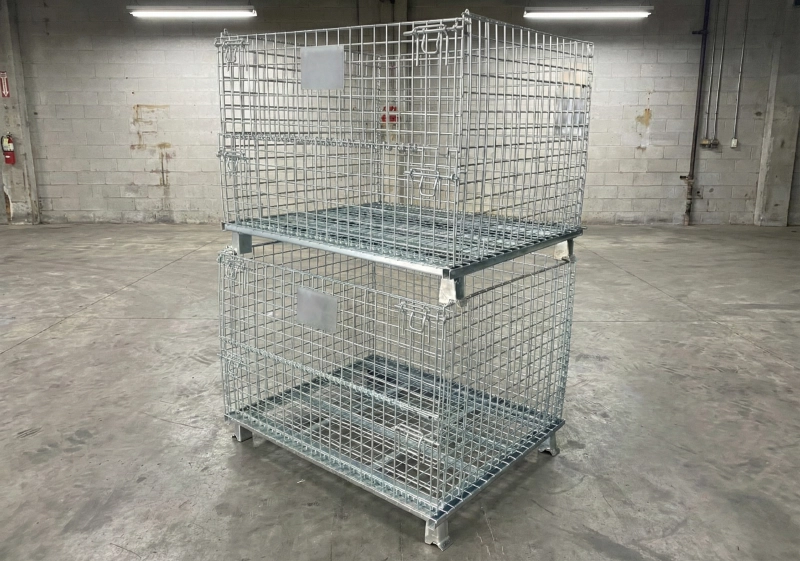
Floor assessment is equally important. Identify the concrete or floor construction, surface finish, joints, drains, slopes and weak spots. Then check both the distributed load and the local point load at each wheel. The concrete floor image shows a static two-high storage situation; it does not provide a floor capacity value for a mobile cage. Your plant engineering or responsible construction professional must confirm that the floor can carry the calculated contact pressure along the entire travel and parking route.
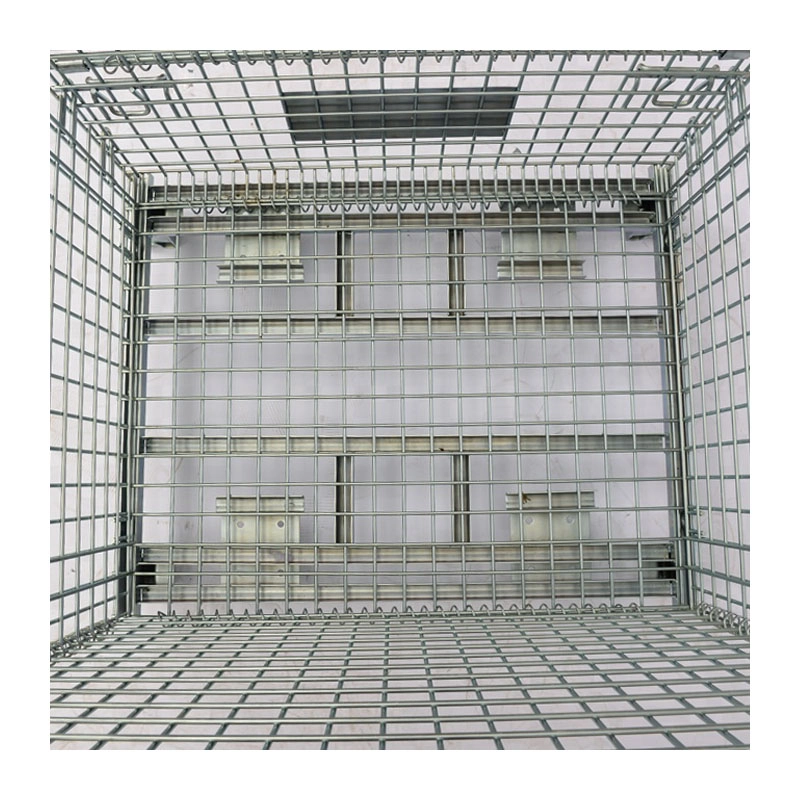
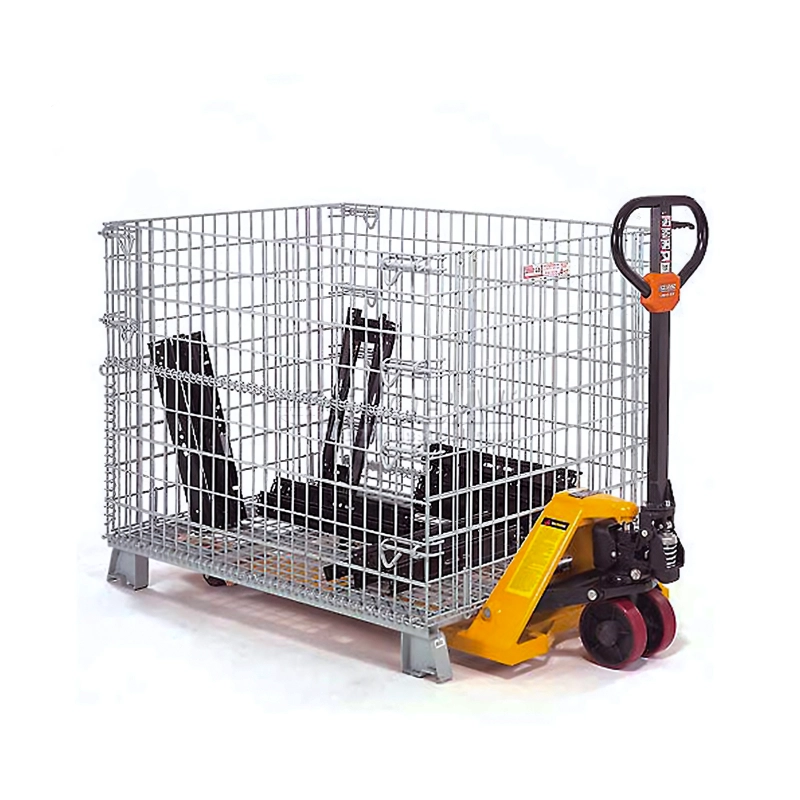
Pallet jack compatibility is a separate question. The Stbox base can be handled with a pallet jack in the configuration shown, but that evidence does not confirm that the same cage is safe on casters, nor does it confirm stacking while the wheels are mounted.
What you must confirm before ordering casters
- Operating load: state the empty weight of the container, the maximum contents, the load distribution and whether the load can shift during movement; the rating of the wheel group must then be confirmed for that case.
- Route and surface: describe the condition of the concrete, joints, slopes, thresholds, camber, dirt and any vulnerable floor finish, so that the type and size of the wheel are not chosen solely on the basis of appearance.
- Parking and stacking rule: state whether the container remains mobile, is parked loaded, or returns to static stacking; these are different approval conditions and must not be combined.
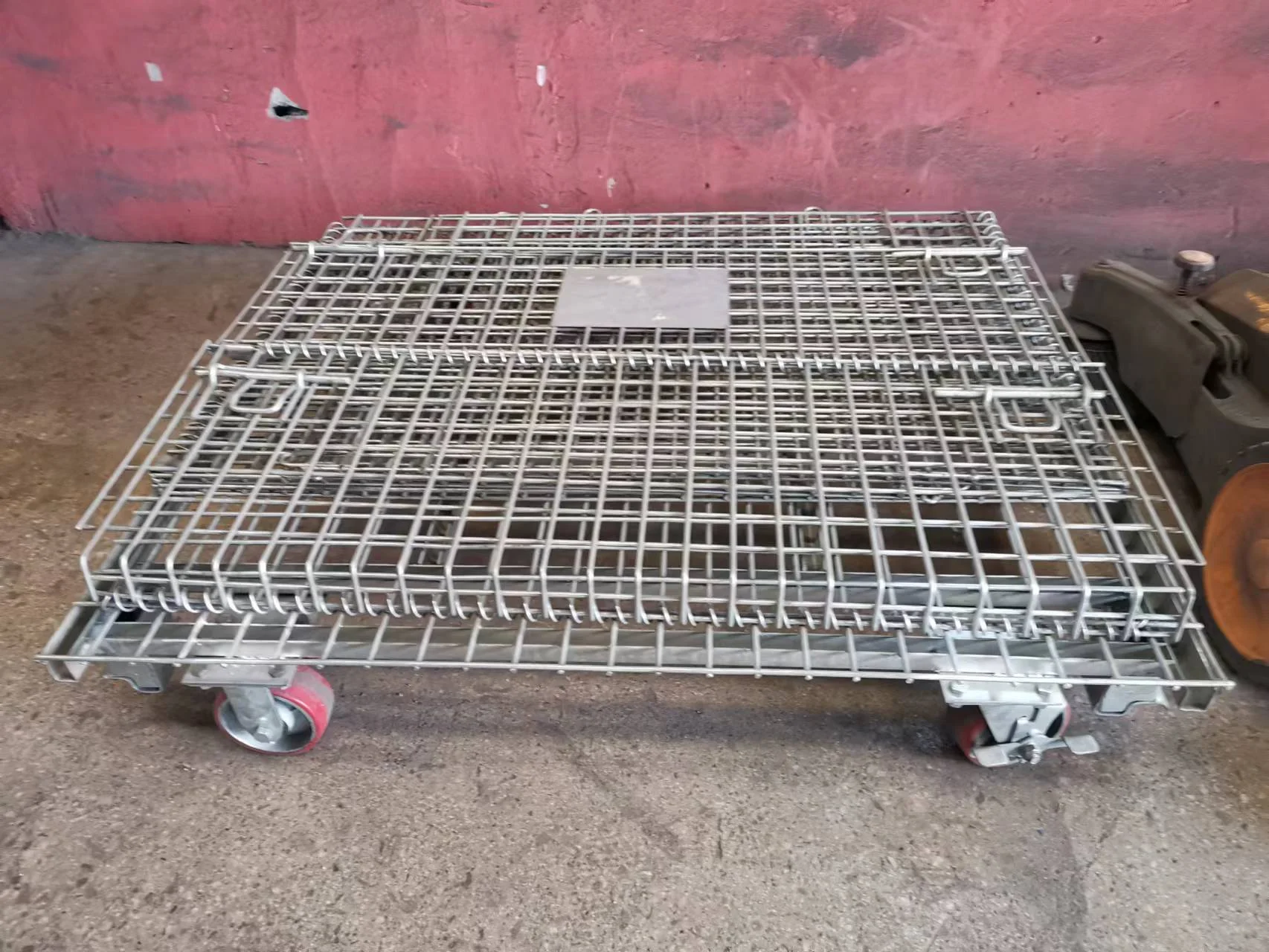
- Base interface: confirm mounting plates, reinforcement, wheel clearance and whether the original stacking feet remain the intended load path. The folded version on wheels below shows a special configuration, not a universal retrofit instruction.
Veelgestelde vragen
Do casters need brakes?
For parking at the line, loading, picking or supermarket distribution, it is normally worth specifying a locking function so that the container can be secured while people work around it. The version shown has foot-operated brakes, but the exact brake type, locking behavior and suitability must still be confirmed for the chosen wheel set. A brake prevents or limits rolling; it does not make the container approved for static stacking and does not replace a floor and stability assessment.
What is the safe rule if the configuration is not confirmed?
Keep the caster container on the floor, do not stack, keep the load centered and within the confirmed operating conditions, and use the specified locking when parked. Do you want to mount wheels on your container? Report your floor conditions and loading so we can adjust the wheel configuration and provide the stacking prohibition or approval instructions for actual use.
Heeft u een op maat gemaakte opslagoplossing nodig?
Spreek rechtstreeks met onze technische ingenieurs. Wij bieden gratis constructieontwerpen, evaluaties van zwaar belaste catalogi en snelle B2B-prijsopgaven.
Vraag nu een offerte aan →