
Custom sizing guide for stackable racks and stillages
When pallet sizes change from one line to another, the internal rack size must follow the actual load envelope, not a catalog label.
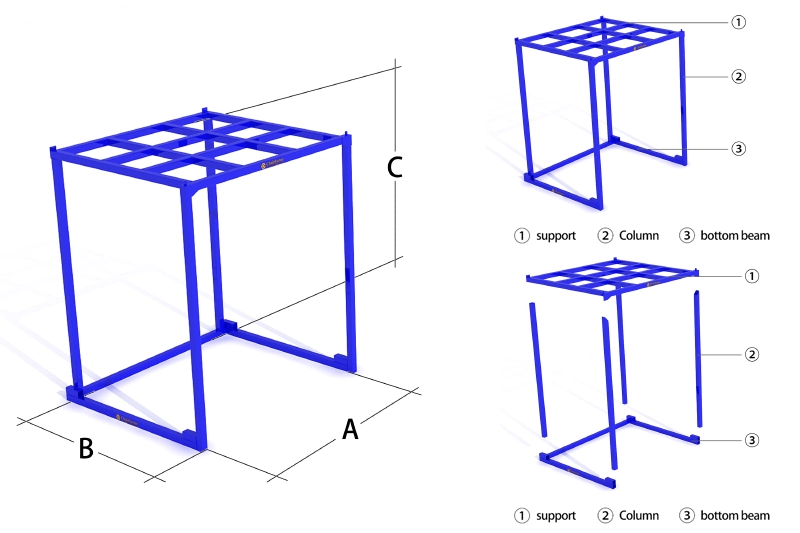
Rerack is a heavy-duty stackable rack / stillage, built for palletized goods that need vertical storage without fixed racking. The main sizing rule is simple: the pallet footprint, the load envelope, the fork entry path, and the nesting clearance must be checked together. That is why the right answer for a 1200×800 pallet is not automatically the same as for a 1100×1100 or 1200×1200 pallet.
For a buyer, the practical question is not "what standard size do you sell?" but "what internal size keeps the pallet free of contact while still using space efficiently?" If the structure is too tight, pallet feet or load corners can touch the steel. If the structure is too wide, the rack wastes floor area, container space, and reduces the benefit of the rack-and-stack workflow. Rerack is designed to avoid both problems through project-specific internal dimensions.
What really defines the internal size
The final internal dimension is determined by five things: the pallet footprint, the external load dimensions, the position of pallet feet or support points, the movement of forklift forks, and the nesting clearance needed for empty return. In documented projects, the product briefing also records an empty nesting clearance of 100 mm chosen to suit forklift fork thickness. This is a useful reminder that stackable rack sizing is never just a drawing exercise; it is a handling decision.
Square pallets need special attention. A 1100×1100 pallet and a 1200×1200 pallet look simple on paper, but the rack still needs to respect the load envelope above the pallet, the way the load shifts during transport, and the way the structure nests when empty. If the application involves goods packed in boxes, bags, or other stable palletized loads, the structure can be adjusted tightly around the load. If the load is bulky or overhanging, the internal size must follow the actual external profile rather than the nominal pallet label.
Documented project sizes show the pattern
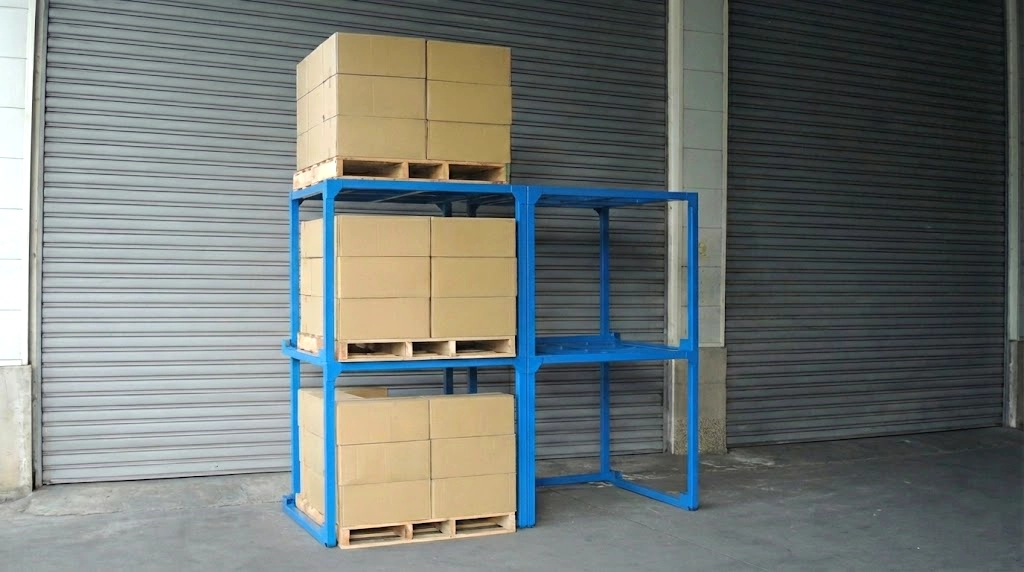
The project files provide four confirmed internal size examples: 1300×900×1900 mm, 1300×1250×1800 mm, 1300×1300×1350 mm, and 1250×1150×1700 mm. These are not a universal stock list. They are evidence that the correct answer depends on the job. A pallet program based on 1200×800 boxes may need a different depth than a program based on 1100×1100 square loads, even if both use the same stackable rack family.
- 1300×900×1900 mm suitable for a taller closed load where vertical clearance matters as much as the footprint.
- 1300×1250×1800 mm fits a wider pallet envelope and leaves room for handling clearance.
- 1300×1300×1350 mm is useful when the load footprint is square and the height is more controlled.
- 1250×1150×1700 mm shows that the final size can be narrower than a square example when the load envelope allows it.
That is exactly why we do not collapse these jobs into a single unified SKU. A "universal" internal size would waste space or create a collision point somewhere in the warehouse.
How we keep pallet feet and steel members in harmony
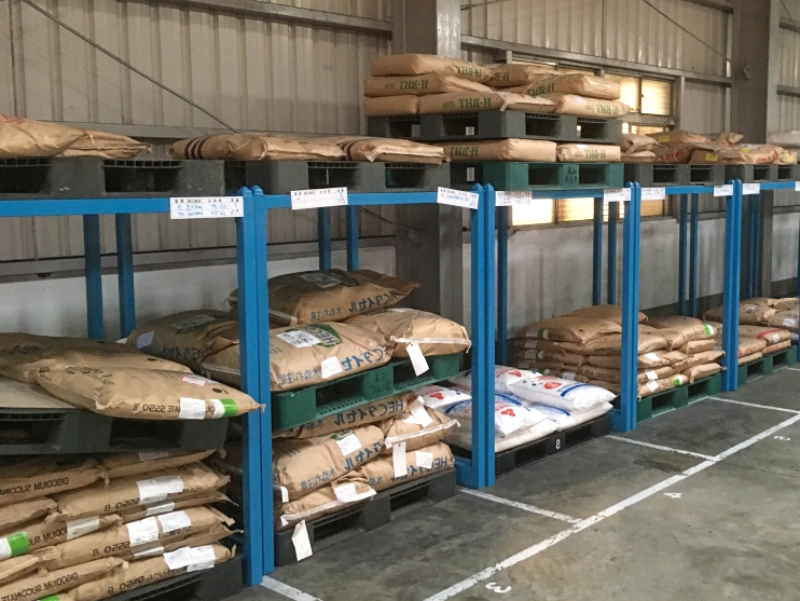
One project note is especially important: crossbars can be aligned with the pallet support feet to avoid deforming wooden pallets. This detail matters more than a generic clearance rule. If the support points are wrong, the rack may look correct in a drawing but still damage the pallet in use. For buyers comparing stackable rack vs fixed rack, this is one of the biggest reasons to treat the rack as a custom stackable rack rather than a standard catalog item.
Another documented point is structural weight. Depending on the configuration, the project files show Rerack units at approximately 58 to 61 kg, with a comparison case of a 75 kg demountable post rack in a special project. This weight range supports the high-strength welded steel structure needed for palletized goods, while still allowing empty units to nest tightly for compact storage and return transport.
When Rerack is the right answer
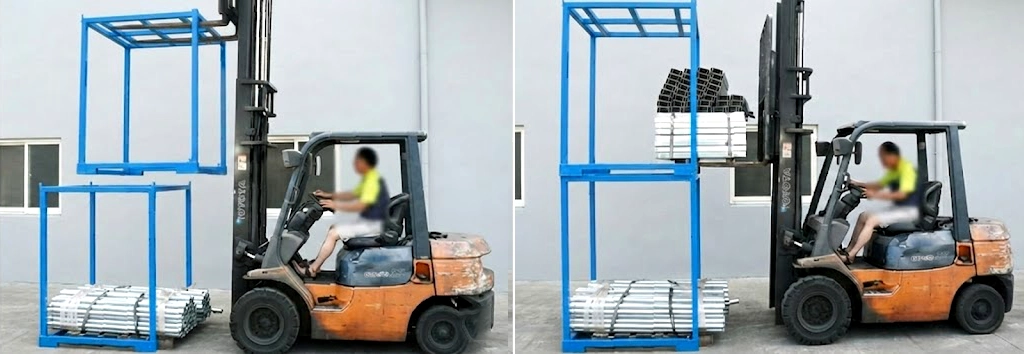
Rerack is a great option for stable palletized goods, temporary warehouse layouts, dense staging zones, and return cycles where empty racks need to travel back in a compact package. It is also a good option when your operation needs to match existing pallets rather than forcing the warehouse to adopt a new single standard. That is why the best contribution a buyer can make is the exact pallet footprint and the actual load envelope together.
O Rerack não é a resposta certa se a carga for instável, a carga precisar de uma âncora fixa no chão ou a operação esperar uma infraestrutura permanente de racks. Em ambientes de armazenamento frio ou úmido interno, a escolha do revestimento ainda deve ser adequada ao projeto. E para qualquer stillage de aço empilhável, a unidade superior só deve ser liberada após a unidade inferior estar totalmente assentada e a pilha devidamente engatada.
Se você está planejando paletes 1100×1100 ou 1200×1200, envie o tamanho do palete e as dimensões externas da carga juntos. Essa é a maneira mais rápida de definir o tamanho interno corretamente, evitar conflito com os pés do palete e manter o rack útil tanto no armazenamento quanto no retorno.
Próximo passo: compare a página do produto em PDP-03 e os exemplos de projeto em CASE-03.
Precisa de uma Solução de Armazenamento Personalizada?
Fale diretamente com nossos engenheiros técnicos. Oferecemos projetos estruturais gratuitos, avaliações de catálogos de alta capacidade e orçamentos rápidos para B2B.
Solicite um Orçamento Agora →