
An empty wire mesh container does not travel free. On an auto parts return leg the containers go back to the plant as cargo in their own right, and that is where two packing routes split. One is stretch film plus strapping: a folded bundle held together with film and banding, which adds almost nothing to the packaging invoice. The other is a wooden crate: a rigid timber shell priced by surface area, carried at a project reference of about CNY 90 per square metre on the 13967 record. The question is not which one is cheaper to buy. It is which one costs less once the containers are unloaded and the paint finish is inspected.
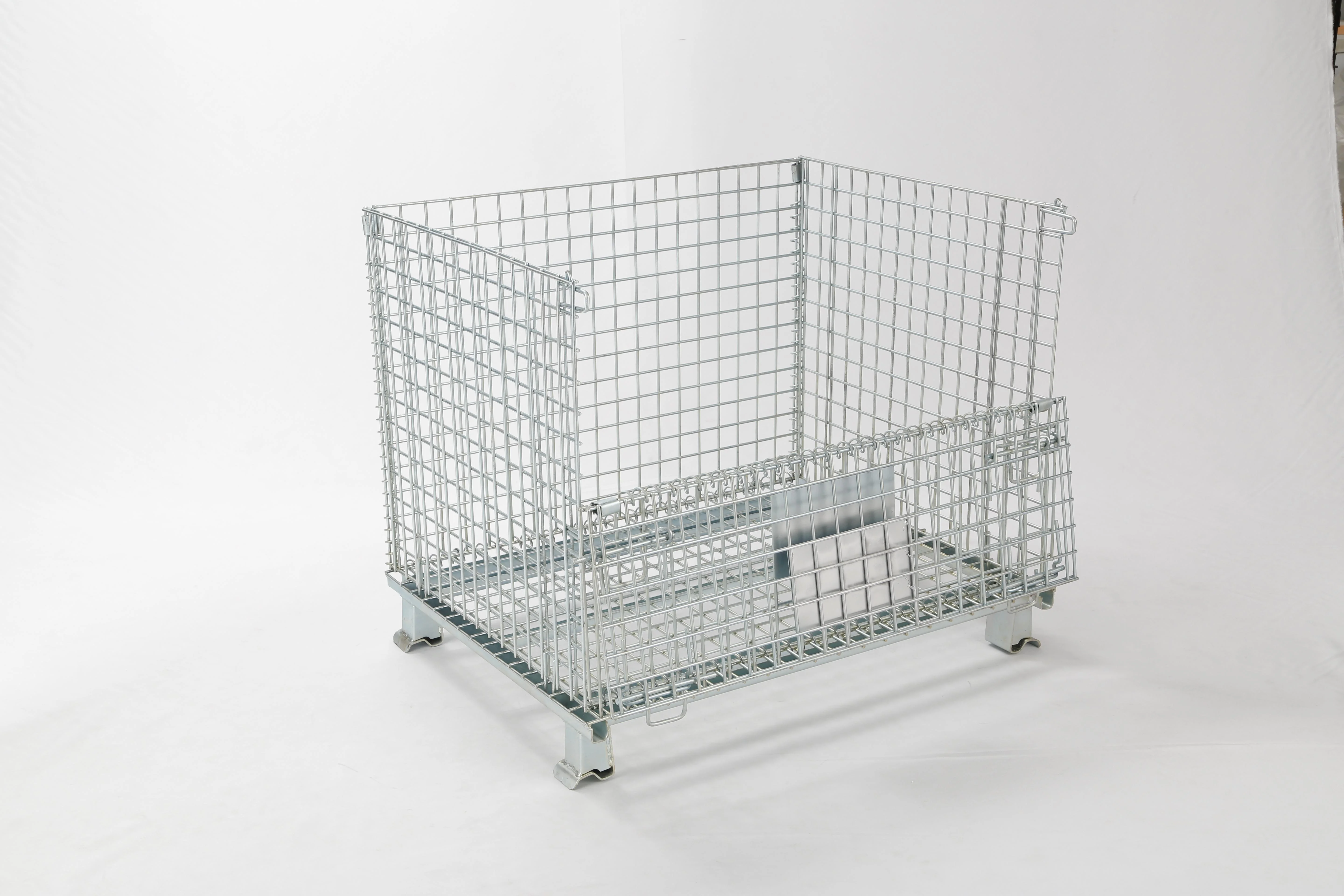
This article works through both routes on the recorded 13967 configuration — a collapsible steel cage measuring 800 × 1200 × 890 mm that folds to a 190 mm height, bundled ten units to a stack listed at 1240 × 1240 × 1600 mm — and sets out what each option protects, what each adds in weight and cube, and where the crate price has to be re-quoted instead of assumed.
How Do You Pack Empty Wire Mesh Containers for Export?
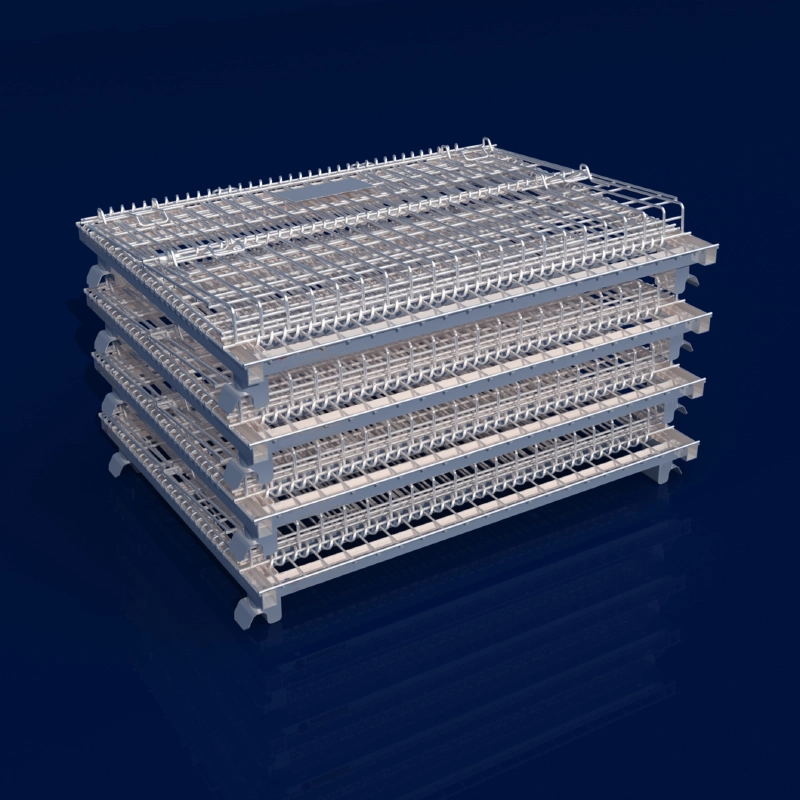
Empty return packing starts with the fold, because the folded bundle — not the individual cage — is the unit you quote, strap, load and pay freight on. On the 13967 record the collapsible cage drops to a 190 mm folded height, and ten folded units are bundled into one stack listed at 1240 × 1240 × 1600 mm.
From that stack, the two routes diverge. Route one wraps the bundle in stretch film and closes it with strapping bands, PET or steel, so the folded panels cannot open in transit. Route two builds a wooden crate around the bundle, or around an assembled container if the cages ship erected.
Whichever route you take, the packing plan has to be built on the final drawing rather than on a catalogue image. Fold height, stack footprint, band positions and fork entry all follow the cage dimensions you actually ordered, and cage sizes vary between projects. A packing plan written for one order does not transfer to the next.
Stretch Film and Strapping: What It Does and What It Cannot Do
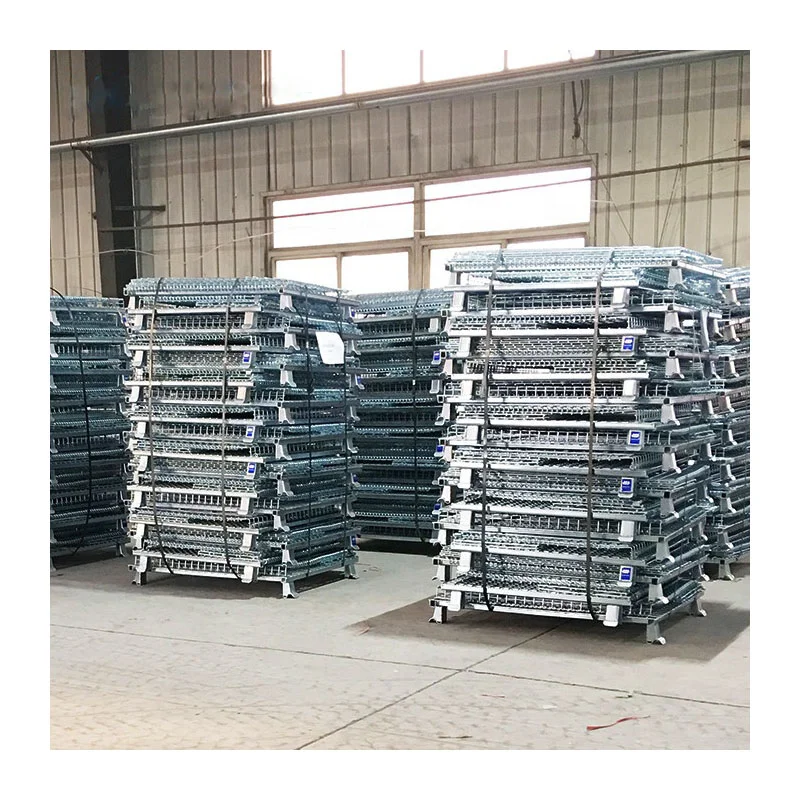
Film and banding is the low-cost route, and on a repeat export loop it is usually the default. The film holds the folded panels together and keeps dust and road spray off the outer surfaces to a degree. The strapping gives the bundle its shape and stops the stack from opening during handling.
What this route does not do is create a rigid shell. Between the folded panels there is metal-to-metal contact, and a tensioned band presses directly onto galvanized surfaces. Under road vibration and repeated handling, that contact can mark the coating. It is a real risk on any bundle, and it is why we do not promise a scratch-free arrival on the film-and-strapping route. Where arrival finish matters, treat this option as the one that needs extra care — interleaved protection between panels, controlled band tension, corner protection under the bands — not as the option that needs no care at all.
On cost, this route adds film and banding consumption only. There is no crate material, no crate weight and no crate cube to carry.
Wooden Crating: What a Per-Square-Metre Price Actually Buys
Wooden crating is quoted the other way round, by surface area. On the 13967 record the figure used for early cost comparison is about CNY 90 per square metre. Read that as a planning number, not a fixed price. Crate cost moves with the crate size and panel thickness, the timber specification, whether the destination requires heat-treated and marked wood, and the quantity on the order. Re-quote it against your own cage dimensions and destination before it goes into a landed-cost sheet.
What the money buys is separation. A crate keeps handling equipment, other cargo and the container wall away from the cage, and it lets you immobilise the load inside so it cannot slide. The trade-offs are weight and cube on every leg, and the return leg: a wooden crate is normally one-way. If the crates are not coming back, the per-square-metre price is a cost per shipment rather than a cost per container life.
One point decides the choice more often than price does. The crate has to be packed so the cage cannot move inside it. A rigid box around a loose bundle still transfers impact through the timber.
Stretch Film vs Wooden Crate: Side by Side
| Decision point | Stretch film + strapping | Wooden crate |
|---|---|---|
| What it adds | Film wrap and banding around a folded bundle | A rigid timber shell around the bundle or the assembled cage |
| Price basis | Film and banding consumption only | Quoted by surface area; project reference about CNY 90 per square metre, re-quoted per project |
| Protection against abrasion | Limited: folded panels and bands contact the coating directly | Higher: the cage is separated from outside contact, provided it is immobilised inside |
| Added weight and cube | Lowest of the two | Adds tare weight and cube on every leg |
| Return leg | Film and banding are cut off; the container is reused | One-way unless return freight is paid |
| Typical fit | Repeat loops where freight cost per container dominates | One-way or long sea legs where arrival condition outweighs packaging cost |
How Much Volume Does Folding and Stacking Save?
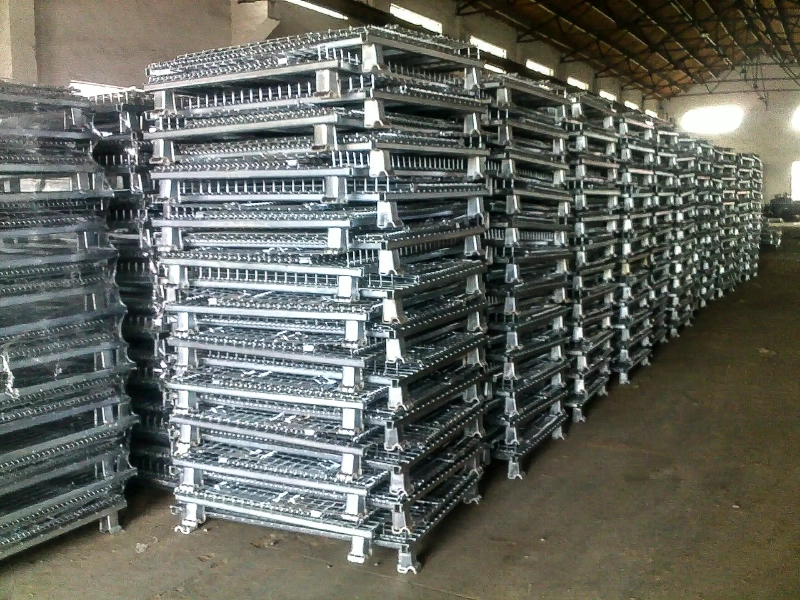
Folding is where the return leg is won or lost. On the 13967 record an assembled cage measures 800 × 1200 × 890 mm, roughly 0.85 cubic metres. Ten of them standing assembled take about 8.5 cubic metres. The same ten units folded and bundled occupy a stack listed at 1240 × 1240 × 1600 mm, about 2.46 cubic metres. That is roughly 71% less volume for the same ten containers.
Two qualifications matter. First, that is arithmetic on recorded figures, not a freight quote: how much of the saving you bank depends on the container type, how the stacks are arranged and how much dead space remains. Second, the folded stack footprint is wider than a single assembled cage footprint, so the saving is in height and total cube rather than in floor width. Build the loading plan accordingly.
Which Packing Route Fits Your Return Shipping?
- Film and strapping suits repeat loops where the containers come back to your own plant, the coating is not a customer-visible surface, and freight cost per container dominates the decision.
- Wooden crating suits one-way legs, high-value containers, long sea routes, and any shipment where arrival condition is worth more than the packaging invoice.
- Choose crating on mixed loads where other cargo can shift against the cages.
- Before booking freight, confirm fold height, stack footprint and band positions against the final drawing for the cage size you ordered.
- Budget the crate price from a project re-quote and the film-and-banding cost from consumption, not from a catalogue figure.
Frequently Asked Questions
Can stretch film and strapping guarantee the containers arrive without scratches?
No, and we will not claim it. Film and banding hold the bundle together; they do not stop contact between folded panels or between tensioned bands and galvanized surfaces. Interleaved protection, controlled band tension and corner protection reduce the risk, but the film-and-strapping route is the one that carries coating-mark risk, not the one that eliminates it.
Is the CNY 90 per square metre wooden crate price firm?
It is a project reference used for early cost comparison on the 13967 record, not a fixed quotation. The real figure depends on the crate size, timber specification and thickness, whether the destination requires treated and marked wood, and the order quantity. Send the cage dimensions and destination and the crate price is re-quoted.
How many folded containers go into one bundle?
On the 13967 record, ten folded cages are bundled in a single stack listed at 1240 × 1240 × 1600 mm, with a folded height of 190 mm. Other project records for this container family use different cage sizes, so treat the bundle count and stack size as configuration data to confirm on your own drawing.
Stbox is the collapsible steel wire mesh container behind these figures: a fold-flat, stackable cage for parts storage, line-side buffering and empty return logistics, with galvanizing, lids, liners and casters selected per project. If you are costing an empty return leg, send the cage size, the units per shipment and the destination, and the packing route can be worked through with you. Start from the product page: collapsible wire mesh container (Stbox).
Need a Custom Storage Solution?
Speak directly with our technical engineers. We offer free structural designs, heavy-duty catalog evaluations, and quick B2B price quotations.
Request a Quote Now →