
Vorderrad-Klemmen-Motorradträger für kratzfreien Radtransport
Vorderrad-Klemmen-Motorradträger für kontrollierten Radtransport: Handrad-Anziehen, zweiseitige U-förmige Gurthaken und rampenunterstütztes Beladen. Bestätigen Sie Radpassung, Klemmkraft, Gurte und Last für Ihr Motorrad.
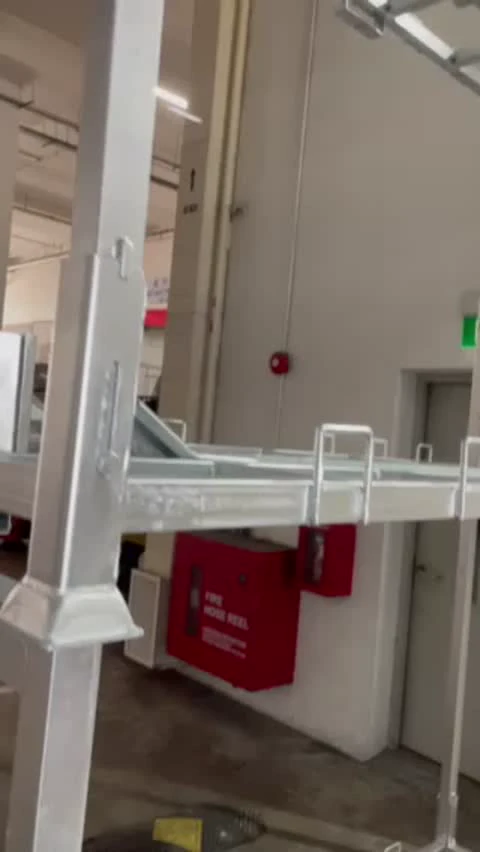
Vorderrad klemmen, Gurte einhängen, einfach hineinrollen
Mtrack positioniert ein Motorrad über sein Vorderrad: Eine handradbetätigte Klemme schließt sich um das Rad, U-förmige Haken auf beiden Seiten nehmen die Zurrgurte auf, und Auffahrrampen ermöglichen es, das Motorrad in Position zu rollen, anstatt es anzuheben.
Die Basis trägt das Fahrzeug und bietet den Gabelzugang. Zwei Rampenbereiche auf der Basis lassen das Vorderrad hochrollen und in die Radposition fallen. Die Klemme sitzt am vorderen Positionierpunkt und wird durch Drehen des Handrads angezogen oder gelöst – lösen, Rad hineinrollen, schließen. Beide Seiten der Basis tragen U-förmige Haken, sodass Gurte links und rechts vom Motorrad verlaufen können, und der beladene Träger wird dann als eine Gabelstaplereinheit in das Lager, einen Anhänger oder einen Container gehandhabt.
Was nicht über die gesamte Reihe festgelegt ist: Klemmkraft, Gurtspezifikation und die Raddurchmesser, die die Klemme aufnimmt. Projekt 14476 dokumentiert eine handradgesteuerte Vorderradklemme, die für ein Rad mit Ø480 mm gezeichnet wurde, und die Projekte 14905 und 15052 dokumentieren Gurt-Haken auf beiden Seiten – dies sind Projekteingaben, kein veröffentlichter Passungsbereich. Senden Sie uns das Motorradmodell, die Reifengröße und das Gewicht, und die Klemmposition, die Hakenanordnung und die Sicherung werden auf der Zeichnung bestätigt.
- Handradbetätigte Vorderradklemme: Anziehen und Lösen durch Drehen des Griffs
- U-förmige Gurthaken auf beiden Seiten der Basis, sodass das Motorrad links und rechts verzurrt werden kann
- Einfahrtsrampen rollen das Vorderrad ohne Anheben des Motorrads in die Radposition
- Radmulde und vorderer Positionieranschlag halten das Motorrad gerade auf der Basis
- Tragfähigkeit pro Projekt festgelegt – in verschiedenen Projekten mit 250, 350 und 500 kg dokumentiert
- Forklift access configured two-way or four-way depending on the drawing
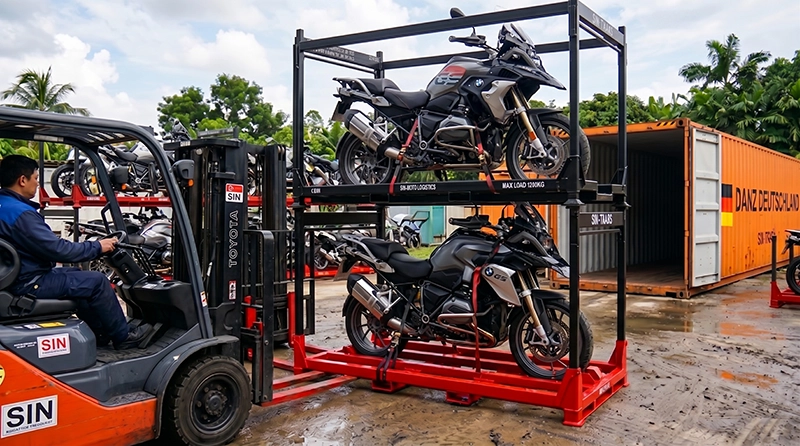
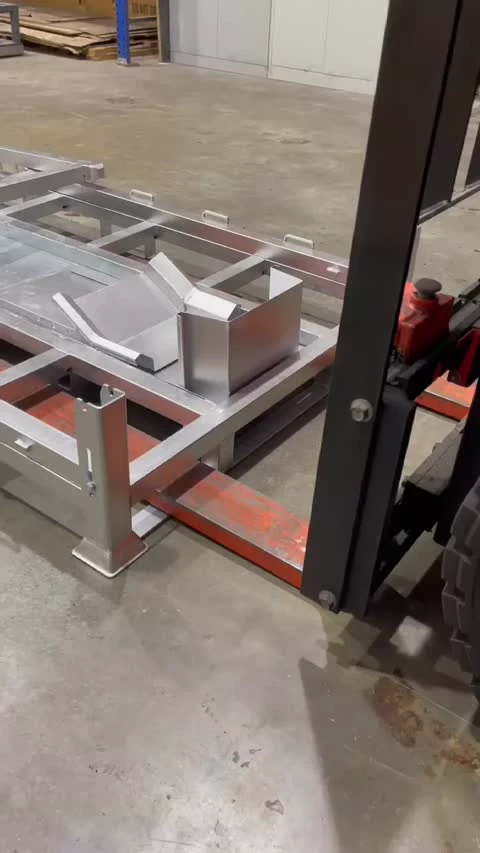
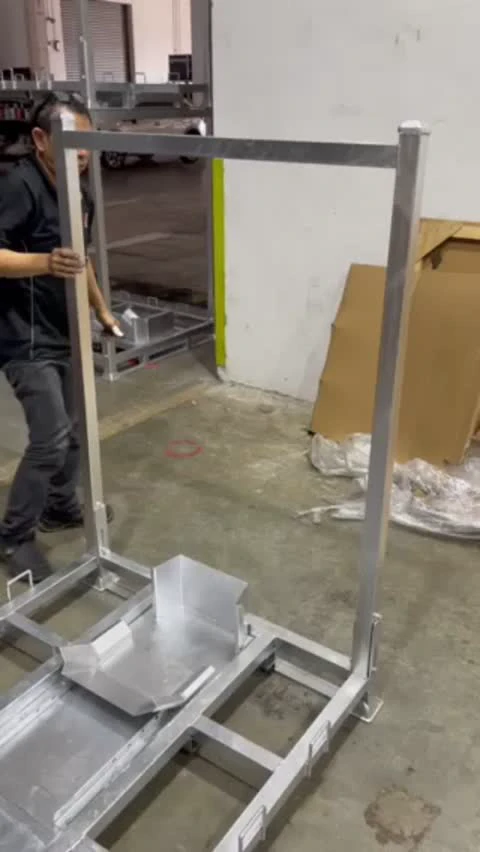
Three ways to secure the motorcycle – clamp, straps or both
Clamp
Handwheel front wheel clamp
The front wheel is held in the positioning position by a clamp. The handwheel on the mechanism controls closing and opening so that the operator tightens it once the wheel is seated and releases it before the motorcycle is rolled down.
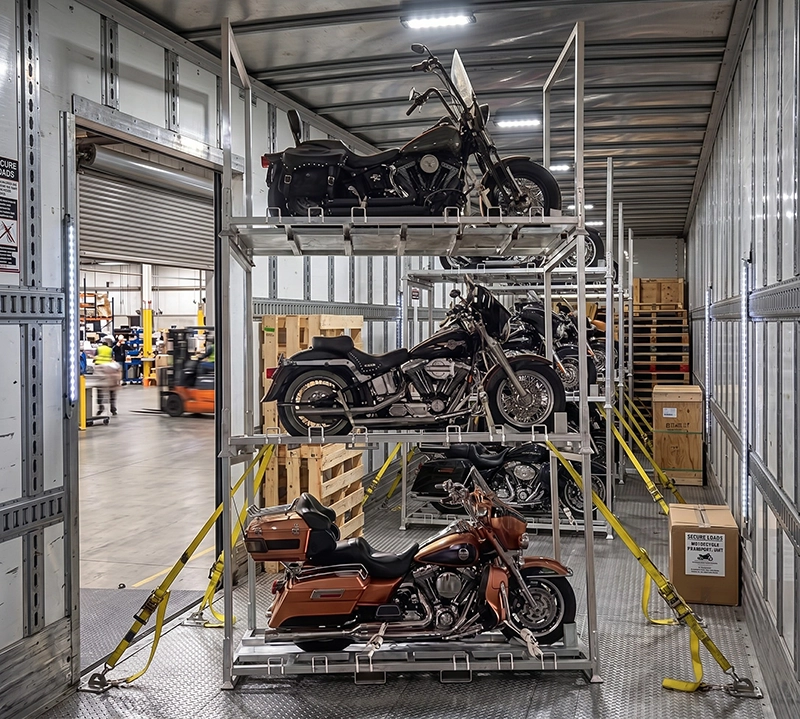 Straps
U-shaped strap hooks on both sides
U-shaped hooks are inserted on both sides of the base so that straps can be routed to the left and right of the motorcycle instead of over any pipe. The hook positions are part of the drawing, not an improvised anchoring point.
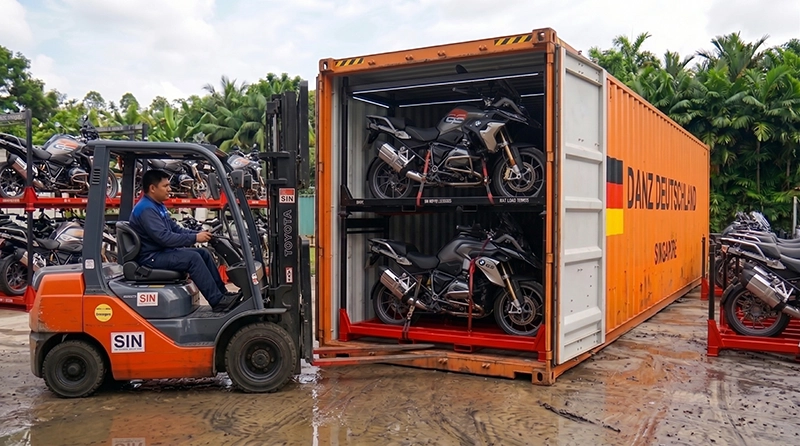 Beladung
Loading ramps, wheel channel and front wheel stop
Loading ramps on the floor make it possible to push the front wheel into the wheel position so that one person can load the motorcycle without a lifting device. A wheel channel and a front positioning stop keep it in line while the clamp and straps are tightened.
Why clamp and strap, not just strap
Vorderrad durch die Klemme gehalten, nicht durch Zufall
Eine flache Palette lässt das Vorderrad frei drehen und wandern. Die Klemme schließt sich am Rad in der gezeichneten Position, und das Handrad gibt dem Bediener eine klare Aktion zum Anziehen und eine zum Lösen.
Haken auf beiden Seiten für einen geraden Zug
U-förmige Haken auf beiden Seiten ermöglichen es, dass Gurte gegen den Boden ziehen statt gegen ein nicht tragendes Rohr, sodass das Motorrad links und rechts gesichert wird und nicht durch einen diagonalen Gurt, der bei der Gabelhandhabung verrutscht.
Rollen, nicht heben
Auffahrrampen am Boden bedeuten, dass das Motorrad in die Radposition geschoben wird. Schwerere Touring- und Cruiser-Modelle können von einer Person verladen werden, und das Rad fällt jedes Mal reproduzierbar in die Rille.
Tragfähigkeit ist eine Projektsangabe, keine Serienangabe
Dokumentierte Arbeitslasten pro Gestell variieren je nach Projekt: 500 kg bei den Projekten 14905 und 15052, 350 kg bei Projekt 15385 und 250 kg bei Projekt 15575. Ihr Gestell wird basierend auf dem Motorradgewicht, der Gestellgröße und der von Ihnen angegebenen Handhabungsmethode berechnet.
Bestätigung des Klemm- und Gurtschemas für Ihr Motorrad
Senden Sie die Motorraddaten
Modell, Vorderreifen- und Radgröße, Radstand oder Gesamtlänge, Lenkerbreite, Höhe und Gewicht des einzelnen Motorrads. Bei einer gemischten Flotte senden Sie das größte und das kleinste Motorrad – siehe den Eintrag Motorrad-Palettenregal für mehrere Größen für die Auswahl eines Gestells oder zweier Größen.
Wählen Sie die Sicherung
Vorderradklemme, beidseitige Gurt-Haken oder beides. Klemmkraft, die Radgrößen, die die Klemme aufnehmen kann, und die Gurtspezifikation werden zu diesem Zeitpunkt bestätigt, da sie nicht über das gesamte Sortiment hinweg einheitlich sind.
Check the location and the transport route
Fork direction and fork opening, whether the rack is placed on an existing shelf, a trailer or in a container, the required stacking height and the required workload of the rack (project records contain 250, 350 and 500 kg).
Drawing, then production
The clamping position, the hook layout, the wheel groove, the ramp and the load capacity are drawn and approved before production. The operators must confirm that the clamp is closed and the straps are seated on the specified hooks before lifting the load.
Questions buyers ask before specifying a clamp
How is the front wheel clamp tightened and released?
The clamp is operated via the handwheel on the mechanism: the operator turns it to close the clamp on the front wheel once the wheel is positioned, and turns it back to release it before the motorcycle is rolled down. This handwheel-controlled closing and releasing is documented in project 14476.
What are the U-shaped hooks for?
They are the attachment points for the straps. U-shaped hooks for the tie-down straps are documented in project 14476, and hooks on both sides of the carrier – so that the motorcycle is strapped down on the left and right – are documented in projects 14905 and 15052. The number, positions and spacing of the hooks are specified in the drawing.
How is the motorcycle loaded onto the carrier?
Via a ramp. The base has ramp surfaces so that the front wheel can be pushed up and guided into the wheel position instead of being lifted, and a wheel groove with a front stop keeps the motorcycle in line while the clamp and straps are tightened. A wheel groove width of approximately 235 mm appears only in project 15575 as a project reference.
What is the load capacity of this carrier?
There is no single series-wide load capacity. Documented load capacities per carrier are 500 kg in projects 14905 and 15052, 350 kg in project 15385 and 250 kg in project 15575. The load capacity of your carrier is calculated from the motorcycle weight, the carrier size and the handling method and is specified in the approved drawing.
What wheel diameters does the clamp accommodate?
This is not a published range. Project 14476 documents a clamp position drawn for a front wheel with Ø480 mm, and another project involved a tire of type 125 – these are two project inputs, not a fitment table. Send us your tire and wheel size, and the clamp position will be checked for you.
Can you guarantee that no scratches or movement will occur?
No blanket assurance is given. The clamp secures the front wheel, and the hooks determine where the straps pull, which prevents the wheel from turning and the motorcycle from slipping during handling; which contact points bear the load – wheel, tire or frame – is agreed per motorcycle. Clamping force and strap specification are confirmed per project, not specified as fixed values.
Does one carrier fit every motorcycle in my fleet?
Not automatically. Carriers are configured around a single vehicle dimension or around two sizes for a mixed fleet, and vehicles that protrude beyond the base are a project-specific decision, not a standard rule. Send us the largest and smallest motorcycles, and we will confirm whether one specification is sufficient for both or whether two sizes are required.