
Motorfietsrek met voorwielklem voor krasvrij wieltransport
Motorfietsrek met voorwielklem voor gecontroleerd wieltransport: vastdraaien met handwiel, U-vormige riemhaken aan beide zijden en laden met behulp van oprijplaten. Bevestig de wielpasvorm, klemkracht, spanbanden en belasting voor uw motor.
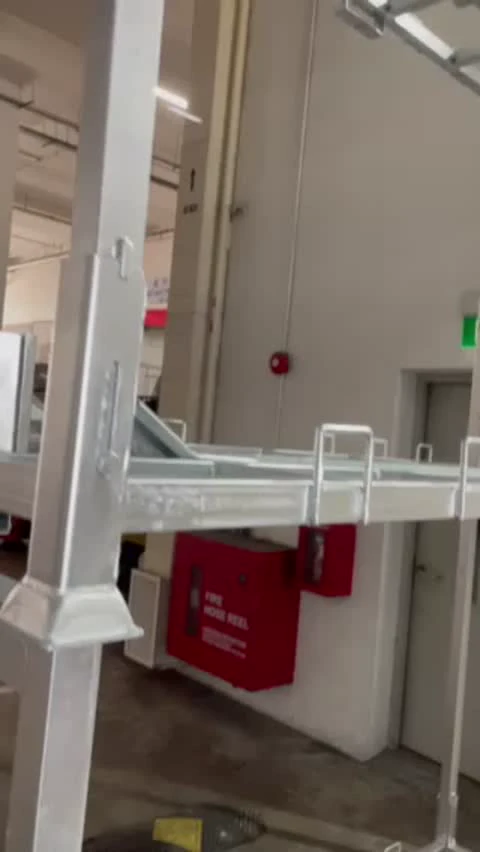
Klem het voorwiel vast, haak de riemen, rol hem naar binnen
Mtrack positioneert een motorfiets aan de hand van het voorwiel: een met de handwiel bediende klem sluit om het wiel, U-vormige haken aan beide zijden nemen de sjorbanden op, en opritten laten de fiets in positie rollen in plaats van hem op te tillen.
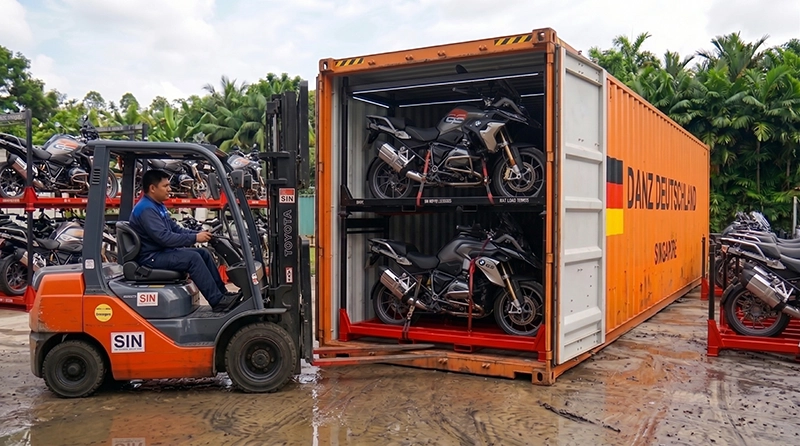
De basis draagt het voertuig en biedt toegang voor de vorken. Twee opritgebieden op de basis laten het voorwiel omhoog rollen en in de wielpositie vallen. De klem bevindt zich op het voorste locatiepunt en wordt vastgedraaid of losgemaakt door aan het handwiel te draaien — maak het los, rol het wiel erin, sluit het. Beide zijden van de basis zijn voorzien van U-vormige haken, zodat de riemen links en rechts van de fiets kunnen lopen, en het beladen rek wordt vervolgens als één heftruckeenheid in opslag, een aanhangwagen of een container geplaatst.
Wat niet vastligt in het assortiment: klemkracht, riemspecificatie en de wieldiameters die de klem accepteert. Project 14476 registreert een met het handwiel bediende voorwielklem getekend voor een wiel van Ø480 mm, en projecten 14905 en 15052 registreren riemhaken aan beide zijden — dit zijn projectgegevens, geen gepubliceerd pasbereik. Stuur ons het fietsmodel, de bandenmaat en het gewicht, en de klempositie, hakenindeling en de fixatie worden bevestigd op de tekening.
- Met handwiel bediende voorwielklem: vastdraaien en losmaken door aan de handgreep te draaien
- U-vormige riemhaken aan beide zijden van de basis, zodat de fiets links en rechts kan worden vastgesjord
- Toegangsopritten rollen het voorwiel in de wielpositie zonder de fiets op te tillen
- Wielgroef en voorste locatiestop houden de fiets haaks op de basis
- Werkbelasting vast per project — geregistreerd op 250, 350 en 500 kg bij verschillende projecten
- Heftrucktoegang geconfigureerd in twee- of vierrichtings, afhankelijk van de tekening
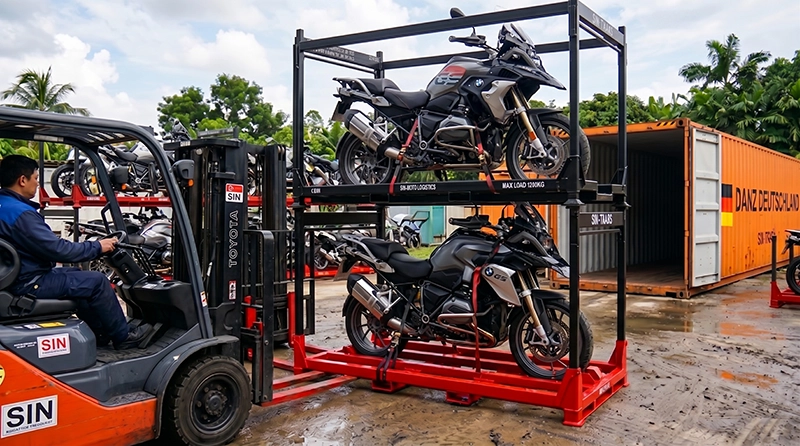
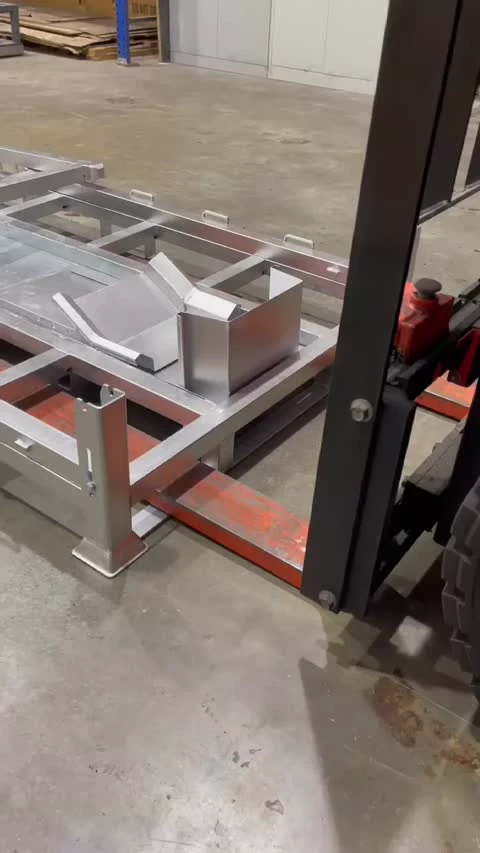
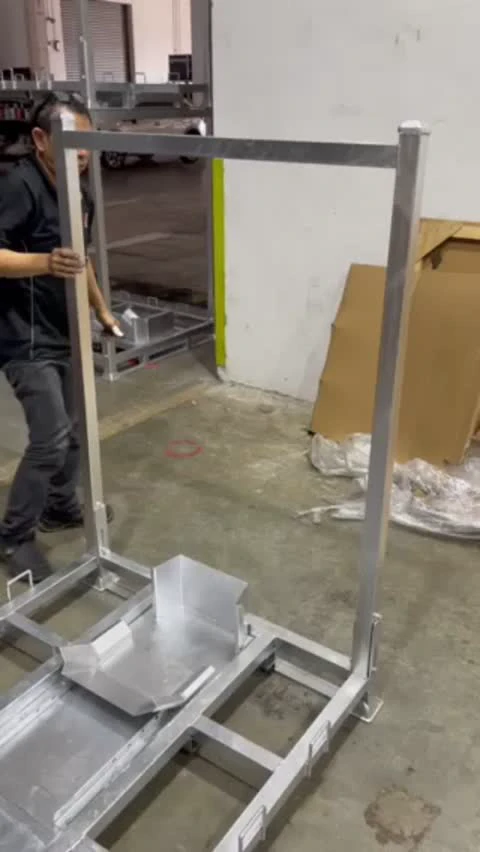
Drie manieren waarop de fiets wordt vastgehouden — klem, riemen, of beide
Klem
Handwiel voorwielklem
Het voorwiel wordt vastgehouden door een klem op de locatiepositie. Het handwiel op het mechanisme regelt het sluiten en openen, zodat de operator het aandraait zodra het wiel op zijn plaats zit en het losmaakt voordat de fiets wordt weggerold.
 Riemen
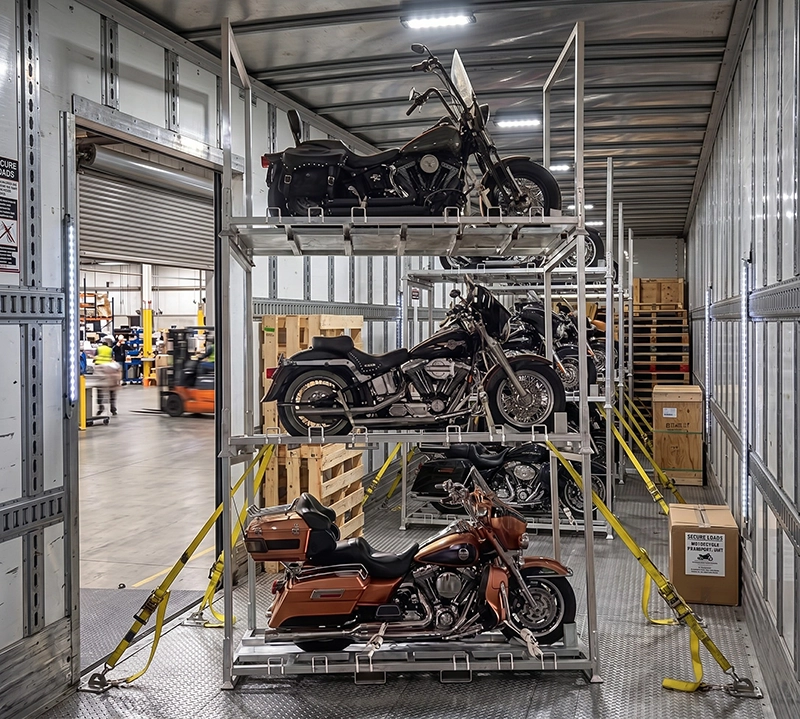
Tweezijdige U-vormige riemhaken
U-vormige haken zijn aan beide zijden van de basis aangebracht, zodat riemen links en rechts van de motorfiets kunnen lopen in plaats van over een willekeurige buis. Haakposities maken deel uit van de tekening, niet een geïmproviseerd verankeringspunt.
 Laden
Oprijplaten, wielgoot en voorstop
Oprijplaten op de basis maken het mogelijk het voorwiel omhoog en in de wielpositie te duwen, zodat één persoon de motor kan laden zonder hefinrichting. Een wielgoot en een voorste plaatsingsstop houden hem op zijn plaats terwijl de klem en de spanbanden worden aangetrokken.
Waarom klem en spanband, niet alleen spanband
Front wheel secured by the clamp, not by chance
A flat pallet lets the front wheel spin free and roll away. The clamp closes on the drawn position around the wheel and the handwheel gives the user one clear action to tighten and one to release.
Hooks on both sides for a straight pulling force
U-shaped hooks on both sides let straps pull against the base instead of against a non-load-bearing tube, securing the bike left and right instead of with a single diagonal strap that shifts during fork handling.
Roll it in, don't lift it
Thanks to the ramps on the base, the bike is pushed into the wheel position. Heavier touring and cruiser models can be loaded by one operator, and the wheel drops into the trough in a repeatable spot every time.
Capacity is a project value, not a series claim
The working loads recorded per rack differ by project: 500 kg for projects 14905 and 15052, 350 kg for project 15385, and 250 kg for project 15575. Your rack is calculated based on the bike weight, the rack size and the handling method you specify.
Confirming the clamp and strap schedule for your bike
Send the bike data
Model, front tire and wheel diameter, wheelbase or total length, handlebar width, height and weight per bike. For a mixed fleet, send the largest and the smallest bike — see the entry multi-format motorcycle pallet rack for the choice between one rack or two formats.
Choose the attachment
Front wheel clamp, two-sided strap hooks, or both. Clamp force, the wheel diameters the clamp fits and the strap specification are confirmed at this point, because these are not fixed for the entire range.
Check location and routing
Fork direction and fork opening, whether the rack is placed on an existing rack, a trailer or in a container, the desired stacking height and the required working load of the rack (project data includes 250, 350 and 500 kg).
Drawing, then production
The clamping position, hook arrangement, wheel trough, loading ramp and load capacity are drawn and approved before production. Users must confirm that the clamp is closed and the tie-down straps are placed on the designated hooks before the load is lifted.
Questions buyers ask before specifying a clamp
How is the front wheel clamp tightened and released?
The clamp is operated via the handwheel on the mechanism: the user turns it to close the clamp on the front wheel once the wheel is in place, and turns it back to release before the motorcycle is rolled off the rack. This handwheel-controlled closing and releasing is documented in project 14476.
What are the U-shaped hooks for?
They are the attachment points for the tie-down straps. U-shaped hooks for the tie-down straps are documented in project 14476, and hooks on both sides of the rack — so that the motorcycle is secured on the left and right — are documented in projects 14905 and 15052. Number of hooks, positions and spacing are specified on the drawing.
How is the motorcycle loaded onto the rack?
Via a loading ramp. The base has loading sections so that the front wheel can be pushed up and into the wheel position instead of being lifted, and a wheel trough with a front stop keeps the motorcycle aligned while the clamp and the tie-down straps are tightened. A wheel trough width of approximately 235 mm appears only as a project reference in project 15575.
What is the load capacity of this rack?
There is no single value applicable to the entire series. Documented working loads per rack are 500 kg for projects 14905 and 15052, 350 kg for project 15385, and 250 kg for project 15575. The working load of your rack is calculated based on the motorcycle weight, the rack dimensions and the processing method, and is stated on the approved drawing.
What wheel diameters does the clamp accept?
This is not a published range. Project 14476 lists a clamp position drawn for a Ø480 mm front wheel, and another project involved a 125-type tire — these are two project inputs, not a fitment chart. Send your tire and wheel size and the clamp position will be checked for you.
Can you guarantee there will be no scratches or any movement?
No blanket promise is made. The clamp positions the front wheel and the hooks determine where the straps pull, which stops the wheel turning and the bike sliding during transport; which contact points take the load — wheel, tire or frame — is agreed per motorcycle. Clamp force and strap specification are confirmed per project rather than stated as fixed values.
Will one rack fit every motorcycle in my fleet?
Not automatically. Racks are configured around one vehicle size or around two sizes for a mixed fleet, and vehicles that fall outside the base are a project decision, not a standard rule. Send the largest and the smallest motorcycles and we will confirm whether one specification covers both or two sizes are needed.